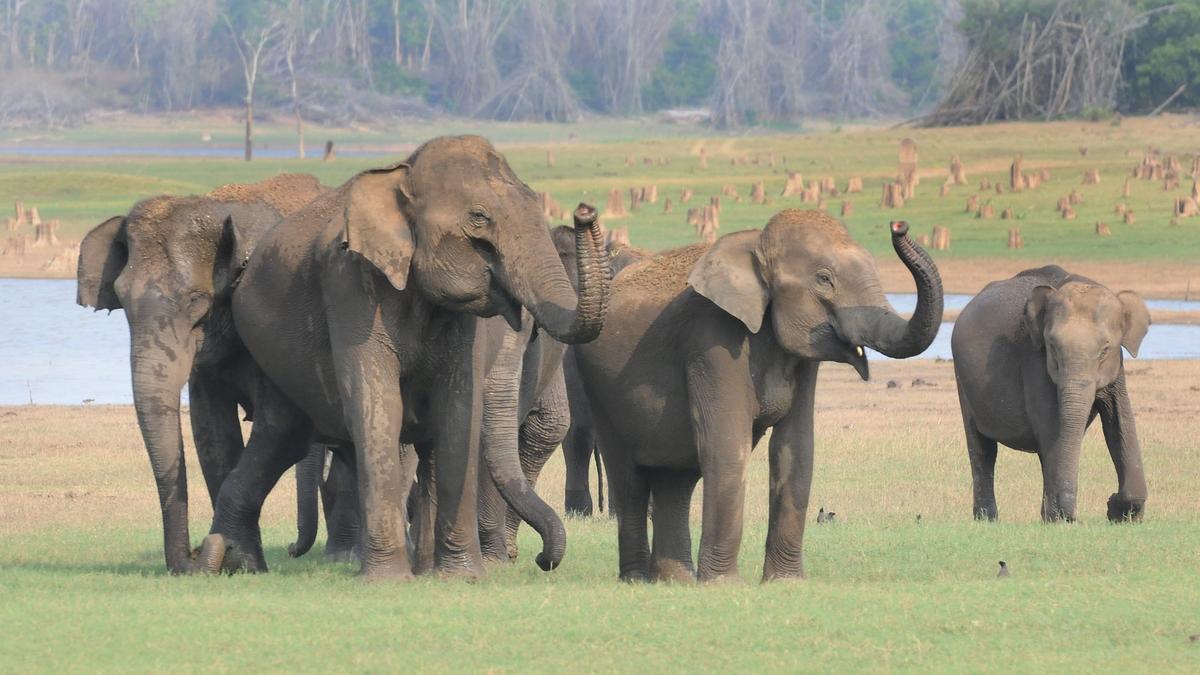
Elephant census concludes in South Karnataka; incessant rains affect final day exercise
The Hindu
Three-day elephant census in South Karnataka to assess population trends, sex distribution, and age despite rain disruptions.
The three-day elephant census as a mandate prescribed by the Interstate Coordination Committee (ICC) charter concluded on Sunday, and the results are expected to indicate the elephant population trends in South Karnataka region.
The census commenced on May 23 with block sampling or direct count exercise followed by line transect exercise on Saturday. On Sunday, it was waterhole count exercise to assess sex distribution and age. However, incessant rains across the region affected the exercise on the final day.
As rains pounded the forests, waterhole was not the only source for elephants. A senior official in Nagarahole who visited multiple sites said not a single elephant had visited the waterhole as rain had ensured water availability everywhere. However, this will not drastically affect the robustness of data collected on the first two days which will help in assessing population estimation and density, the official added.
Ramesh Kumar, Director, Bandipur Tiger Reserve said as the elephant census are being held regularly from three years, the sex-ratio will not be drastically different. The data collected on the first-two days are more important, he added.
The census was part of a synchronised exercised carried out across south India. In Karnataka, it was held simultaneously in Bandipur Tiger Reserve, Nagarahole Tiger Reserve, BRT Tiger Reserve, Bhadra Tiger Reserve, Cauvery Wildlife, M.M. Hills, Madikeri Territorial, Madikeri Wildlife, Virajpet, Bannerghatta National Park, Kolar, Chikkamagalur and Shivamogga Wildlife Divisions.
The census exercise was mandated by the ICC charter to generate and share the database of elephant population in a bid to resolve human-elephant conflicts that are on an upward trend, especially in forests bordering the three south Indian states of Karnataka, Kerala and Tamil Nadu.
In addition, parts of south interior Karnataka – as in Hassan and Chikkamagalur – too experience conflict resulting in deaths of both humans and elephants. Kolar, which shares border with both Andhra Pradesh and Tamil Nadu, has also been witnessing a rise in conflict.


Telangana Governor Shiv Pratap Shukla attends Bihar Foundation Day celebrations in Hyderabad, honoring Bihar's historical and cultural contributions.

Samsung workers protest for the reinstatement of 27 suspended employees, citing unfulfilled promises from the Labour Minister.

The Vice-Chancellor of Rajiv Gandhi University of Health Sciences (RGUHS) B. C. Bhagavan said on Sunday that the university will soon open a research centre on Yoga and Naturopathy on 60-acre land in Bengaluru.

UT Matters: Construction of Uppar drain road overbridge in Puducherry to be completed in four months, amid traffic regulations.

Union Minister Dharmendra Pradhan highlights Bharat Innovates' aim to elevate Indian deep-tech startups to the global stage.

In an exclusive interview, DMK MLA Ezhilan discusses Tamil Nadu's 2026 elections, party structure, and local governance challenges.

Minister Satish Jarkiholi asserts confidence in retaining Davangere and Bagalkot seats in upcoming bypolls amid addressing internal discontent.

Sunil Ambekar of RSS emphasizes national unity, defending road prayer restrictions and promoting awareness of shared ancestry in India.

Opposition MPs and activists voice strong concerns against proposed amendments to the Transgender Persons Act at a Delhi hearing.

Four Assam police commandos injured in an extremist attack during a gunfight in Tinsukia district, officials report.

Campaigning intensifies in Ernakulam district as candidates engage voters ahead of the crucial Assembly polls.

Lord Rama rides Hanumantha Vahanam on sixth day of Brahmotsavams in Tirupati

Nagapattinam faces underdevelopment and resource challenges, impacting its rich heritage and the livelihoods of its fishing community.