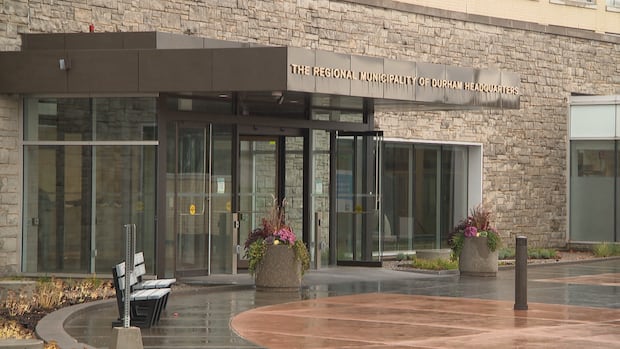
Durham Region residents can now report hate crimes and incidents without going to police
CBC
A new online portal allows Durham Region residents to report hate-motivated crimes and incidents, as well as access support, without involving police.
The reporting program, launched last week on the Victim Services of Durham Region (VSDR) website, follows a 77 per cent spike in police-reported hate crimes and incidents in the region from 2023 to 2024, according to police data.
But Sydney Marcoux, acting executive director of VSDR, says existing data may not tell the whole story, as many may choose not to report such incidents to police due to a lack of trust, fear of retaliation and uncertainty about what can be considered a hate crime.
"I think that there's a massive gap in the data collection certainly," she said of hate crimes and hate incidents, adding with the new reporting tool, "we're trying to create the most accurate picture possible."
Researchers and community organizations involved in the program say it presents an alternative for people reluctant to go directly to police and will improve data collection for hate crimes and non-criminal hate incidents.
Hate incidents can include "disrespectful, discriminatory or hostile speech” and may be classified as a crime after police investigation, according to the Durham Regional Police Services (DRPS) website.
People who are racialized and the 2SLGBTQ+ community may be particularly reluctant to engage with police due to longstanding, fraught relationships with law enforcement, said Barbara Perry, director of the Centre on Hate, Bias and Extremism at Ontario Tech University.
“There is some distrust, there's some level of fear of law enforcement, but they nonetheless do want their experiences recorded,” she said.
Users who fill out the online reporting form can indicate whether they want to be contacted by VSDR and can choose to be anonymous.
For those who ask to be contacted, the type of support will depend on the nature of the incident, Marcoux said. For example, if the incident involved graffiti, the VSDR would handle clean up so the victim would not need to, she said.
People may also be connected to “culturally appropriate services” that meet their needs and experiences, Marcoux said.
VSDR created the program in partnership with the Region of Durham. In a news release, the region said similar reporting programs have been launched in Ottawa and Chatham Kent, but said this is the first of its kind in the Greater Toronto Area.
The portal is “meant to be complementary to the work that DRPS will be doing,” said Allison Hector-Alexander, director of diversity, equity and inclusion at the Region of Durham.
Those who access support through the program can decide whether to involve police at any point, she said, and the program is designed to provide a “warm handover” if they do.


Eight casinos across southwest B.C. have been sold to First Nations in the last two years, with the province's gambling scene set to be reshaped as a result.

Hamilton hosts the Junos Sunday, and the musical awards show is bringing tourists, musicians, concerts and a ton of themed events to the city this week.

The multi-million-dollar deal at the heart of a high-profile fight between the Canadian government and one of the world’s biggest carmakers contains multiple clauses about the company’s footprint in Ontario, according to a copy obtained by CBC Windsor.

In recent months, Calgary police have carried out three day-long safety blitzes, parading out dozens of officers to flood an area with their increased presence — at least, temporarily.

A national organization is seeking people with experience in Canada's forestry sector as they put together a working group that will examine ways to improve forest recovery following wildfires.

Ella Heyder is bracing for a breakup, even though she already moved out decades ago.

Shawne Hopkins never saw it coming.

Politicians return to Queen’s Park Monday for a shortened spring session, as Premier Doug Ford prepares to unveil his eight budget amid heightened global economic uncertainty.

Despite a recent announcement that a water supply pipeline will be build in Oneida Nation of the Thames, some members of the community say that's no excuse for taking water for granted.

As scandal has swirled around former prince Andrew Mountbatten-Windsor, questions and curiosity have also focused on his ex-wife, Sarah Ferguson, and their daughters, Princesses Beatrice and Eugenie.

Friday may have been the first day of spring, but winter storms are not over yet for Newfoundland.

While we officially welcomed spring last week, an incoming system will be a reminder that snow is still very much part of the new season, especially early on.

The future of a national historic site in Fredericton is up for discussion at meetings across New Brunswick in the next few weeks as the Anglican diocese considers what to do about costly repairs needed at Christ Church Cathedral.