Doha Political Declaration calls for more just and inclusive societies
The Peninsula
Doha, Qatar: Amid growing geopolitical tensions and widening inequalities, global leaders at the Second World Summit for Social Development adopted th...
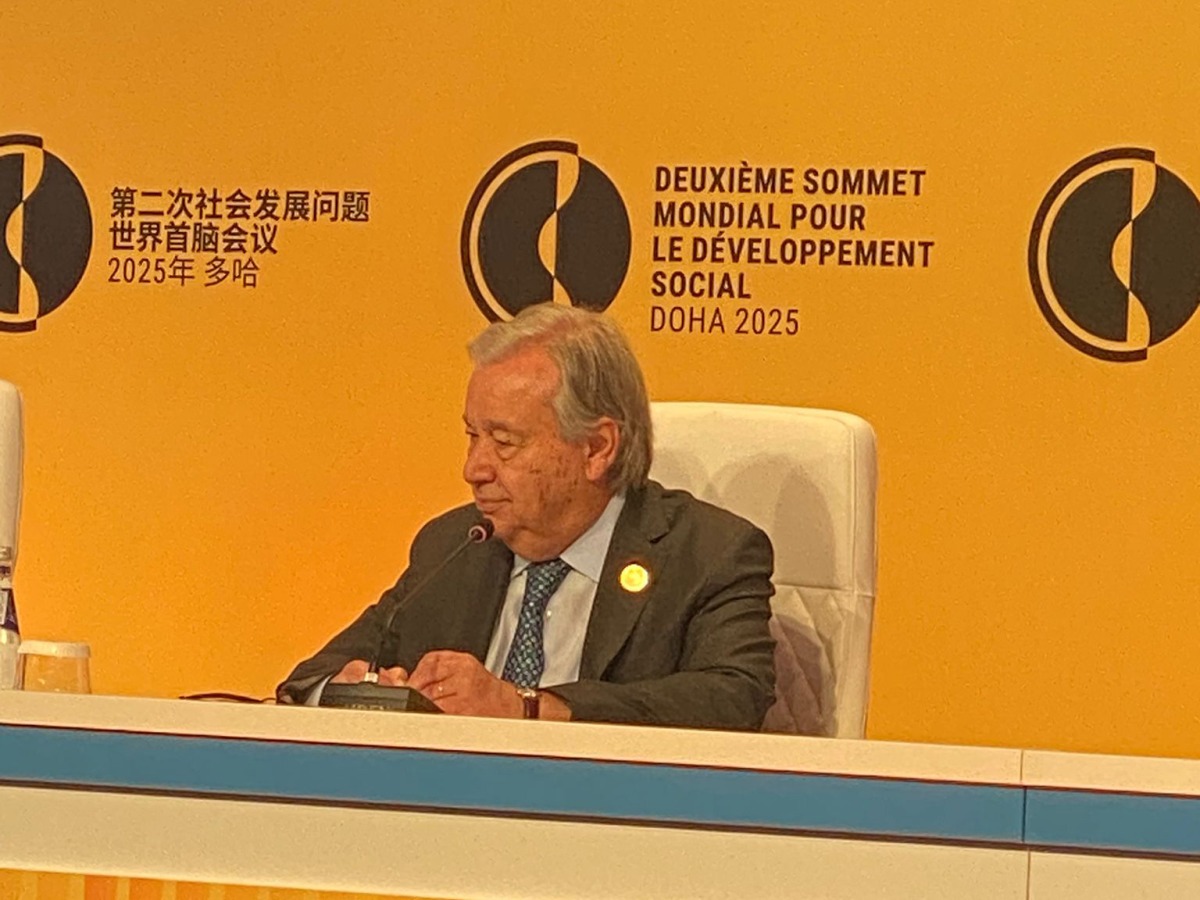
Doha, Qatar: Amid growing geopolitical tensions and widening inequalities, global leaders at the Second World Summit for Social Development adopted the Doha Political Declaration yesterday, reaffirming their collective resolve to advance more just and inclusive societies worldwide.
The adoption of the Declaration marks a shared commitment by governments to tackle poverty, create decent jobs, advance equality and protect human rights, underlining that social development is not only a moral imperative, but also essential for peace, stability and sustainable growth.
“True development isn’t about prosperity for the few,” said UN Secretary-General António Guterres at the opening press conference. “It’s about opportunities for the many, grounded in social justice, full employment, and human dignity.” Calling the Doha Political Declaration a “booster shot for development” and “a people’s plan”, he highlighted urgent action in four key areas: accelerate action to end poverty and inequality through stronger social systems; create decent jobs through skills, inclusion, and equal opportunity; unlock finance for developing countries by reforming global systems and easing debt; and ensure no one is left behind, empowering those most at risk of exclusion.
Bringing together more than 40 Heads of State and Government, 170 ministerial-level representatives, heads of international organizations, youth, civil society and delegates from around the globe, the Summit is convening over 14,000 stakeholders to advance inclusive social development and reaffirm the pledge to leave no one behind.
Thirty years after the landmark 1995 Copenhagen Declaration, adopted during the first World Summit for Social Development, the global landscape for social development has evolved dramatically, shaped by climate change, pandemics, migration, and the rapid digital transformation driven by artificial intelligence.


Doha, Qatar: Qatar s fintech sector is entering a new phase where real financial infrastructure is being deployed, moving beyond pilot projects and po...

Doha, Qatar: As the Qatar Meteorology Department forecasts rain accompanied by thunder and wind in the country, various government bodies have issued...

Doha, Qatar: As the Qatar Meteorology Department forecasts rain accompanied by thunder and wind in the country, various government bodies have issued...

Doha, Qatar: The Qatar Meteorology Department shared the total amount of rain recorded across the country on March 23, 2026. It reported that Al Wa...

Doha, Qatar: The Qatar Meteorology Department shared the total amount of rain recorded across the country on March 23, 2026. It reported that Al Wa...

Doha: As offices nationwide returned to regular working hours today, industry experts and employees have commended the authorities for the seamless an...

Doha: As offices nationwide returned to regular working hours today, industry experts and employees have commended the authorities for the seamless an...

Doha, Qatar: The Ministry of Commerce and Industry (MOCI) has intensified its market monitoring and inspection efforts in response to ongoing regional...

Doha, Qatar: The Ministry of Commerce and Industry (MOCI) has intensified its market monitoring and inspection efforts in response to ongoing regional...

Doha, Qatar: Weather inshore until 6pm on Tuesday will be hazy and partly cloudy to cloudy at times with scattered rain may be thundery at times, the...

Doha, Qatar: Weather inshore until 6pm on Tuesday will be hazy and partly cloudy to cloudy at times with scattered rain may be thundery at times, the...

Doha, Qatar: Qatar s Public Works Authority (Ashghal) said on Monday its teams are working 24/7 to monitor drainage networks and ensure highways and t...

Doha, Qatar: Qatar s Public Works Authority (Ashghal) said on Monday its teams are working 24/7 to monitor drainage networks and ensure highways and t...