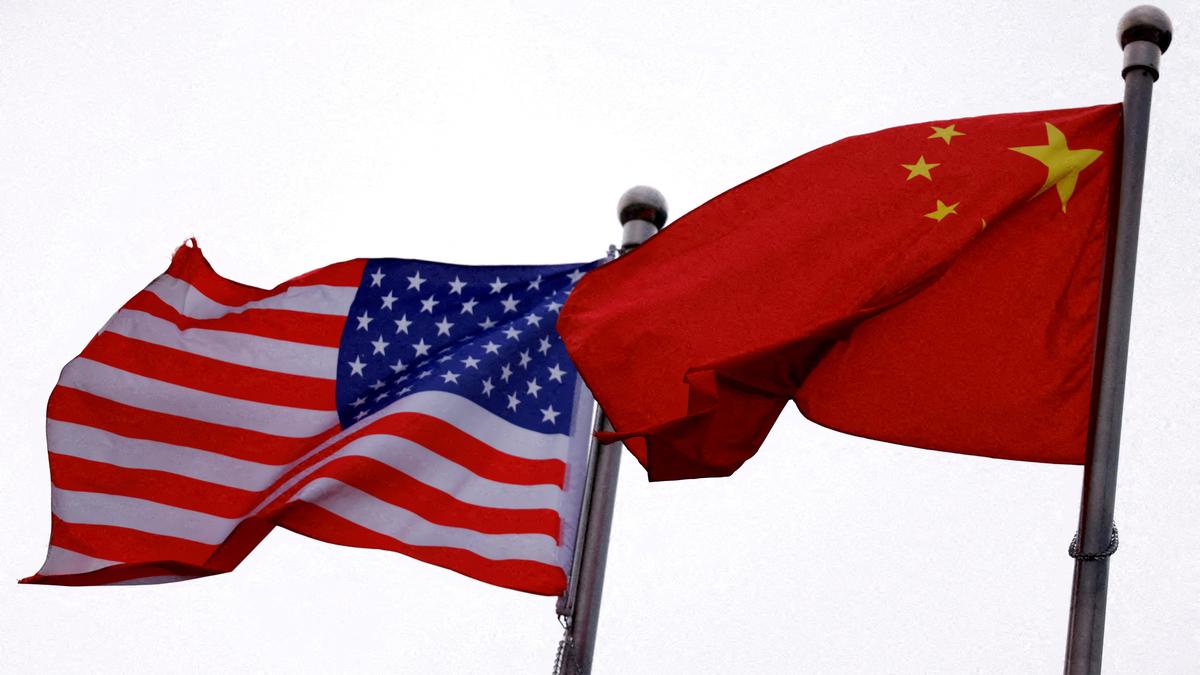
Digital misinformation casts shadow on U.S.-China trade truce
The Hindu
U.S. President Donald Trump’s on-again, off-again tariffs have sent jitters through the world economy, unnerving investors and roiling financial markets.
From false claims of Americans panic-buying Chinese goods to bot-driven attacks on U.S. brands, a tide of misinformation is casting a shadow over a temporary trade truce between Washington and Beijing.
The world's two biggest economies agreed earlier this month to pause reciprocal tariffs for 90 days, a surprise de-escalation in their bitter trade war following high-level talks in Geneva.
But an alternate reality is unfolding across social media platforms, including China's Douyin and Weibo, where a surge of falsehoods is fueling anti-American sentiment that could undermine the fragile truce.
One online video, which garnered millions of views across those platforms and TikTok, claims to show panicked American shoppers snapping up Chinese-branded television sets in the aftermath of trade tensions.
But in reality, that was old footage from 2018 showing Black Friday shopping frenzy at a U.S. supermarket.
The falsehood was further amplified by Chinese state media outlets, including China Daily, which ran headlines such as: "Americans are starting to stock up like crazy amid tariffs and snapping up Chinese-branded TVs."
A news clip on its website, more recycled footage from 2018, bears a "file footage" watermark in the upper left corner, apparently to shield the outlet from legal liability.


The rupee declines 20 paise to 93.73 against the dollar as global oil prices rise and investor uncertainty persists.

Siemens said on Monday that the Iran war has led to customers holding back on new investments as prices increase for raw materials and energy.

OpenAI said its close ties with Microsoft could be a potential risk to its business, telling investors that the software company is responsible for “a substantial portion of our financing and compute,” CNBC reported

LPG crisis: Alternative solutions are being considered, with ammonia cylinders being increasingly used for industrial applications amid delays in commercial LPG deliveries.

India monitors U.S. military pause on Iran as oil prices dip; External Affairs Minister engages with GCC nations for support.

India monitors U.S.-Iran tensions as Trump pauses attacks, leading to a significant drop in oil prices.

Union Minister Ashwini Vaishnaw launches three initiatives to enhance India's creative economy through AI training, citizen platforms, and advanced tech access.

Two Indian-flagged LPG tankers approach the Strait of Hormuz, navigating safely amidst regional tensions to reach Indian ports.

Gold and silver prices plummet over 7% due to West Asia tensions, inflation fears, and a stronger dollar.

Asian shares fall as rising oil prices and escalating Iran conflict diminish hopes for U.S. interest rate cuts.

Japan's SoftBank Group said Saturday it plans to build a huge new gas-fired power plant in the US state of Ohio

Silver prices plunge 9% to ₹2.06 lakh per kg in futures trade amid weak global cues and rising macroeconomic pressures.

OpenAI plans to nearly double its workforce to 8,000 from 4,500 by the end of 2026, the Financial Times reported on Saturday, citing two people with knowledge