Designing the new arena: the rise of sports infrastructure in India
The Hindu
Explore India's evolving sports infrastructure, focusing on flexible, inclusive, and sustainable stadium designs that enhance urban life.
There is no denying that sports infrastructure has evolved rapidly in India over the last decade or so. “Sports in India has transformed from being ‘just sport’ to a mainstream activity, and the turning point for this was the arrival of the Indian Premier League (IPL) in 2008. It changed the economics, and audience dynamics. People experienced a novel format: high-energy, primetime, family entertainment. With this, the revenue models of sports infrastructure have expanded to include broadcast, hospitality, commercial boxes, events, concerts, and year-round use. This has therefore created a large demand for modern, flexible, spectator-friendly stadiums,” says Rajeev Trehan, senior associate architect, Architect Hafeez Contractor (AHC), a Mumbai-based architecture and urban design firm. Further, events like the Commonwealth Games and the conversations around an Olympic bid for India, have raised the bar. This has prompted architects to build to global standards while catering to accessibility, climate, mobility and legacy.
An Olympic-sized swimming pool is situated adjacent to the academic block. | Photo Credit: Vinay Panjwani
“As cities densify and wellness becomes an integral part of daily life, sports infrastructure is increasingly viewed not as an auxiliary amenity, but as an essential urban programme. In the Indian context, this evolution is further amplified by adaptive reuse opportunities where existing industrial or under-utilised structures are reimagined as active, social and inclusive environments,” says Mueen Haris, founder of Ds2 Architecture, a multi-disciplinary practice with offices in Bengaluru, Kochi, and Mangalore.
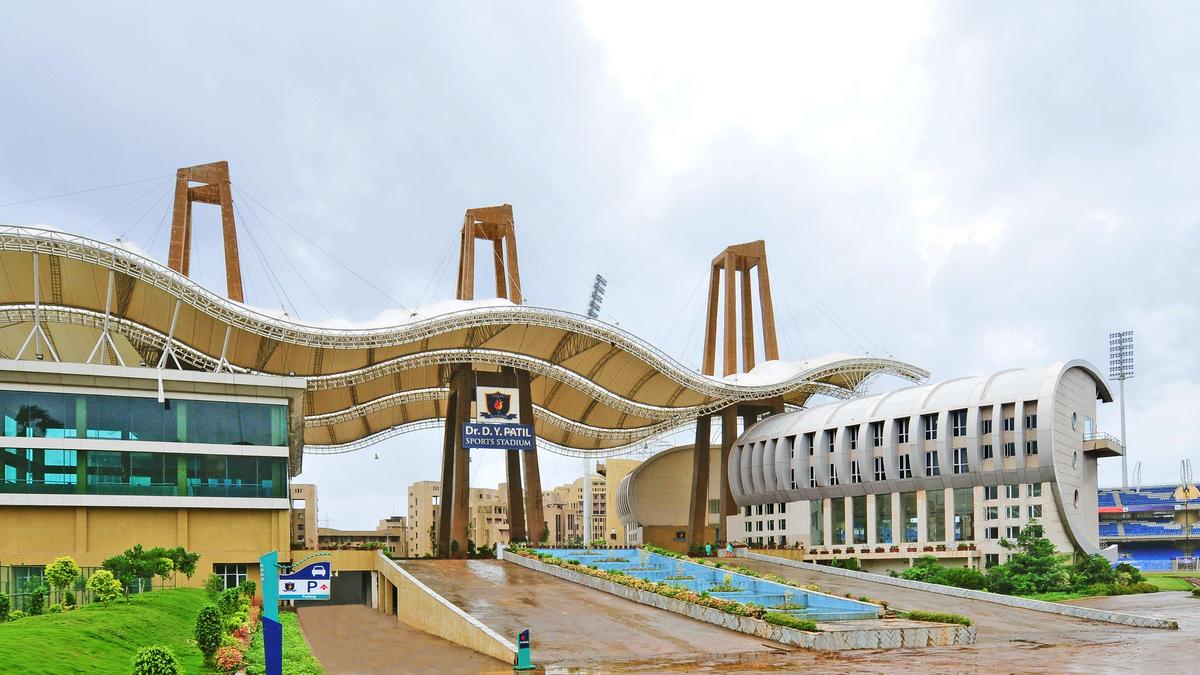
While a stadium is fundamentally for sport, it must also respond to spectator comfort, safety and experience. Aspects like sightlines, circulation, shelter, acoustics, and accessibility are non-negotiable. Further, planning for traffic, public transport, and pedestrian movement is critical. After all, a venue that seats 50,000-60,000 people can paralyse a neighbourhood if not properly integrated into the surrounding infrastructure. “Events like large concerts — for instance, the Coldplay concert that happened at the D.Y. Patil Stadium [in Navi Mumbai] in February 2025 — amplify this further. In places like Melbourne, stadiums connect seamlessly to universities, stations, and public spaces,” adds Trehan.
Designing a sports facility demands careful calibration between performance requirements and human experience. It is a constant balancing act.
Skating arena


PM Modi and President Murmu extend Eid-ul-Fitr greetings, promoting unity, harmony, and compassion for a progressive nation.

Security forces in Manipur seized 29 firearms and 50 IEDs during operations amid ongoing ethnic violence.

A data jam on March 28 by OpenCity will have participants studying how the Assembly constituencies in and around Chennai are faring on a set of parameters

Matheesha Pathirana will miss the start of IPL 2026, while Harshit Rana's participation remains uncertain for KKR.

Shashi Tharoor advocates for peace in the West Asia conflict, emphasizing the urgent need for de-escalation and international cooperation.

Assembly polls 2026: Follow updates from The Hindu on the upcoming elections in five States, on March 21, 2026

Maharashtra women's panel chief resigns amid controversy over ties to rape-accused godman, facing political pressure and public backlash.

India's Iran policy could be shaped by the evolving dynamics of the U.S.–Israel war

Will G. Sudhakaran's independent run disrupt the Left's stronghold in Ambalappuzha and reshape Kerala's political landscape?

The Hindu Morning Digest gives a select list of stories to start the day. Read the top news today on March 21, 2026

Manjeswaram gears up for a tightly contested Kerala Assembly election in 2026, featuring key candidates from UDF, NDA, and LDF.

Thirty-three detained Bangladeshi nationals from Tamil Nadu are being deported to Bangladesh via West Bengal with police escort.

Tree felling for a flyover and underpass on the Manikonda-Hitech City stretch sparks outrage as Hyderabad’s road expansion drives another green loss.