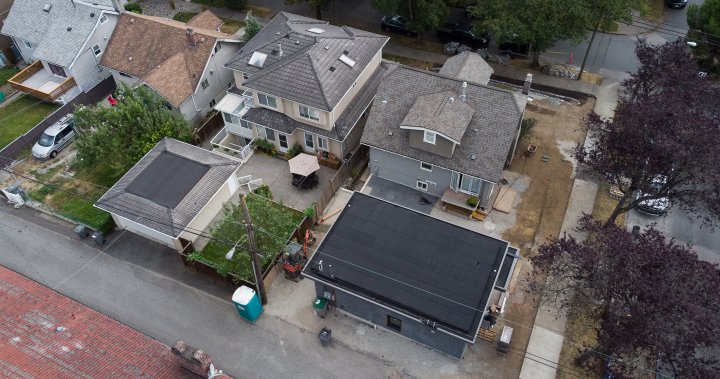
Considering a 2nd unit on your property? How to weigh the pros and cons
Global News
Depending on your housing needs, some experts say additional dwelling units (ADU) may be the answer. But what are they and what are pros and cons?
With mortgage rates causing stress for many Canadians and rents across the country on the rise, many are looking for creative solutions for the housing crisis.
Depending on your needs, some experts say additional dwelling units (ADU) may be the answer.
“An ADU is … essentially a self-contained residential unit within the same property as a single-family home. They can also exist in ancillary buildings, which could be a secondary building on a property that can be a garden suite, laneway suite, or just an additional structure, somewhere on the property,” said Zachary Soccio-Marandola, a Toronto-based real estate lawyer.
In 2022, Ontario passed Bill 23, also known as the More Homes Built Faster Act.
“They’ve allowed up to three residential units on any parcel of urban residential land in Ontario,” Soccio-Marandola said, adding that an ADU could be one of those units. Depending on the size of the property, homeowners could potentially build up to three additional units on their land.
Robert Pierson is the development director of the Vancouver-based group Eco Homes, which creates a platform for manufacturers of pre-fabricated homes.
“I have examples here in Vancouver, of whole subdivisions now that are being built because the zoning allows an ADU. (In these cases) The developer is fitting or building an ADU in every home as a way of making the accommodation more affordable here in Vancouver.”
Soccio-Marandola said ADUs can be a great way for homeowners to make an extra buck.


The price for a barrel of benchmark U.S. crude shot up 8.5 per cent Thursday to settle at US$81.01 per barrel, the highest level since the summer of 2024.

Under the terms of the voluntary pledge, companies intend to build or buy new sources of power generation for their data centers and cover the expense of infrastructure upgrades.

Oil prices leaped, and stock markets slumped worldwide following military strikes by the United States and Israel on Iran, including Wall Street and the TSX.

'The core thesis is simple. Intelligence tools have changed what it means to build and run a company,' CEO Jack Dorsey said in a letter to shareholders of the financial tech firm.