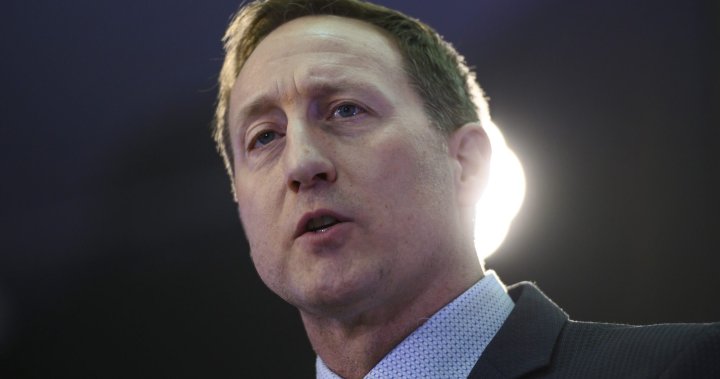
Conservatives need ‘fine tuning,’ not overhaul after election loss: MacKay
Global News
Former Conservative cabinet minister Peter MacKay isn't pointing the finger at Pierre Poilievre for the party's election loss, but he does think members of his team need to go.
Former Conservative cabinet minister Peter MacKay isn’t pointing the finger at Pierre Poilievre for the party’s loss in last week’s federal election, but he does think members of his team need to go and that the party itself needs “fine-tuning.”
MacKay, who served multiple roles under former prime minister Stephen Harper and ran against Poilievre for the party leadership in 2022, says “difficult” and sometimes “painful” conversations will be had on what went wrong for the Conservatives.
While he says tensions exist within the party and with some provinces, MacKay doesn’t believe that’s what led to a fourth Liberal mandate.
“I don’t think it’s indicative of a party in crisis — it’s indicative of a party that’s in need of some fine-tuning, perhaps some policy and communications adjustments,” he told Mercedes Stephenson in an interview that aired Sunday on The West Block.
“The results do, to a large degree, speak for themselves: increased seat count, increased overall vote total, and I think policies that were very appealing to millions of Canadians.”
The Conservatives increased their vote share to 41.3 per cent, with over eight million ballots cast, and flipped several ridings to form the largest Official Opposition in Canadian history, with a projected 144 seats.
Despite all that, the Liberals still managed to win a stronger minority government — 168 seats compared to the 160 seats won in the 2021 election, and 157 in 2019 — as well as the popular vote for the first time since 2015, when they won a majority with 184 seats.
Poilievre himself lost the Ottawa-area riding he held for 20 years, and will now have to run in a future byelection in Alberta to get back into Parliament and serve again as the Leader of the Opposition, which under procedural rules is tied to the caucus, not his role as Conservative Party leader.


Auditor General Karen Hogan says there are critical weaknesses in the integrity controls for the International Student Program.

Return trips by Canadian residents from the U.S. fell 22 per cent in January compared with a year earlier, according to the latest data.

Three byelections are being held on April 13 and the results could have an impact on both the makeup of Parliament and how long it lasts.

Ontario's provincial members of parliament are heading back to Queen's Park Monday, as the legislature sits for the first time since December.

Members of Parliament are back in the House of Commons today, where the government is expected to face tough questions about new auditor general reports and the war in Iran.

Two Air Canada pilots are dead after their flight originating from Montreal collided with a fire truck at New York’s LaGuardia Airport Sunday night.

With more rain in the forecast, crews continue to deal with a mudslide earlier this week that covered a road in Coquitlam in debris, posing risk to Metro Vancouver's water supply.

A former BC Ferries CEO says the Queen of the North sinking remains ‘disturbing’ 20 years later. The ferry struck an island in Wright Sound on March 22, 2006. Two people died.

The 2026 Kraft Hockeyville top two contestants have been named. The winner receives $250,000 for ice rink upgrades, and the runner-up will receive a prize worth about $100,000.

The Office of the Parliamentary Budget Officer scrutinizes federal spending decisions and helps to cost out campaign proposals during elections.

Man’s best friend is proving to be a true lifeline. All across Saskatchewan, service dogs are providing essential, life-changing support every day.

Two days after the first day of spring, parts of Atlantic Canada and Quebec will see another blast of winter with Environment Canada forecasting several centimetres of snow.

UNESCO recognized several Maritime historical groups including the executive director of the Black Loyalist Heritage Centre for their work on the Black Loyalist archive.