Comparing separation of powers jurisprudence between India and U.S. based on recent SCOTUS ruling Premium
The Hindu
Explore the comparison of separation of powers jurisprudence in India and the U.S. following a recent SCOTUS ruling on executive authority.
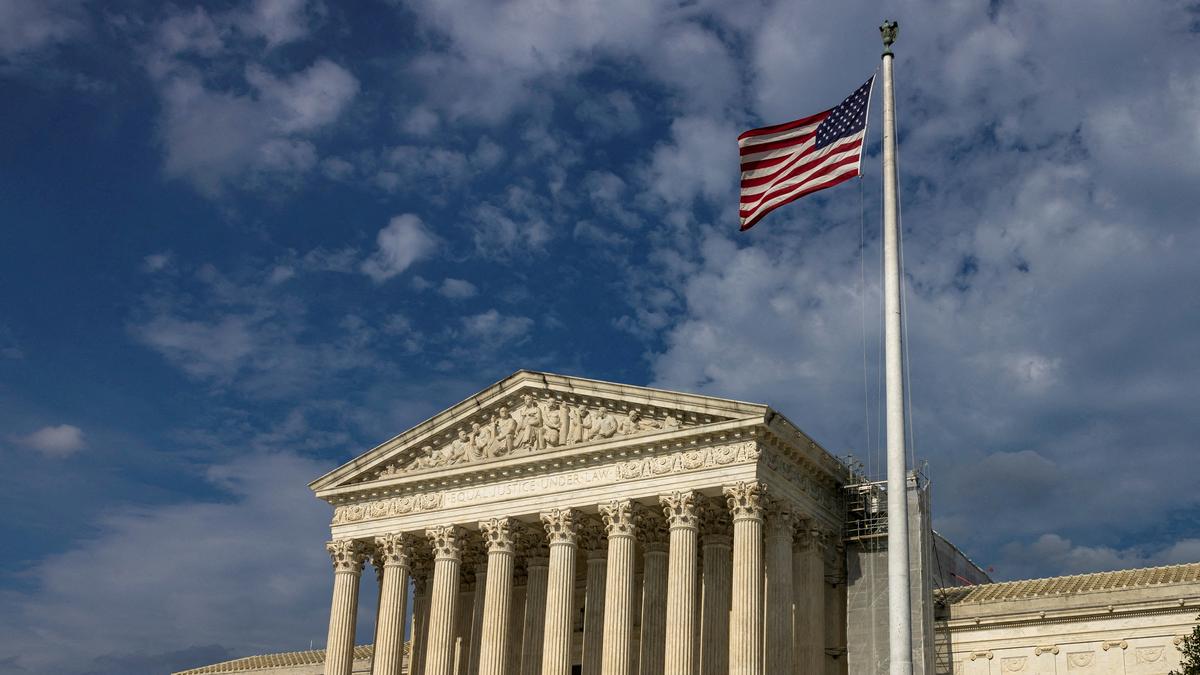
The Supreme Court of the United States (SCOTUS), in a 6:3 ratio judgment, declared that President Donald Trump overreached his authority to unilaterally impose unbounded tariffs and change them at will using the International Emergency Economic Powers Act (IEEPA) of 1977 during peacetime.
Mr. Trump criticised the Supreme Court for being “very unpatriotic and disloyal to the Constitution”, suggesting the ruling was influenced by “foreign interests”.
Also read: U.S. Supreme Court rejects Trump’s global tariffs highlights
But the ruling of the Supreme Court was grounded in the interpretation of Article I, Section 8, of the Constitution, which recognises the unique power of the Congress to “lay and collect taxes, duties, imposts and excises”. It read that the taxing power “very clearly” included the authority to impose tariffs. The majority opinion of the court held that the Constitution Framers did not vest any part of the taxing power in the Executive Branch.
The court reasoned that any delegation of powers to the Executive must be expressly stated in the statute, in this case, the IEEPA. The Bench rejected the government’s interpretation that IEEPA authorised the President to impose tariffs of unlimited amount and duration on any product from any country. Instead, the court invoked the Major Questions Doctrine to hold that the Congress itself “cannot delegate highly consequential legislative powers to the Executive through ambiguous language. It has to be a specific delegation with strict limits”.
The Supreme Court found that Mr. Trump acted beyond the legitimate reach of his office to indulge in a “transformative expansion of the President’s authority over tariff policy”. The Bench said neither historic precedents nor the breadth of authority of the President’s office supported the use of IEEPA to impose “any” tariffs, let alone tariffs of such magnitude and scope. The IEEPA’s half-century of existence has never witnessed the national emergency law being used by the Executive to such a distinct and sweeping extent. Three of the Judges on the Bench, Justices Kagan, Sotomayor and Jackson, went on to observe that the court need not even invoke the Major Questions Doctrine to back its reasoning against the President’s tariffs. Ordinary tools of statutory interpretation would suffice to come to the same result.


Vice-President J.D. Vance expresses trust in Trump’s Iran strategy, aligning on nuclear concerns despite previous anti-war stance.

Iran-Israel war: Follow live updates from The HIndu on the West Asia conflict on Marh 17, 2026

Migrant workers in the Gulf face deadly repercussions from Iran's retaliatory attacks, highlighting their vulnerability amid escalating conflict.

Iran warns of grave threats to its citizens from U.S. and Israeli strikes, asserting its refusal to submit to aggression.

Israeli military initiates limited ground operations against Hezbollah in Lebanon amid escalating violence and humanitarian crisis.

Sri Lanka introduces a four-day workweek for public sector to conserve fuel amid escalating energy crisis concerns.

EU and UN explore Black Sea initiative to reopen the Strait of Hormuz amid rising oil prices and regional tensions.

Russia fines Telegram $432,366 for not removing banned content amid accusations of hosting illegal material.

Shorts News:Watch: Smoke billows near Dubai airport after drone attack

West Asia conflict disrupts pharma air routes, threatening cancer drug supplies and forcing companies to find alternative shipping methods.

Trump accuses Iran of weaponising AI for disinformation, citing misleading claims about military successes and public support rallies.

Myanmar's Parliament convenes under military control, following a controversial election that reinforces the Army's grip on power.

Trump urges allies to secure the Strait of Hormuz, but Japan and Australia refuse to send naval support amid rising tensions.