Climate report: Africa's rare glaciers soon to disappear
CTV
Africa's rare glaciers will disappear in the next two decades because of climate change, a new report warned Tuesday amid sweeping forecasts of pain for the continent that contributes least to global warming but will suffer from it most.
The report from the World Meteorological Organization and other agencies, released ahead of the UN climate conference in Scotland that starts Oct. 31, is a grim reminder that Africa's 1.3 billion people remain “extremely vulnerable” as the continent warms more, and at a faster rate, than the global average. And yet Africa's 54 countries are responsible for less than 4% of global greenhouse gas emissions.
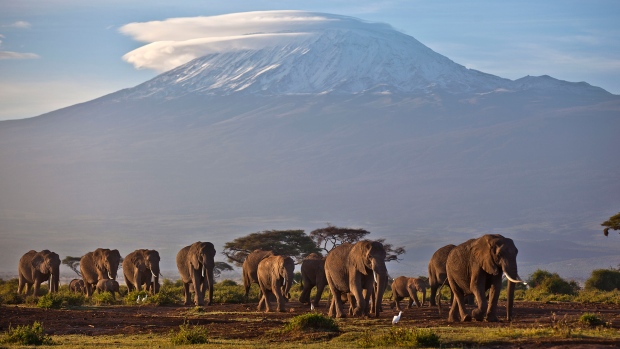
The new report seizes on the shrinking glaciers of Mount Kilimanjaro, Mount Kenya and the Rwenzori Mountains in Uganda as symbols of the rapid and widespread changes to come. “Their current retreat rates are higher than the global average. If this continues, it will lead to total deglaciation by the 2040s,” it says.
Massive displacement, hunger and increasing climate shocks such droughts and flooding are in the future, and yet the lack of climate data in parts of Africa “is having a major impact” on disaster warnings for millions of people, WMO Secretary-General Petteri Taalas said at Tuesday's launch.
Estimates of the economic effects of climate change vary across the African continent, but “in sub-Saharan Africa, climate change could further lower gross domestic product by up to 3% by 2050,” Josefa Leonel Correia Sacko with the African Union Commission writes in the report. “Not only are physical conditions getting worse, but also the number of people being affected is increasing.”


This year’s hard winter weather likely left significant damage for many homeowners coming into spring. Building and renovation expert Ryan Thompson spoke to CTV’s Your Morning about some of the biggest areas to focus on around the exterior of your home, to help prevent serious damage after the cold, hard winter.

Iranians are managing to get online during the current war with the U.S. and Israel despite drastic censorship and frequent blackouts, throwing the spotlight on to providers of tools such as VPNs (virtual private networks).

March is Nutrition Month, and two Ottawa dietitians joined "CTV Your Morning Ottawa" to mark the occasion and share three sample performance plates for three different levels of activity.

Dozens of models with Down syndrome strutted down a catwalk at a fashion show in Romania’s capital for an evening celebrating style, “atypical beauty” and courage to mark World Down Syndrome Day.

Hawaii suffered its worst flooding in more than 20 years as heavy rains fell on soil already saturated by downpours from a winter storm a week ago, officials said Friday while warning that still more rain was expected during the weekend.

While Canada is well known for its accomplishments in space — including building the robotic arms used on the Space Shuttle and the International Space Station — the country still has no ability to launch its own satellites. This week, Ottawa committed nearly a quarter‑billion dollars towards changing that.

March is Liver Health Month, and while many people think about alcohol and diet when it comes to liver health, a growing risk factor is chronic hepatitis B.

It’s an enduring stereotype that Canadians are unfailingly nice, quick to apologize even when they have done nothing wrong. But an online urban legend claims the opposite of Canada’s soldiers, painting a picture of troops so brazen in their brutality that international laws were rewritten to rein them in.

Friday marks the first official day of spring in the northern hemisphere, but it will still feel like winter this weekend for many Canadians, as snow, sleet, rain and sub-zero temperatures are forecast across the country.

A social media post from the U.S. Food and Drug Administration this week shows a big-eyed macaque staring out from behind bars.

Young people in southeast England and beyond are lining up for the meningitis B vaccine after an outbreak killed two people, sparking supply warnings from pharmacies and raising broader questions about the best public health response to the disease.

Many wage earners are engaging in “microshifting,” a flexible scheduling approach that involves tackling job duties in short, productive bursts instead of a single nine-to-five stretch.

Tyson Atleo, a hereditary leader of the Ahousaht First Nation, says the creation of three new forestry areas to be managed by his community and two others on the west coast of Vancouver Island marks the realization of a long-standing promise.