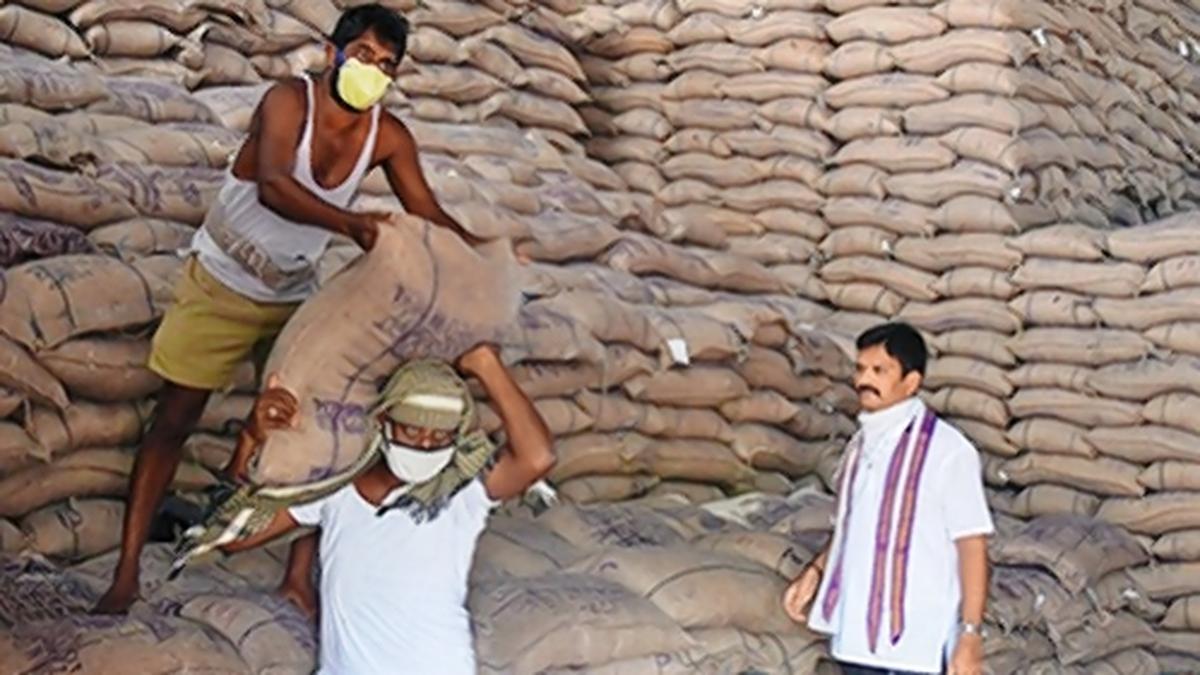
Centre says stoppage of rice and wheat supply to States is aimed at controlling inflation
The Hindu
Under the scheme, the Karnataka Government has promised to provide 10 kg of food grains/rice to every member of a Below Poverty Line (BPL) household.
Amid a political slugfest over the discontinuation of the sale of rice and wheat from the Central pool to State governments, the Government on Thursday said the decision was not “deliberate” and was only aimed at controlling retail inflation in food grains.
The Centre, in a notification sent to the States on June 13, stopped the sale of rice and wheat from the Central pool under the Open Market Sale Scheme (OMSS) to State governments. The move is likely to hit some States, particularly Karnataka, which has promised free rice to its citizens under the ‘Anna Bhagya’ scheme.
Under the scheme, the Karnataka Government has promised to provide 10 kg of food grains/rice to every member of a Below Poverty Line (BPL) household and Antyodaya card holders every month. With the Centre’s decision, it now remains to be seen if the State will be able to implement the scheme from July 1 as decided.
Karnataka Chief Minister Siddaramaiah and other leaders of the Congress party have hit out at the Centre, accusing it of conspiring to “fail” the State government’s poll guarantee by ensuring the State did not receive the required amount of rice to implement the scheme.
Moreover, in the upcoming Assembly polls in Rajasthan, Madhya Pradesh and Chhattisgarh, many populist schemes such as these may be announced.
“Any State, when they announce any scheme, they do not consult us. They did not consult whether we can supply the food grains or not,” Food Corporation of India (FCI) Chairperson and Managing Director Ashok Kumar Meena said, when asked about the Karnataka Chief Minister’s allegations.
“The Government of India doesn’t decide for States,” he said, adding that OMSS operations are carried out in a manner that retail prices are controlled.


Global equity markets plummet as West Asia tensions rise and oil prices surge, triggering significant investor anxiety.

The rupee hits a record low of 93.94 against the dollar amid foreign fund outflows and a crashing equity market.

The Thane police have arrested two co-founders of cryptocurrency exchange platform CoinDCX in connection with an alleged fraud of Rs 71.6 lakh, officials said

Meta Chief Executive Mark Zuckerberg is building a CEO agent to help him do his job, the Wall Street Journal reported

Insurance penetration and density are often misunderstood and do not reveal how many families are insured or whether they would be financially secure if the main earning member were to die. The real issue is not reach but adequacy, as households may have life insurance but not enough cover to replace lost income, leaving them financially vulnerable.

Five top firms lose ₹1 lakh crore in market value, with HDFC Bank experiencing the largest decline of ₹56,124.48 crore.

L&T confirms 95% of its West Asia project sites are safe, while addressing logistics challenges amid ongoing regional conflicts.

Mines Ministry to auction 19 critical mineral blocks on March 23, expanding strategic resources for clean energy and technology sectors.

Mines Ministry to auction 19 critical mineral blocks on March 23, expanding strategic resources for clean energy and technology sectors.

Five top firms lose ₹1 lakh crore in market value, with HDFC Bank experiencing the largest decline of ₹56,124.48 crore.

HDFC Bank terminates three senior officials over client onboarding issues at its DIFC branch amid ethical concerns following chairman's resignation.

Air India CEO warns of potential flight cuts and reduced travel demand due to rising fuel costs amid ongoing Gulf conflict.

Options are widely used by retail traders to speculate on the value of the stock for immediate gains and such behaviour in large scale can distort the market