Canadian research shows extreme wildfire weather increasing around the globe
Global News
New research suggests the risk of extreme wildfire events is increasing across the globe, with some of the largest increases in Western Canada.
New research suggests the risk of extreme wildfire events is increasing across the globe, with some of the largest increases in Western Canada.
The research, conducted by Natural Resources Canada and published Thursday in the journal Nature, says rising temperatures and falling humidity are the biggest drivers of the change.
“Our predictions of the future are showing those same trends,” said lead author Piyush Jain. “We can expect fire weather to get more extreme.
Previous research found that fire seasons are getting longer, with an associated increase in the amount of forest burned. Jain and his colleagues wanted to look at how extreme fire risk has changed along with it.
They used a tool called the fire weather index, a numerical rating that uses temperature and precipitation information to rate the danger of an out-of-control wildfire.
In Alberta, a fire weather index of 19 is considered to be very high. A fire ignited under such conditions is likely to outpace efforts to douse it.
Over the years 1979 to 2020, that index for the interior of British Columbia climbed between 10 and 20 points. Globally, the index has increased by an average of 14 per cent.
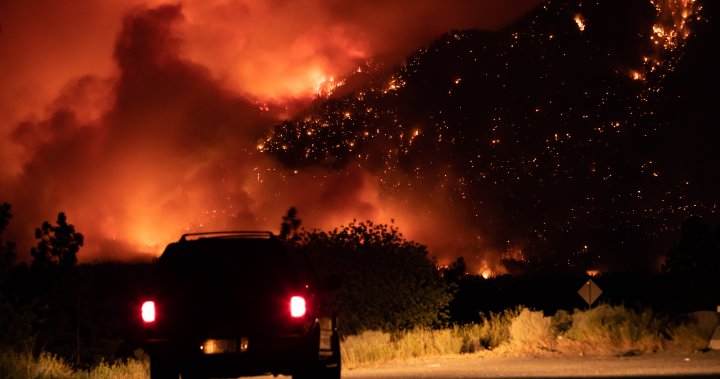
Last summer, a stretch of very hot, dry weather pushed the fire hazard in B.C. into uncharted territory — what fire officials called “extremely extreme.” Shortly after, the village of Lytton was wiped out when a fire ignited.


It was both a big win and hopefully not too big of a loss for the Edmonton Oilers on Sunday.

Some experts say that a cyberwar through 'proxies' may be the next stage of the Iran war, with civilian infrastructure also coming under threat.

The study is being billed by the university as "the first to study a wide range of factors which link ADHD symptoms and mental ill health symptoms over time."

The group says MAGA Energy hasn't paid its lease for three years, and therefore the company is no longer allowed on their land in Edmonton.

The analysis by the Canadian Climate Institute says oilsands producers will pay an average of about 50 cents per oil barrel, if the minimum carbon price rises to $130 per tonne.

Between November 29 and February 27, authorities recorded 406 outbreaks of bird flu in domestic birds in 32 European countries and 2,108 outbreaks in wild birds, they said.

Dr. Michael Domeier, director of the Marine Conservation Science Institute, told Global News that they tag the adult females as they are the most interesting.

Regina’s recycling contamination is currently triple the limit and city is urging resident to change sorting habits now to avoid citywide fines and higher resident fees.

The study found that higher ultra-processed food intake at age three years was associated with adverse behavioural and emotional symptoms at age five years.

Edmonton's single-use waste rules were controversial and unpopular when introduced in 2023 — but new data shows the changes are having the intended effect of reducing garbage.

Carney's speech to Australia's parliament highlighted a soon-to-launch Canadian low earth orbit satellite network that experts say could soon compete with Elon Musk's Starlink.

The Pentagon said in a statement Thursday that it has “officially informed Anthropic leadership the company and its products are deemed a supply chain risk, effective immediately.”

Opioid overdose deaths in Canada are falling, but there's growing concerns on a certain veterinary tranquilizer being cut into fentanyl and other opioids.