Budget may cut reliance on foreign telescopes; trips on space spending Premium
The Hindu
India's budget boosts space research funding, aiming to reduce reliance on foreign telescopes and enhance domestic capabilities.
The budget has brought some cheer to India’s research community, particularly for those involved in astronomy and space research, as it has earmarked ₹13,416.20 crore for the Department of Space for 2026-27.
A large chunk of the allocation has been set aside for deep-space exploration and astrophysics, including to build two advanced telescope facilities: the 30-m National Large Optical-Infrared Telescope and the National Large Solar Telescope near Pangong Lake in Ladakh.
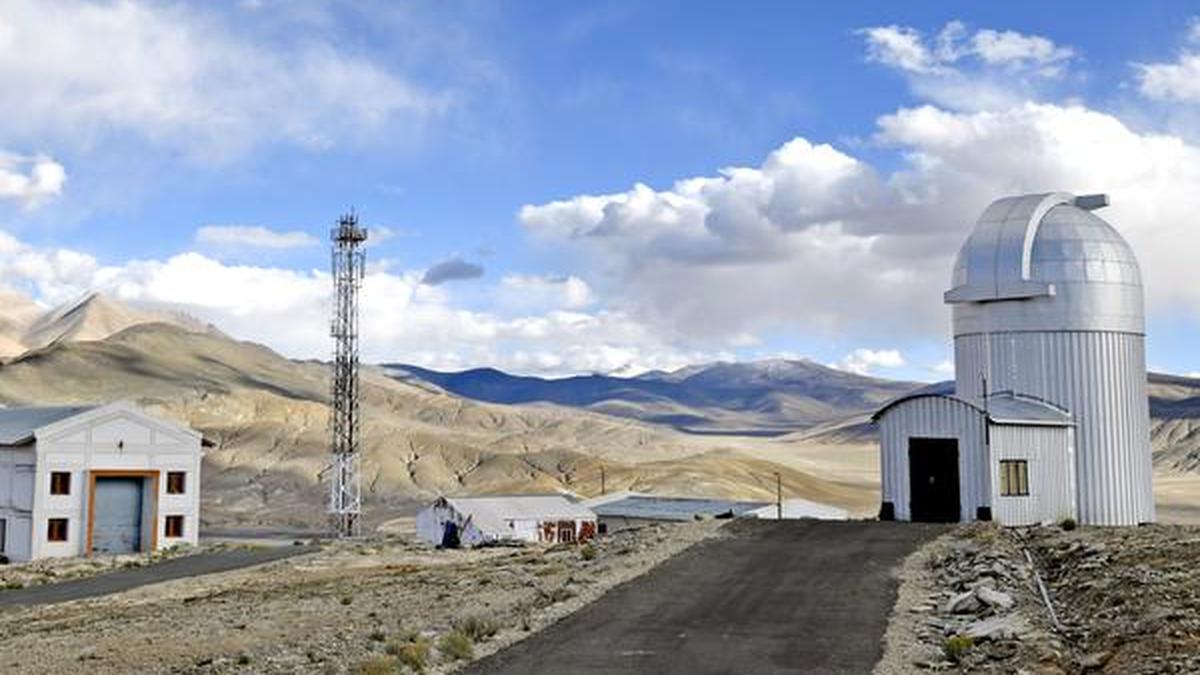
Also in focus is the COSMOS-2 planetarium in Amaravati, Andhra Pradesh, to be completed soon, and improving the control systems of the Himalayan Chandra Telescope in Hanle, Ladakh. Currently, only the U.S., China, Japan and the European Union prioritise astronomy research to a high degree and constantly invest large sums to upgrade their terrestrial and space telescopes. So, astronomers have said, the telescope allocations will improve space research capability and science outreach in India.
However, experts also raised concerns about a significant drop in expenditure, with the actual expense falling short of budgetary estimates. This underutilisation has in the past led to bottlenecks in the planning and executing major projects.
“There were several proposed space missions which were finally not supported,” Bhaswati Mookerjea, professor and chairperson of the Department of Astronomy and Astrophysics at the Tata Institute of Fundamental Research, Mumbai, said.
Dr. Mookerjea added that although this budget “is an extremely positive step for astronomy in India,” the importance of following it through couldn’t be overstated: “The execution of big projects in India would still require some streamlining of resources with checks and balances.”


NASA revamps its Artemis lunar program to address delays and ensure a Moon landing by 2028.