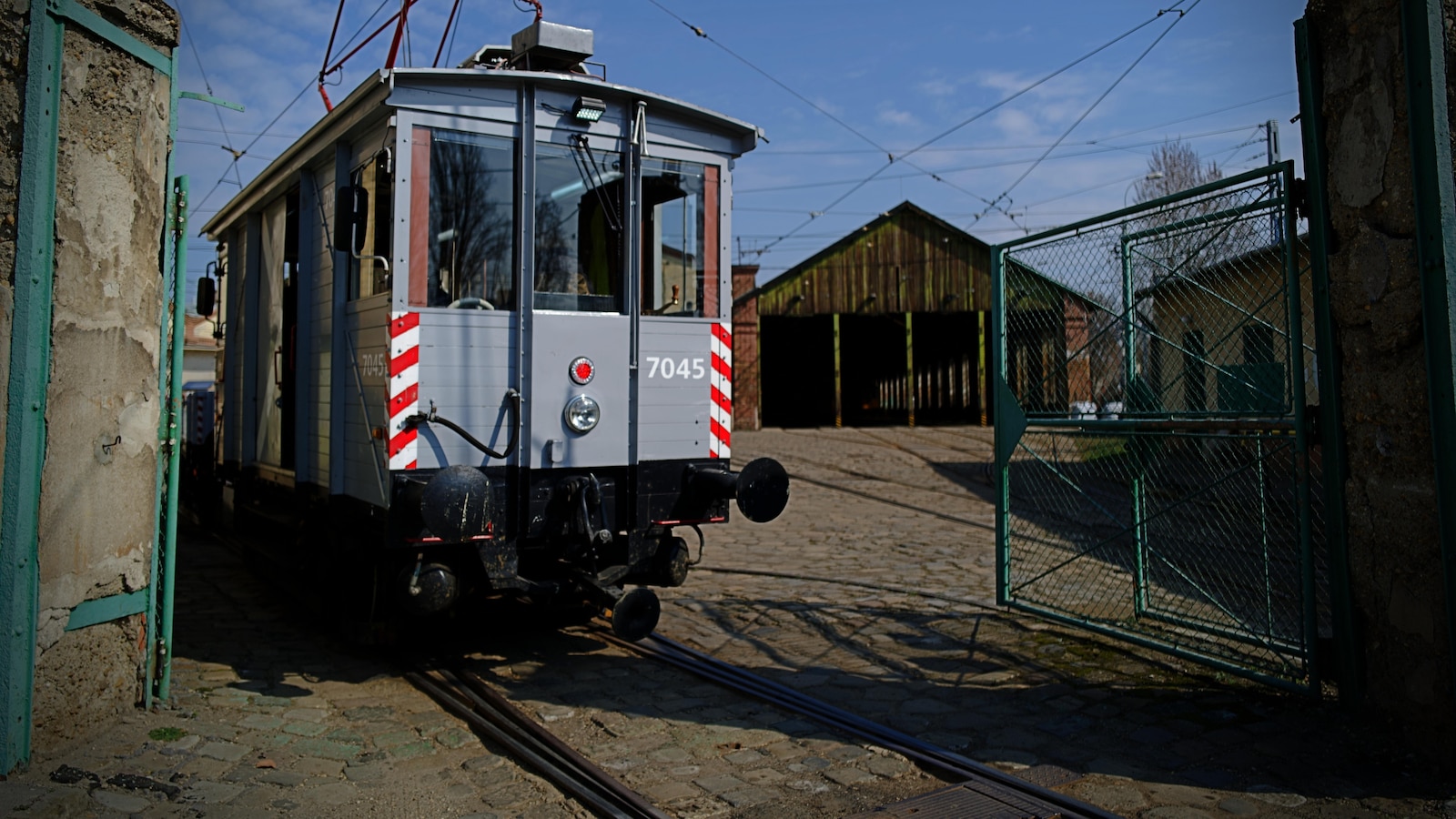
Budapest's vintage freight trams celebrate 100 years in service
ABC News
Budapest is keeping century-old freight trams running to do the work that modern passenger trams cannot, plowing snow and hauling broken-down vehicles
BUDAPEST, Hungary -- With the toot of a horn, the ring of a bell and the hiss of air brakes, an unusual rail vehicle pulls out of a depot in Budapest to serve the Hungarian capital's public transit system, a job it has done for a century.
The so-called freight trams, known as mukis, run on electricity provided by overhead wires and travel on Budapest's vast tram rail network, one of the busiest in the world. But unlike the hundreds of iconic yellow trams in the passenger fleet, they don’t carry commuters.
Acquired by the city in 1926, the wood-sided trams were initially products of necessity: They brought goods and raw materials to and from Budapest's factories after much of the local freight infrastructure had been destroyed during World War I.
"Engineers at the time designed an electric drive system mainly using parts from vehicles damaged in the war, as well as parts from vehicles that had already been designated for scrapping,” said Ádám Zadravecz, the head of tram vehicle development and technology at Budapest's public transit company BKV.
“Their primary purpose was freight transport, but after World War II, these vehicles were also used for removal of the war ruins," he said.


Haitian authorities say they have arrested legislator Arnel Belizaire

Former French President Nicolas Sarkozy is back in court to appeal his conviction over alleged illegal campaign financing by Libya in 2007

A crowded welfare payment line in eastern Pakistan has turned deadly after a shop roof collapsed, killing at least eight women

An artillery strike has hit a village in northern Yemen and killed at least 10 people, including six children

A new constitution that strengthens President Kassym-Jomart Tokayev’s grip on power in Kazakhstan, Central Asia’s largest country, has won overwhelming approval in a referendum

Myanmar has opened its first parliamentary session in more than five years following an election that did not include major opposition parties, ensuring that the ruling military is set to retain a firm grasp on power

Mexico City set a world record on Sunday with the largest soccer class ever, with 9,500 participants in the capital’s Zocalo square as the country prepares to host the opening match of the World Cup in June

Cuban activist Yoani Sánchez says a purported policeman dressed in civilian clothes is stopping her from leaving her home in Havana

Former Brazilian President Jair Bolsonaro’s kidney function has improved but he will remain in an intensive care unit because of pneumonia

Pope Leo XIV has urged a ceasefire in the Middle East and called on leaders in the Iran war to reopen talks

Ukrainian President Volodymyr Zelenskyy says he is ready for the next trilateral peace talks with the U.S. and Russia, but the meeting depends on Washington and Moscow

Yemen’s Iran-backed Houthi rebels are staying on the sidelines as the Iran war expands

Taiwan is seeing a surge of Chinese military planes near the island after a sharp drop in flights over the past two weeks had sparked discussions among observers