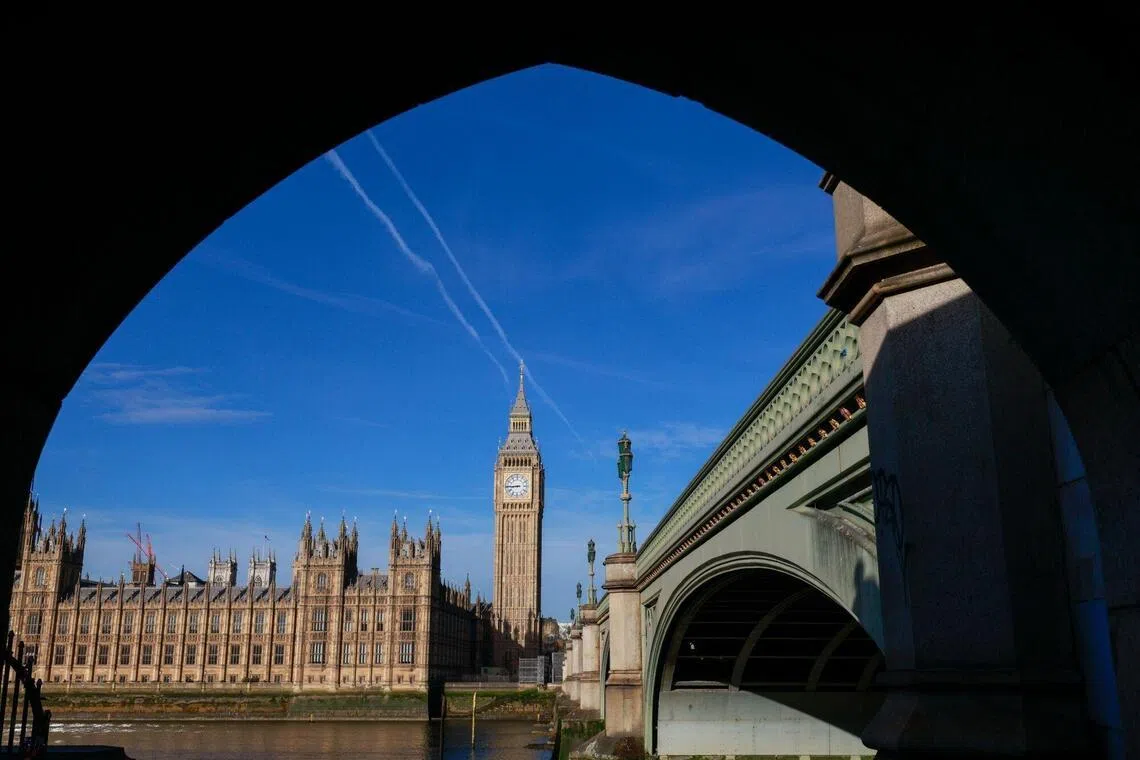
Britain votes to oust hereditary peers from its upper house
The Straits Times
The government called the measure “one of the biggest reforms to Parliament in a generation”. Read more at straitstimes.com.
LONDON - British hereditary peers will no longer be able to sit and vote in the House of Lords after a Bill to remove them cleared Parliament on March 10.
Britain’s upper house and Lesotho’s Senate are the only legislative bodies in the world that still contain a hereditary element, the government said.
But once this Bill comes into effect at the end of this session of Parliament later this year, all 92 hereditary peers who can still vote in the Lords, which include a range of dukes, viscounts, and earls, will lose their membership of the upper house. They can only get it back if they are made life peers.
The government called the measure “one of the biggest reforms to Parliament in a generation” and said it completes reform of the Lords which began under Tony Blair’s Labour government in the late 1990s.
“The Lords plays a vital role within our bicameral Parliament, but nobody should sit in the House by virtue of an inherited title,” said leader of the House of Lords, Baroness Smith.
“Getting this bill through is a major first step towards reform of the Lords, with further changes to follow - including on members’ retirement and participation requirements.”


About 12 per cent of active registered express buses have yet to complete the verification process. Read more at straitstimes.com.

It will also deliberate on the implementation of a five-year national policy plan. Read more at straitstimes.com.

Financial commitments, such as repayment of credit cards, eat into the bulk of their monthly budget. Read more at straitstimes.com.

The conflict exposes the city to many risks, but some are seeing opportunities too. Read more at straitstimes.com.

The 'unprecedented' freeze on trillions of dollars in financial assistance was instituted in early 2025. Read more at straitstimes.com.

The EU recently struck trade accords with India and a bloc of South American countries. Read more at straitstimes.com.

Mr Dan Caldwell was a former top adviser to US Defense Secretary Pete Hegseth. Read more at straitstimes.com.

They allegedly shared images and videos of school shootings in other countries with one another. Read more at straitstimes.com.

CHISINAU, March 16 - A Russian attack on a hydroelectric plant in southern Ukraine triggered an oil spill and polluted water systems in neighbouring Moldova, with supplies cut completely in the country's second-largest city, officials said on Monday. Read more at straitstimes.com.
MOSCOW, March 16 - Russian air defence units downed at least 67 Ukrainian drones headed for Moscow on Monday, according to data published by the city's mayor, Sergei Sobyanin. Read more at straitstimes.com.

MOSCOW, March 16 - Russia has taken control of 12 settlements in Ukraine in the first two weeks of March as part of advances along the front line in eastern and southern Ukraine, Russian state-run news agencies quoted top general Valery Gerasimov as saying on Monday. Read more at straitstimes.com.

The eastern half of the US, including New York, Chicago and Atlanta, has been hit with widespread air travel delays and cancellations. Read more at straitstimes.com.

It could lead to a protracted conflict with devastating humanitarian consequences, the leaders said in a joint statement. Read more at straitstimes.com.