BRICS-GCC ties take center stage as global order shifts
The Peninsula
Doha, Qatar: A high level panel at the Doha Forum explored how shifting global alliances between BRICS and the Gulf Cooperation Council (GCC) are resh...
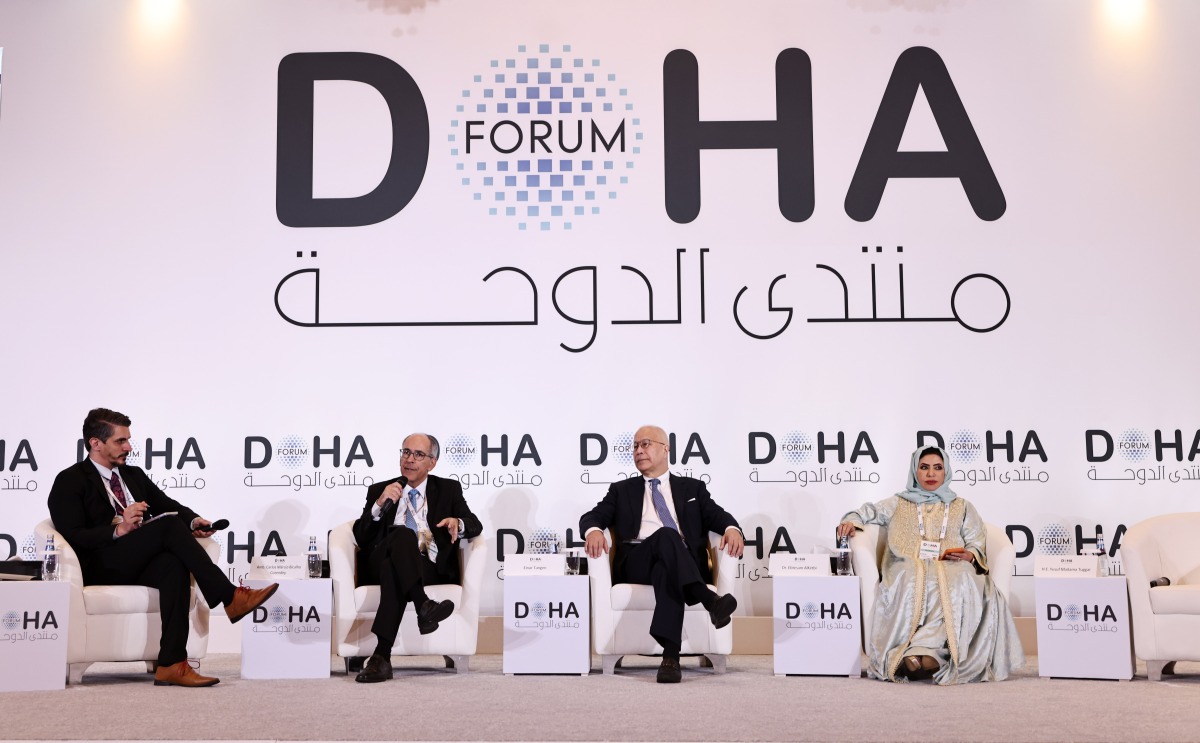
Doha, Qatar: A high-level panel at the Doha Forum explored how shifting global alliances between BRICS and the Gulf Cooperation Council (GCC) are reshaping the geopolitical and economic landscape, signaling what several speakers described as a transition toward a more multipolar world order.
The session, entitled ‘BRICS, GCC, and Evolving Relations for a Changing Global Order,’ convened senior policymakers and geopolitical analysts, including Dr. Ebtesam AlKetbi, President of the Emirates Policy Center, Brazil’s Secretary of Multilateral Political Affairs, H E Carlos Márcio Bicalho Cozendey, Senior Fellow at the Center for International Government Innovation, Einar Tangen, and moderator Dr. Gustavo de Carvalho from the South African Institute of International Affairs.
Speakers highlighted the recent expansion of BRICS, which now includes the UAE, Saudi Arabia, and Egypt, as a pivotal moment in global diplomacy. With additional candidates such as Bahrain, Chile, and Colombia under consideration, the bloc is now emerging as a major political and economic counterweight to traditional Western-led institutions.
Officials discussed ongoing BRICS deliberations over financial alternatives, including talk of a shared currency as a mechanism to reduce dependence on the US dollar in global trade. These conversations tie directly into a broader trend of South-South cooperation and financial diversification.
Brazil’s representative, H E Cozendey, emphasised that the group’s evolution is not about replacing existing systems but complementing them, stating the changing structure of BRICS reflects a broader push for inclusivity in global governance. “BRICS is not a political coalition; it’s a cooperation space. Its members are not required to share the same opinions or positions. Within that space, there are nearly 300 working groups, some already producing concrete results, others still exploratory,” he said.


Hong Kong: Hong Kong carrier Cathay Pacific said on Tuesday it has extended its flight suspensions to and from Dubai and Riyadh by a month until May 3...

Hanoi, Vietnam: Vietnam s national air carrier will suspend nearly two dozen domestic flights a week starting next month because of limited fuel suppl...

Doha: Team Qatar delivered an outstanding performance at the opening round of the 2026 European Le Mans Series, securing a remarkable victory in the 9...

Doha, Qatar: Al Rayyan and Al Arabi opened their Men s Basketball League semi final playoff campaigns with convincing wins yesterday as the 2025 2026...

Doha, Qatar: Qatar s fintech sector is entering a new phase where real financial infrastructure is being deployed, moving beyond pilot projects and po...

Doha, Qatar: As the Qatar Meteorology Department forecasts rain accompanied by thunder and wind in the country, various government bodies have issued...

Doha, Qatar: As the Qatar Meteorology Department forecasts rain accompanied by thunder and wind in the country, various government bodies have issued...

Doha, Qatar: The Qatar Meteorology Department shared the total amount of rain recorded across the country on March 23, 2026. It reported that Al Wa...

Doha, Qatar: The Qatar Meteorology Department shared the total amount of rain recorded across the country on March 23, 2026. It reported that Al Wa...

Doha: As offices nationwide returned to regular working hours today, industry experts and employees have commended the authorities for the seamless an...

Doha: As offices nationwide returned to regular working hours today, industry experts and employees have commended the authorities for the seamless an...

Doha, Qatar: The Ministry of Commerce and Industry (MOCI) has intensified its market monitoring and inspection efforts in response to ongoing regional...

Doha, Qatar: The Ministry of Commerce and Industry (MOCI) has intensified its market monitoring and inspection efforts in response to ongoing regional...