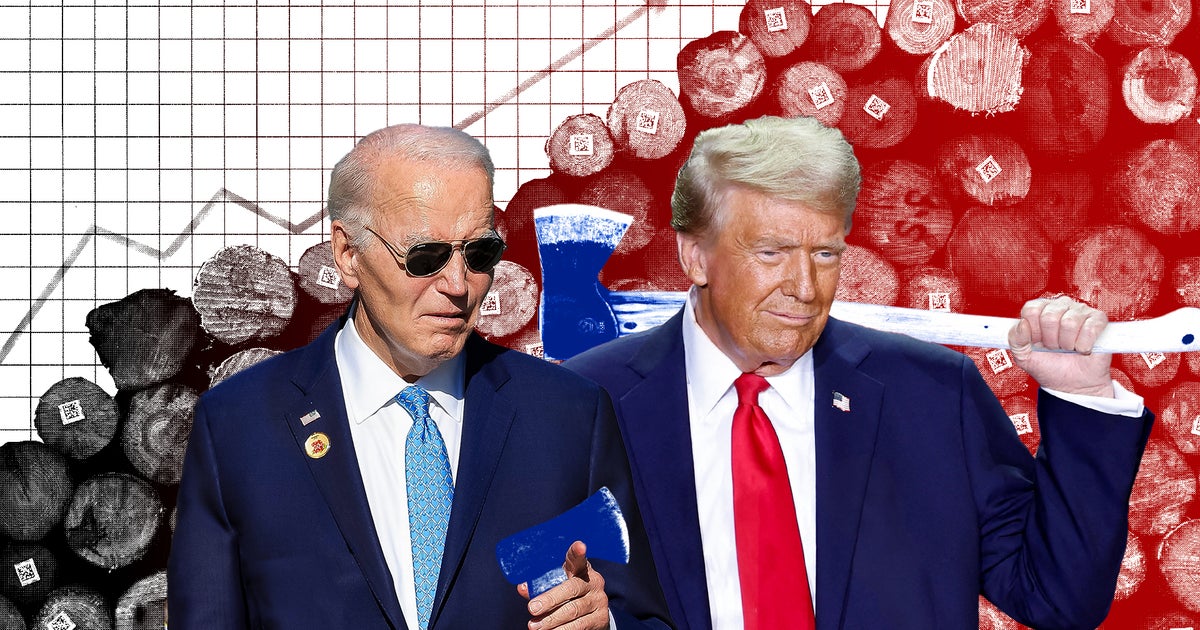
Biden Had A Chance To Protect Ancient Trees — And Failed
HuffPost
The president set out to leave a legacy on nation's most carbon-rich forests. Experts say he dropped the ball.
Sporting aviator sunglasses and standing in front of a lectern last month in Manaus, Brazil, in the heart of the Amazon, outgoing President Joe Biden spoke of the importance of safeguarding the world’s carbon-rich forests — a message he delivered numerous times throughout his tenure.
“The most powerful solution we have to fight climate change is all around us: the world’s forests,” Biden said, becoming the first sitting president to visit the world’s largest rainforest. “Trees breathe carbon dioxide out of the atmosphere. And yet each minute, the world is chopping down the equivalent of 10 soccer fields’ worth of forests.”
Biden went on to tout the U.S. as a “leader” in the global fight against deforestation and planet-warming greenhouse gas emissions, highlighting among other things his administration’s goal of conserving 30% of lands and waters by 2030 and his signature climate law, the Inflation Reduction Act, which included a historic $369 billion in clean energy and climate investments. And he stressed that he was leaving the administration of his successor, Republican President-elect Donald Trump, with “a strong foundation to build on, if they choose to do so.”
Over the last four years, Biden helped elevate national attention on the myriad ecological benefits of old-growth forests, even signing an executive order in 2022 directing federal agencies to conserve and restore such ecosystems. But he stands to exit office having failed to get nationwide protections for America’s most ancient trees across the finish line.
Old-growth forests, sometimes referred to as primary forests, are typically defined as those that are at least 150 years old and largely undisturbed by human activity. “Mature” forests are decades old but haven’t reached the old-growth stage. Together, these ecosystems sequester massive amounts of carbon in trees and soil.


The ’90s hair accessory is having a resurgence thanks to “Love Story: John F. Kennedy Jr. & Carolyn Bessette.” But doctors have a warning.

It’s easy to think you know everything about the person you’re with.

Here’s what eco-dietitians want everyone to take away from the Vital Farms egg controversy, and what labels to look for at the store.

There are scores of toothpastes available on the shelves, but dentists say there are right and wrong options.

Yes, there's a high likelihood that your parents and grandparents are still having sex.

Doctors share their thoughts on what’s normal when it comes to gas and what needs to be checked out.

The United States is getting slammed by a stretch of weather extremes.

There’s a useful chart that can help you determine if your stool falls into a healthy or not-so-healthy category.

If you and your friends still keep tabs on that girl from high school, this is for you.

These lazy (but legit) meals are homemade as hell, and much more satisfying than takeout.

You'll need a portable phone charger, compact backpack and some first aid before you pack up and go on a trip outside the country.

With TSA officers working without pay and spring break travel ramping up, experts offer tips to reduce stress and avoid missing flights.

This stowaway truly was sly as a fox.