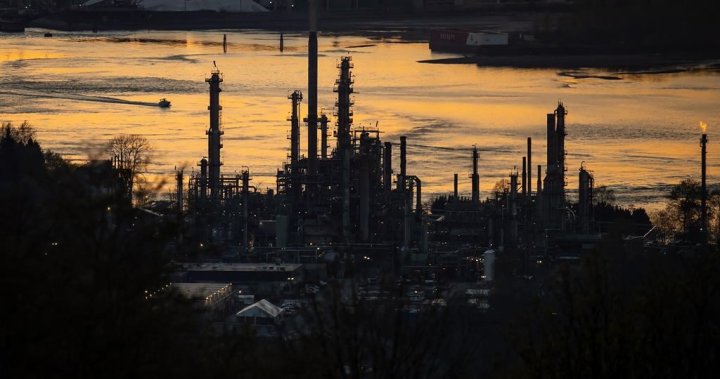
B.C. odour incidents spark questions around corporate ethics and communication
Global News
Vancouver resident Robert Ford was heading to a yoga class Sunday morning when he smelled an odour he likened to "semi-burnt fuel."
Vancouver resident Robert Ford was heading to a yoga class Sunday morning when he smelled an odour he likened to “semi-burnt fuel.”
As a member of council at his Kitsilano apartment building, he said he decided to check the boiler room, but it smelled fine.
“I was expecting something in there, so that was strange. I scratched my head and I went to the front door, which is right across from the beach, and it was 10 times more powerful outside,” he said.
He immediately began searching online for an explanation but didn’t find any answers until almost four hours later.
“I’m just kind of perplexed at how we can have such a nasty event with no public information hardly,” he said.
It was one of two acrid odours that spread over parts of Metro Vancouver in less than a week, raising questions about corporate responsibility to inform the public when such events cause widespread concern and confusion but fall short of health and safety breaches.
The smell Ford referred to was revealed to be “an unplanned issue” with a Parkland fuel refinery processing unit in neighbouring Burnaby. The heavy stench, which Ford compared to jet fuel, blanketed parts of Metro Vancouver and caused more than 100 complaints from local residents.
It came just days after a gas leak from a FortisBC natural gas plant in nearby Delta, B.C., prompted criticisms from Mayor George Harvie and numerous residents that the utility didn’t notify the public for more than four hours.


Some experts say that a cyberwar through 'proxies' may be the next stage of the Iran war, with civilian infrastructure also coming under threat.

The study is being billed by the university as "the first to study a wide range of factors which link ADHD symptoms and mental ill health symptoms over time."

The group says MAGA Energy hasn't paid its lease for three years, and therefore the company is no longer allowed on their land in Edmonton.

The analysis by the Canadian Climate Institute says oilsands producers will pay an average of about 50 cents per oil barrel, if the minimum carbon price rises to $130 per tonne.

Between November 29 and February 27, authorities recorded 406 outbreaks of bird flu in domestic birds in 32 European countries and 2,108 outbreaks in wild birds, they said.

Dr. Michael Domeier, director of the Marine Conservation Science Institute, told Global News that they tag the adult females as they are the most interesting.

Regina’s recycling contamination is currently triple the limit and city is urging resident to change sorting habits now to avoid citywide fines and higher resident fees.

The study found that higher ultra-processed food intake at age three years was associated with adverse behavioural and emotional symptoms at age five years.

Edmonton's single-use waste rules were controversial and unpopular when introduced in 2023 — but new data shows the changes are having the intended effect of reducing garbage.

Carney's speech to Australia's parliament highlighted a soon-to-launch Canadian low earth orbit satellite network that experts say could soon compete with Elon Musk's Starlink.

The Pentagon said in a statement Thursday that it has “officially informed Anthropic leadership the company and its products are deemed a supply chain risk, effective immediately.”

Opioid overdose deaths in Canada are falling, but there's growing concerns on a certain veterinary tranquilizer being cut into fentanyl and other opioids.

The product is being recalled in Alberta, British Columbia, Manitoba, Ontario, Quebec and Saskatchewan due to 'undeclared almonds' being found.