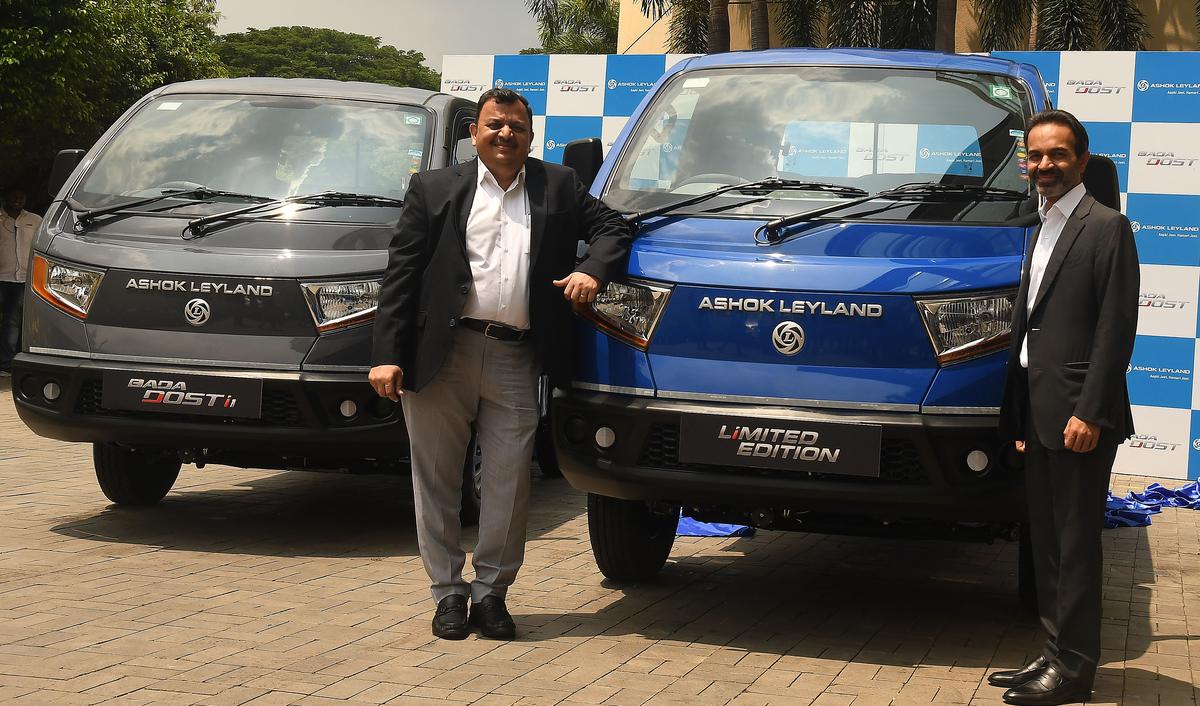
Ashok Leyland plans to unveil Dost with LHD option in West Asia, African markets
The Hindu
Chennai
Hinduja group flagship company Ashok Leyland is currently engaged in testing of its highly popular light commercial vehicle ‘Dost’ with left hand drive (LHD) option as it plans to serve the Middle East and African markets, a top company official said.
The company currently retails a range of light commercial vehicles under ‘Dost’ brand with right-hand drive option both in domestic and overseas.
In October, sales from LCVs business grew 18% to 5,671 units compared with 4,789 units sold in October 2021.
“That left-hand drive (DOST) is not from the electric version. It is from current diesel [version] which we are looking to sell in Middle East and African markets,” Ashok Leyland Executive Chairman Dheeraj Hinduja said.
Elaborating, he said the international operation team was currently engaged in testing the products to serve the overseas markets which have left-hand drive options.
To a query on when the product was likely to be launched, he said, “I do not have a date at this point of time.”
“All the effort on the whole ‘Bada Dost’ and AVTR range is to ensure that all the new products within the Ashok Leyland line up are available in LHD version and may go into many new markets where we are not available before,” he told PTI recently.


Crude oil prices drop over 2% as Netanyahu reassures investors amid ongoing Iran conflict and rising energy market concerns.

PPAC designated as nodal agency to enhance data collection on domestic fuel and energy stocks for improved mandate enforcement.

Indian markets plunged over 3% amid soaring crude prices, rupee depreciation, and escalating West Asia geopolitical tensions in March 2026.

Government launches ₹497 crore RELIEF scheme providing credit insurance to exporters affected by the West Asia crisis, focusing on MSMEs.

Crude oil futures rise amid Middle East attacks, pushing Brent above $116 on fears of tightening global supply.

West Asia conflict delays India’s FTA talks with GCC and Israel, while UK and EU agreements proceed as planned in 2024.

Russian Urals oil vessels will reach India on March 21 amid stable fuel prices and diversified LPG imports.

Warner Bros. dominated the Academy Awards, but Paramount’s looming acquisition of the studio signals the biggest restructuring of the industry in decades and a battle over the future of Hollywood itself

HDFC Bank board calls Atanu Chakraborty’s resignation baffling, affirms robust corporate governance and strong market confidence.

RNFI and Jio Payments Bank launch cardless UPI QR cash withdrawals for instant access across urban, semi-urban, and rural India.

RBI approves HDFC Bank's chairman transition plan, affirming the bank's strong financials and competent management.

Markets fall 2% as Israel attacks Iran’s South Pars gas field, pushing Brent crude above $112 and rupee below ₹93.

HDFC Bank shares drop over 4% following chairman’s ethical resignation, raising insider trading and management concerns.