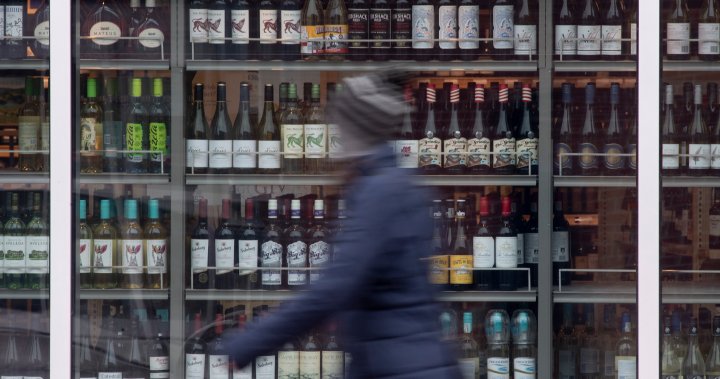
As Dry Feb begins, is there a ‘growing desire’ for alcohol abstention?
Global News
With campaigns such as Dry Feb and Dry January, and the growing popularity of non-alcoholic drinks, the stigma of not drinking alcohol may be starting to shift.
Can you abstain from alcohol for a month?
That is the core question of the Canadian Cancer Society’s Dry Feb, a fundraising campaign challenging Canadians to hold off on consuming their favourite alcoholic beverages for a month, while raising funds for cancer research.
With campaigns such as Dry Feb and Dry January, and the growing popularity of non-alcoholic drinks, the stigma of not drinking alcohol may be starting to shift, said Ciana Van Dusen, advocacy manager of prevention and early detection with the Canadian Cancer Society.
“The interesting thing about alcohol is it’s actually one substance where we almost have reverse stigma, a stigma for not consuming as opposed to stigma for consuming,” she told Global News.
“The ability to say no to drinking alcohol is getting a lot more normal or acceptable … and you get less questioning.”
A 2021 Statistics Canada study showed drinking habits among Canadians were changing.
At the time, the agency reported almost 5.1 million people, or 15.6 per cent of Canadians aged 12 years and older, engaged in heavy drinking – defined as having five or more drinks for men and four or more for women, on one occasion, at least once a month in the previous year.
Nevertheless, it was the lowest level of heavy drinking since Statistics Canada first asked in 2015. Canadians aged 18 to 34 years (1.7 million people) were most likely to report being heavy drinkers in 2021, down 10.1 per cent from a year earlier, and 31.5 per cent lower compared with 2015.


Some experts say that a cyberwar through 'proxies' may be the next stage of the Iran war, with civilian infrastructure also coming under threat.

The study is being billed by the university as "the first to study a wide range of factors which link ADHD symptoms and mental ill health symptoms over time."

The group says MAGA Energy hasn't paid its lease for three years, and therefore the company is no longer allowed on their land in Edmonton.

The analysis by the Canadian Climate Institute says oilsands producers will pay an average of about 50 cents per oil barrel, if the minimum carbon price rises to $130 per tonne.

Between November 29 and February 27, authorities recorded 406 outbreaks of bird flu in domestic birds in 32 European countries and 2,108 outbreaks in wild birds, they said.

Dr. Michael Domeier, director of the Marine Conservation Science Institute, told Global News that they tag the adult females as they are the most interesting.

Regina’s recycling contamination is currently triple the limit and city is urging resident to change sorting habits now to avoid citywide fines and higher resident fees.

The study found that higher ultra-processed food intake at age three years was associated with adverse behavioural and emotional symptoms at age five years.

Edmonton's single-use waste rules were controversial and unpopular when introduced in 2023 — but new data shows the changes are having the intended effect of reducing garbage.

Carney's speech to Australia's parliament highlighted a soon-to-launch Canadian low earth orbit satellite network that experts say could soon compete with Elon Musk's Starlink.

The Pentagon said in a statement Thursday that it has “officially informed Anthropic leadership the company and its products are deemed a supply chain risk, effective immediately.”

Opioid overdose deaths in Canada are falling, but there's growing concerns on a certain veterinary tranquilizer being cut into fentanyl and other opioids.

The product is being recalled in Alberta, British Columbia, Manitoba, Ontario, Quebec and Saskatchewan due to 'undeclared almonds' being found.