Arab International Academy and the Cultures of Thinking
The Peninsula
As families at this time of year are focused on preparing school supplies and other items considered essential for the return to school, the educators...
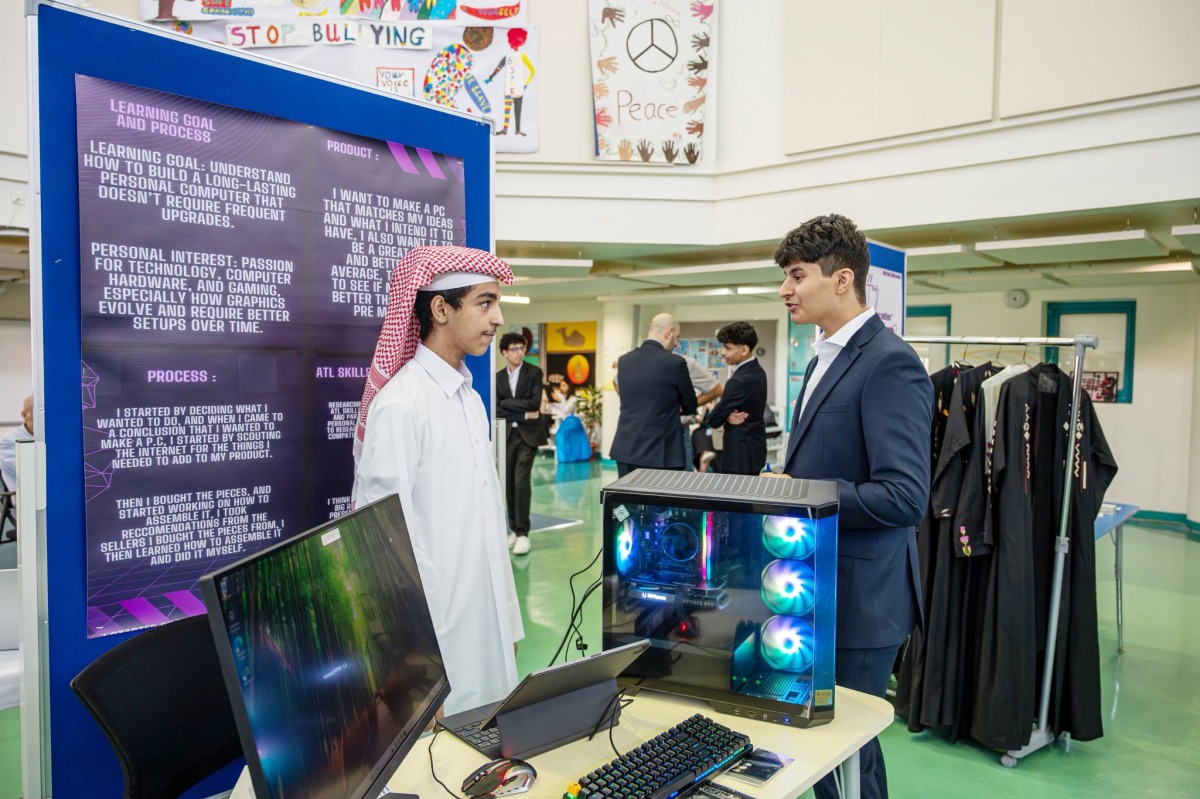
As families at this time of year are focused on preparing school supplies and other items considered essential for the return to school, the educators at the Arab International Academy (AIA) are immersed in designing a transformative learning environment where thinking becomes both the goal and the method of learning. An environment that prioritizes critical thinking over rote memorization and transforms the student from a passive recipient of information into a researcher, critic, and creator. We believe that each child from their earliest years is a potential great thinker, gradually developing thinking skills throughout their learning journey until they graduate as mindful, engaged individuals who face life’s challenges independently and responsibly.
It has become clear that in a world dominated by artificial intelligence, memorizing information is no longer the measure of excellence in education, as machines will excel at that. The true value lies in equipping students with the cognitive and emotional competencies that enable them to develop inquiry, analysis, and synthesis skills that will empower them to consciously make responsible decisions. Machines may provide answers, but they do not empathize, uphold principles, or advocate for causes with conviction… that is a uniquely human ability.
That is why the Arab International Academy has adopted the Cultures of Thinking approach, based on research by Ron Ritchhart, an educational approach that makes thinking a daily practice and a learning goal that supersedes mere knowledge or delivery of content. At AIA, the focus is on equipping students with the cognitive and emotional skills needed to question deeply, think critically, connect ideas meaningfully, and make responsible decisions. This approach is centered around the Eight Cultural Forces present in every collective learning experience and also shape life in the classroom: high expectations motivate students to do their best, language guides them to aim for precision and clarity of meaning, time given generously enables reflection and dialogue, modeling ensures the teacher is a role model of the practice itself. Also, providing opportunities, establishing routines, and building structures allows for an effective space for expression and discussion, while positive relationships and interactions create a safe environment supported by authentic curricula that encourage engagement and creativity.
These cultures are reflected in classroom activities at AIA through the use of thinking routines that encourage students to observe closely, master the art of asking questions, make convincing arguments, and build connections between ideas. These are pedagogical practices that give learners voice and agency and turn knowledge into an animated dialogue instead of static instruction. This approach also strengthens collaborative learning, encouraging students to listen to each other, exchange perspectives, and develop active listening and constructive communication skills.


Doha: QatarEnergy confirmed that Ras Laffan Industrial City this evening has been the subject of missile attacks. In a statement. it said that the...

Doha: Qatar s Ministry of Awqaf (Endowments) and Islamic Affairs issued on Wednesday a set of guidelines for worshippers attending Eid Al Fitr prayers...

Doha: Qatar s Ministry of Awqaf (Endowments) and Islamic Affairs issued on Wednesday a set of guidelines for worshippers attending Eid Al Fitr prayers...

Riyadh: The Saudi Ministry of Defense announced Wednesday the interception and destruction of two ballistic missiles. Major General Turki Al Maliki...

Doha, Qatar: The Amir HH Sheikh Tamim bin Hamad Al Thani received a telephone call today from the President of the Democratic Socialist Republic of Sr...

Doha, Qatar: The Amir HH Sheikh Tamim bin Hamad Al Thani received a telephone call today from the President of the Democratic Socialist Republic of Sr...

Doha, Qatar: The State of Qatar expressed its welcome for the announcement of the temporary pause between Afghanistan and the Islamic Republic of Paki...

Doha, Qatar: The State of Qatar expressed its welcome for the announcement of the temporary pause between Afghanistan and the Islamic Republic of Paki...

Doha: The Qatar Stock Exchange (QSE) index closed lower on Wednesday, shedding 101.13 points, or 0.97%, to settle at 10,292.16 points. During the s...

Doha, Qatar: The Crescent Sighting Committee at the Ministry of Endowments (Awqaf) and Islamic Affairs has announced that the crescent moon of Shawwal...

Doha, Qatar: The Crescent Sighting Committee at the Ministry of Endowments (Awqaf) and Islamic Affairs has announced that the crescent moon of Shawwal...

Mbabane: The Minister of Foreign Affairs and International Cooperation of the Kingdom ofآ Eswatini HE Pholile Dlamini Shakantu met with the Acting Cha...

Mbabane: The Minister of Foreign Affairs and International Cooperation of the Kingdom ofآ Eswatini HE Pholile Dlamini Shakantu met with the Acting Cha...