An Amazon tribe faced extinction. An unexpected birth now brings hope
ABC News
Three women lived for years as the last members of the Akuntsu people, who were decimated by a government-backed push to develop parts of the Amazon rainforest in the 1970s and ‘80s
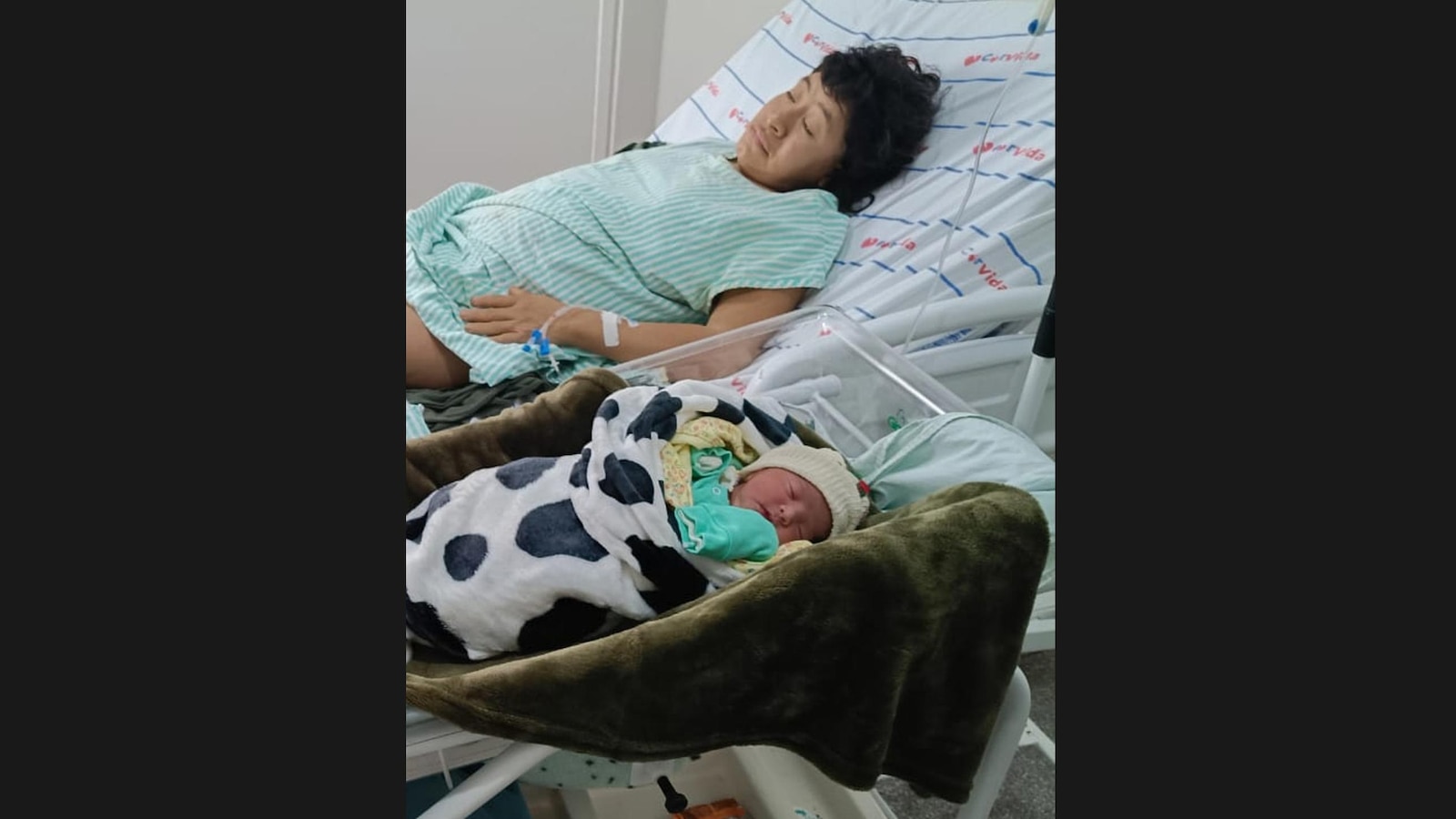
SAO PAULO -- Pugapia and her daughters Aiga and Babawru lived for years as the only surviving members of the Akuntsu, an Indigenous people decimated by a government-backed push to develop parts of the Amazon rainforest. As they advanced in age without a child to carry on the line, many expected the Akuntsu to vanish when the women died.
That changed in December, when Babawru — the youngest of the three, in her 40s — gave birth to a boy. Akyp's arrival brought hope not just for the Akuntsu line but also for efforts to protect the equally fragile rainforest.
“This child is not only a symbol of the resistance of the Akuntsu people, but also a source of hope for Indigenous peoples,” said Joenia Wapichana, president of Brazil's Indigenous protection agency, known as Funai. “He represents how recognition, protection and the management of this land are extremely necessary.”
Protecting Indigenous territories is widely seen as one of the most effective ways to curb deforestation in the Amazon, the world's largest rainforest and a key regulator of global climate. Researchers warn that continued forest loss could accelerate global warming. A 2022 analysis by MapBiomas, a network of nongovernmental groups tracking land use, found Indigenous territories in Brazil had lost just 1% of native vegetation over three decades, compared with 20% on private land nationwide.
In Rondonia state, where the Akuntsu dwell, about 40% of native forest has been cleared, and what remains untouched is largely within conservation and Indigenous areas. The Akuntsu's land stands out in satellite images as an island of forest surrounded by cattle pasture as well as soy and corn fields.


Mexico City set a world record on Sunday with the largest soccer class ever, with 9,500 participants in the capital’s Zocalo square as the country prepares to host the opening match of the World Cup in June

Cuban activist Yoani Sánchez says a purported policeman dressed in civilian clothes is stopping her from leaving her home in Havana

Former Brazilian President Jair Bolsonaro’s kidney function has improved but he will remain in an intensive care unit because of pneumonia

Pope Leo XIV has urged a ceasefire in the Middle East and called on leaders in the Iran war to reopen talks

Ukrainian President Volodymyr Zelenskyy says he is ready for the next trilateral peace talks with the U.S. and Russia, but the meeting depends on Washington and Moscow

Yemen’s Iran-backed Houthi rebels are staying on the sidelines as the Iran war expands

Taiwan is seeing a surge of Chinese military planes near the island after a sharp drop in flights over the past two weeks had sparked discussions among observers

French voters are heading to the polls to choose new municipal teams in an early test for political parties before next year’s presidential elections

Kazakhs are voting Sunday in a referendum on a new constitution that analysts say could allow President Kassym-Jomart Tokayev to extend his hold on power beyond his current term

North Korea says leader Kim Jong Un has observed a live-fire test of multiple rocket launch systems to examine the country’s war deterrence

Thousands of people have protested in Italy against wars in the Middle East and proposed judicial reforms by Italian Prime Minister Giorgia Meloni

The United States flag has been raised over its embassy in Caracas for the first time since 2019

A hospital in the capital, Brasilia, says former Brazilian President Jair Bolsonaro's kidney function has worsened at the intensive care unit to which he was transferred hours earlier