All you need to know about: prostate cancer Premium
The Hindu
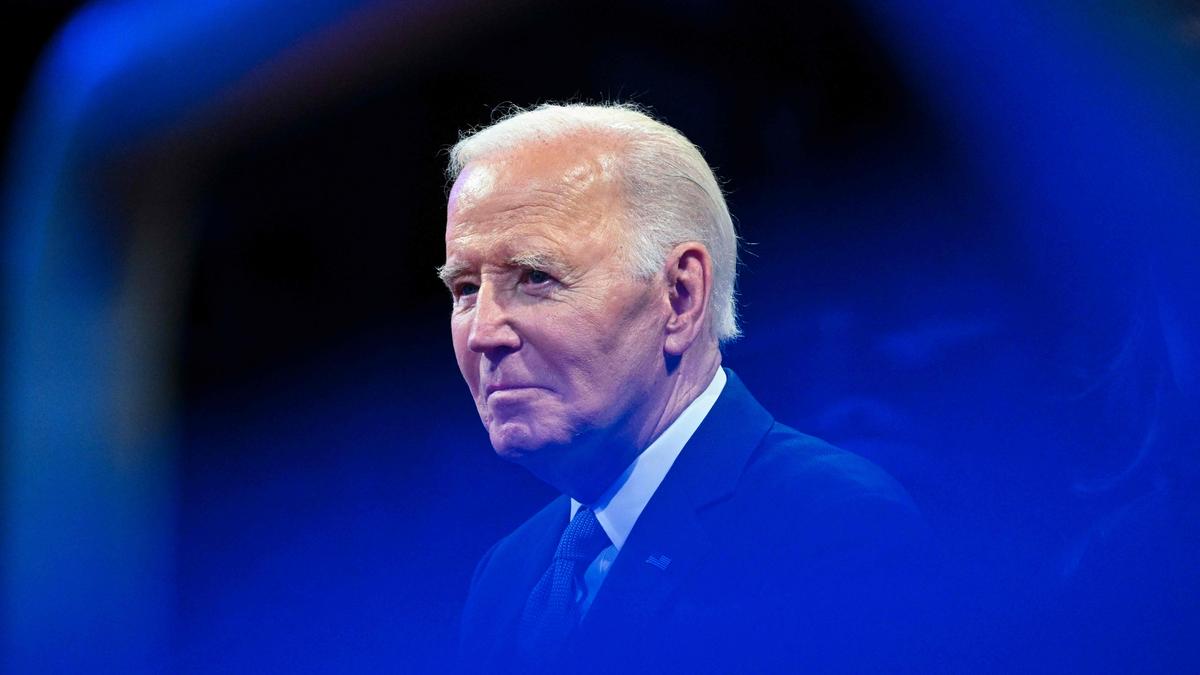
Former US President Joe Biden diagnosed with prostate cancer, a common cancer in men, with various treatment options available.
Former United States president Joe Biden was diagnosed with prostate cancer last week, with his office announcing that it was an ‘aggressive’ form of the disease, as cancer cells had spread to the bone. His office however, also said that the cancer appeared to be hormone-sensitive which “allows for effective management” and that the president and his family are reviewing treatment options with his physicians.” Many political leaders, including current U.S. President Donal Trump sent Mr. Biden wishes for his recovery.
Prostate cancer is a cancer that develops in the prostate gland, which is part of the male reproductive system. The prostate gland is about the size of a walnut but tends to grows with age. It is located just below the bladder, in front of the rectum. The main job of the prostate gland is to produce a fluid that becomes part of the semen.
Prostate cancer is a common cancer: according to ‘The Lancet Commission on prostate cancer: planning for the surge in cases’, 2024, prostate cancer is the most common cancer by incidence in men in 112 countries (as of 2020), and accounts for one in every 14 cancers diagnosed globally, and 15% of all male cancers. Among men, the disease ranks second only to lung cancer in terms of cancer mortality. In the United States, it is second only to skin cancer among men, while in India, it is third-most common cancer among men as of 2022.
Risk factors for prostate cancer include: age -- as men grow older, their risk of getting prostate cancer increases; family history -- men who have had a close family member with prostate cancer have an increased chance of getting it; obesity -- studies have linked being overweight to having a greater chance of getting prostate cancer. Other risk factors include ethnicity as African American men are at greater risk.
In the early stages, prostate cancer may not always cause symptoms. When symptoms do occur, they may include: a frequent need to urinate, trouble passing urine or a weak flow or pain and burning while urinating, blood in the urine (making it look pink or red), blood in the semen, pain in the lower back, hips or thighs and painful ejaculation.
Severity of symptoms may depend on where the cancer is located and how advanced it is. Changes in urinary functions could also be symptoms of a common condition, an enlarged prostate -- it is important to consult a doctor for the right diagnosis.
Healthcare providers may use a scale known as the Gleason score to determine how serious the cancer is. Under the Gleason score, the more abnormal cells you have, the higher your score. These scores range from 2 to 10. A score of below of 5 is not considered cancer. Scores from 6 to 10 are considered cancer -- with 6 being a slow-growing cancer and 10 being a fast-growing cancer.


CCB arrests three drug peddlers in Mangaluru, seizing ₹2.5 lakh worth of MDMA and other valuables.

TVK's 28 candidates in Puducherry include former BJP MLAs, a sitting Independent, and a retired police IG.

BRS submits notice on private member bill to Speaker

CPI-M accepts DMK's five-seat offer for Tamil Nadu Assembly elections, prioritizing INDIA bloc unity over seat demands.

Ricky Rai, son of former underworld operative Muthappa Rai, on Monday appeared before the Bengaluru Traffic Police for questioning in connection with a case involving a Lamborghini performing dangerous stunts at Anil Kumble Circle on March 21.

The Dispur election heats up as 'CongBJP' defections shape a high-stakes contest between veteran candidates from BJP and Congress.

Bengaluru's M. Chinnaswamy Stadium conducts readiness drill ahead of IPL 2026, ensuring upgrades and technical preparations are complete.

First-level randomisation of EVMs completed in Nagapattinam for upcoming elections, ensuring transparency and security.

A district-level committee in Krishnagiri has been formed to assess and verify seizure claims of goods and cash.

Minister Anam Ramanarayana Reddy pledges government support for local fishermen and farmers facing challenges in Andhra Pradesh.

MP M. Sribharat urges collective efforts to revive Visakhapatnam Steel Plant, highlighting key reforms for crucial recovery and growth.

141 candidates have filed nominations for Kozhikode's Assembly elections, with scrutiny on March 24 and campaigning intensifying.

BJP's Vijayendra accuses Congress of using money to influence Bagalkot bypolls, urging voters to reject their tactics.