Alaska's vanishing salmon push Yukon River tribes to brink
CTV
The remote Alaskan communities that dot the Yukon River and live off its bounty are desperate as salmon stocks have dwindled to almost nothing.
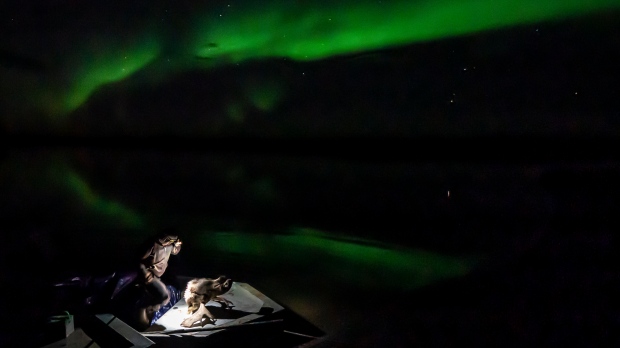
This year, there are no fish. For the first time in memory, both king and chum salmon have dwindled to almost nothing and the state has banned salmon fishing on the Yukon, even the subsistence harvests that Alaska Natives rely on to fill their freezers and pantries for winter. The remote communities that dot the river and live off its bounty -- far from road systems and easy, affordable shopping -- are desperate and doubling down on moose and caribou hunts in the waning days of fall.
"Nobody has fish in their freezer right now. Nobody," said Giovanna Stevens, 38, a member of the Stevens Village tribe who grew up harvesting salmon at her family's fish camp. "We have to fill that void quickly before winter gets here."
Opinions on what led to the catastrophe vary, but those studying it generally agree human-caused climate change is playing a role as the river and the Bering Sea warm, altering the food chain in ways that aren't yet fully understood. Many believe commercial trawling operations that scoop up wild salmon along with their intended catch, as well as competition from hatchery-raised salmon in the ocean, have compounded global warming's effects on one of North America's longest rivers.
The assumption that salmon that aren't fished make it back to their native river to lay eggs may no longer hold up because of changes in both the ocean and river environments, said Stephanie Quinn-Davidson, who has worked on Yukon River salmon issues for a decade and is the Alaska Venture Fund's program director for fisheries and communities.


This year’s hard winter weather likely left significant damage for many homeowners coming into spring. Building and renovation expert Ryan Thompson spoke to CTV’s Your Morning about some of the biggest areas to focus on around the exterior of your home, to help prevent serious damage after the cold, hard winter.

Iranians are managing to get online during the current war with the U.S. and Israel despite drastic censorship and frequent blackouts, throwing the spotlight on to providers of tools such as VPNs (virtual private networks).

March is Nutrition Month, and two Ottawa dietitians joined "CTV Your Morning Ottawa" to mark the occasion and share three sample performance plates for three different levels of activity.

Dozens of models with Down syndrome strutted down a catwalk at a fashion show in Romania’s capital for an evening celebrating style, “atypical beauty” and courage to mark World Down Syndrome Day.

Hawaii suffered its worst flooding in more than 20 years as heavy rains fell on soil already saturated by downpours from a winter storm a week ago, officials said Friday while warning that still more rain was expected during the weekend.

While Canada is well known for its accomplishments in space — including building the robotic arms used on the Space Shuttle and the International Space Station — the country still has no ability to launch its own satellites. This week, Ottawa committed nearly a quarter‑billion dollars towards changing that.

March is Liver Health Month, and while many people think about alcohol and diet when it comes to liver health, a growing risk factor is chronic hepatitis B.

It’s an enduring stereotype that Canadians are unfailingly nice, quick to apologize even when they have done nothing wrong. But an online urban legend claims the opposite of Canada’s soldiers, painting a picture of troops so brazen in their brutality that international laws were rewritten to rein them in.

Friday marks the first official day of spring in the northern hemisphere, but it will still feel like winter this weekend for many Canadians, as snow, sleet, rain and sub-zero temperatures are forecast across the country.

A social media post from the U.S. Food and Drug Administration this week shows a big-eyed macaque staring out from behind bars.

Young people in southeast England and beyond are lining up for the meningitis B vaccine after an outbreak killed two people, sparking supply warnings from pharmacies and raising broader questions about the best public health response to the disease.

Many wage earners are engaging in “microshifting,” a flexible scheduling approach that involves tackling job duties in short, productive bursts instead of a single nine-to-five stretch.

Tyson Atleo, a hereditary leader of the Ahousaht First Nation, says the creation of three new forestry areas to be managed by his community and two others on the west coast of Vancouver Island marks the realization of a long-standing promise.