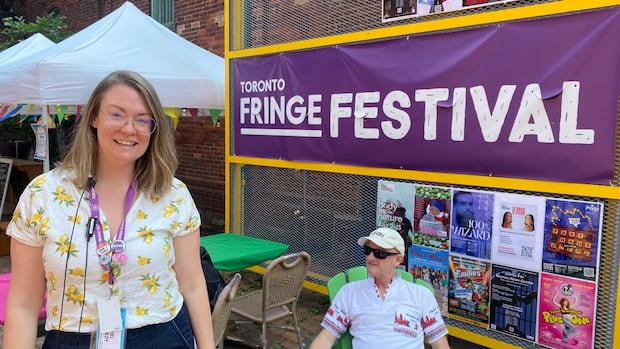
After a rocky post-pandemic recovery, Toronto's Fringe Fest finds stable ground
CBC
It's been a roller-coaster five years for the Toronto Fringe Festival.
In 2020, it was cancelled completely thanks to the pandemic. In 2021, it went digital.
The next three years were tough in different ways: the festival returned to in-person shows with disappointing audience numbers, temporarily lost a critical provincial grant, and cut down the number of shows it presented by a fifth.
This year, says Toronto Fringe Festival executive director Rachel Kennedy, "I think we're in a really good spot."
"Fringe has now placed things in a way that feels really good for us," she continued. "We're seeing the numbers corroborate that … it's definitely an upward trajectory."
There are a couple of signs that the Fringe Festival, which began on July 2nd and runs through this weekend, may be getting its groove back.
This year, the festival has expanded back to 100 shows, with steady audience numbers, says Kennedy. And, as of Thursday, it's surpassed $500,000 at the box office, all of which goes back to the artists.
"That's half a million dollars going directly into artist pockets through the Fringe," all of whom are chosen by lottery, she said.
"It's more than last year."
Kennedy spoke to CBC Toronto on the patio next to Soulpepper Theatre, in the Distillery District — a new venue for Fringe, and, says Kennedy, a key part of this year's success.
Late last year, Fringe signed on to a three year agreement with four other theatre companies, including Soulpepper, to "try to share knowledge and resources," said Kennedy.
Called the Creative Collaboration Initiative, the agreement also includes Obsidian Theatre, The Musical Stage Company, and Bad Hats Theatre.
"We actually had someone comment online and say, 'this is the Avengers of Toronto theatre,'" laughed Kennedy.
The festival also expanded its offerings this year when it comes to genre, with a slate of musicals running at Theatre Passe Muraille as a Fringe satellite program.


A federal minister has stepped in to temporarily stop the deportation of a Montreal father and son, a last-minute decision the family's lawyer says underscores growing concerns that Canadian authorities are increasingly and abruptly separating the families of recognized refugees.

Residents in the Greater Toronto Area are noticing gas prices continue to soar and this fuel analyst says that’s not stopping anytime soon.

A group of Inuvik youth are learning how to design and print their own apparel.

The federal Conservative Party's campaign manager is shrugging off polls showing the Liberals hold a double-digit lead over the Tories — while Pierre Poilievre says he's broadening his image but won't change who he is.

Despite the proliferation of virtual care during and following the pandemic, the practice is not freeing up doctors as some might have hoped, according to new research published in the journal BMC Primary Care.

Daniel Doody says his trip to the Yukon earlier this month was ruined when he learned his luggage wouldn't arrive with him.

Ontario's legislature is set to resume sitting Monday after a 14-week break that ended in a veritable deluge of news, partial proposals and headline-grabbing musings from Premier Doug Ford and his government.

A new generation of kids on Prince Edward Island will get a chance to peep through the Polka Dot Door this summer.

This year marks 200 years since London was founded. As part of the bi-centennial, local carver Mary-Ann Jack-Bleach is paying tribute to some of the city's black pioneers. Once complete, the carving will be displayed at the Silverwoods Community Centre this fall. Jack-Bleach spoke with CBC Afternoon Drive host Matt Allen about the individuals being featured in the carving.

Iran responded Sunday with threats of its own, a day after U.S. President Donald Trump warned the United States will "obliterate" Iran's power plants if Tehran fails to fully open the Strait of Hormuz in 48 hours.

In advance of what is expected to be a hot summer, the City of Kamloops is encouraging homeowners to request a free assessment of their properties to make sure they are resilient in the face of wildfire.

Friday may have been the first day of spring, but winter storms are not over yet for Newfoundland.

Daniel Doody says his trip to the Yukon earlier this month was ruined when he learned his luggage wouldn't arrive with him.