Advocates concerned temporary immigration cuts don't address systemic issues
CBC
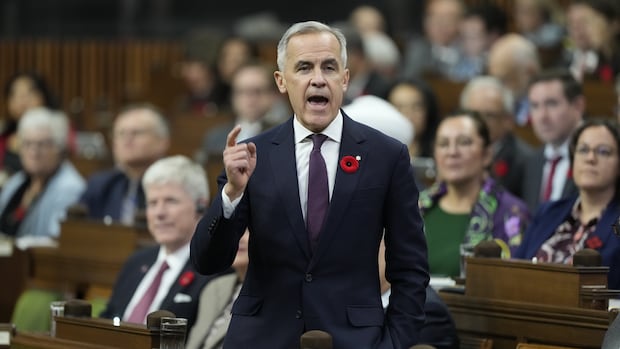
The Carney government’s first budget will significantly reduce the number of temporary immigrants it admits to Canada over the next three years.
The cuts are being made to the temporary foreign worker program and the international student program. The 2026 target for temporary foreign worker (TFW) arrivals is now 60,000, down from the 82,000 the government announced last year, and the international student target is now 150,000, down from 305,900.
The move aligns with the tougher stance the Carney government has made on immigration compared to his predecessor, Justin Trudeau.
During a conversation at the Canadian Club in Toronto on Friday, Carney mentioned that in 2018 temporary residents were about three per cent of Canada's population, and by the time he became prime minister they made up 7.5 per cent.
“That is an enormous shift in a very short period of time, and far exceeded our ability to welcome people and make sure that they had good housing and services,” said Carney.
The TFW program allows employers to hire foreign workers to fill positions that are unable to be filled by Canadians.
Conservative Leader Pierre Poilievre has said he wants the federal government to scrap the program entirely, saying it has led to increased youth unemployment by importing cheap labour.
"The Liberals have to answer: Why is it that they are shutting our own youth out of jobs and replacing them with low-wage, temporary foreign workers from poor countries who are ultimately being exploited?" he said in September.
But Lynn Bueckert, the secretary business manager for the Hospital Employees' Union in B.C., said in a statement that foreign workers are filling critical positions — “sustaining the system, not draining it.”
Marisa Berry Mendez, a campaigner with the francophone wing of Amnesty International Canada, said the TFW cuts do not address the exploitative nature of the program.
A report from Amnesty International called on the federal government to overhaul the TFW program and Tomoya Obokata, a special rapporteur for the UN Human Rights Office, called the program “a breeding ground for contemporary forms of slavery.”
The top occupations for temporary foreign workers are in agriculture, often as general farm workers or harvesting labourers.
Berry Mendez said the root of the problem is that the TFW visa ties the worker to their employer. The program also prevents temporary foreign workers from pursuing permanent residency because they are seen as “low-skilled,” she said.
“If they’re in a situation of abuse then they’re pretty much trapped,” she said.


Timiskaming—Cochrane MPP John Vanthof recalls the meeting in Thunder Bay earlier this month. He was part of the nine-day road trip along Highways 11 and 17 with other NDP MPPs.

A bill before the Nova Scotia Legislature is proposing raising the age limit for support for young people who have been in the foster care or group home system to 26.

The Fredericton Police Force has reallocated funds so new staff can be hired this year to better manage evidence after a police error upended murder cases against five people.

One of two pilots killed in a plane crash at New York's LaGuardia Airport Sunday earned his wings at an Ontario college, CBC News has learned.

Air Canada passengers who were aboard Flight 8646 when the CRJ-900 aircraft struck a fire truck upon landing at New York's LaGuardia Airport on Sunday evening say the collision was sudden and forceful, and they may owe their lives to the pilots who died in the incident.

Cardiac services are set to expand at a Winnipeg hospital once regarded as one of the best in Canada for heart care.

A 26-second TikTok video has ignited a larger conversation about vulnerable populations, theft and content creation.

Some family doctors and emergency room physicians working in Edmonton hospitals warn that an April 1 end to stipend pay arrangements could put patient care at risk and increase suffering.

An Auditor General of Canada report has found that B.C. saw drastically fewer international students than was forecast ever since wide-ranging federal immigration cuts began in 2024.

Six years after e-learning became a mandatory requirement to get an Ontario high school diploma, students don't appear to be taking online school to diversify their course selection as the province had intended, according to a CBC News analysis of provincial enrolment data.

Sarnia City Council will hold a special meeting Tuesday morning to respond to social media comments made by Coun. Bill Dennis, who criticized city spending on a new mural by Indigenous artist Kennady Osborne as “virtue signalling by woke politicians” — then made a series of comments in response to a reply from Aamjiwnaang Chief Janelle Nahmabin that some have characterized as unprofessional and aggressive.

While many Albertans continue to feel the pinch at the pump, Premier Danielle Smith says the government is not considering any fuel tax breaks, as it does not believe it will make much of a difference.

WARNING: This story contains disturbing details about gruesome deaths and sexual abuse.