A sunken ship and a sea of worries Premium
The Hindu
80-year-old fisherman recalls 2004 tsunami, recent shipwreck, and environmental concerns in Kerala's fishing community.
E Sreenivasan, an 80-year-old fisherman, stands near a granite memorial as he recalls the fury of the sea 21 years ago. On December 26, 2004, a tsunami struck the Indian Ocean coast with a ferocious intensity, uprooting trees, smashing buildings, and sweeping away thousands of people. At the fisher hamlet in Arattupuzha at the southern end of Alappuzha district in Kerala, the tragedy claimed 29 lives. “They included three children from the same family,” he says, pointing to the memorial.
Soon after the disaster, a 14-kilometre-long fortress-like seawall came up in Arattupuzha. It was created with concrete tetrapods, huge boulders, sand bags, and coir geotextiles.
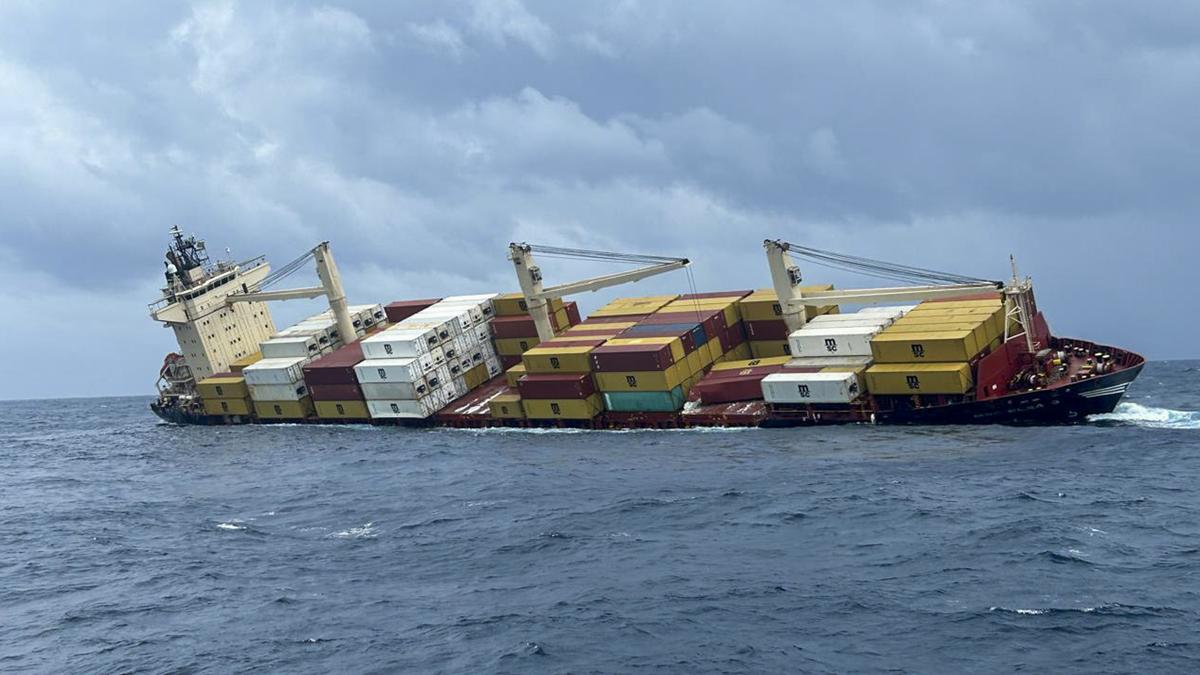
Two decades later, the people of Arattupuzha are relying on that seawall to protect themselves, their houses, and the coast from sea incursion. On May 25, the sea claimed a Liberian-flag container ship, MSC Elsa 3, which was carrying 644 containers, some of which had hazardous cargo; 367 tonnes of heavy fuel oil; and 64 tonnes of diesel. Since then, a large strip of the Kerala coastline has been littered with plastic, cotton, and other waste that washed ashore from containers that fell into the sea from the ship. While there has been no leakage so far, there are oil patches around the ship, the Kerala government said.
Days after the ship sank, the government banned fishing within a 20-nautical-mile (about 37 km) radius of the wreck and promised to give 6 kg of free rice and ₹1,000 a month to each of the affected fisher families in the districts of Thiruvananthapuram, Kollam, Alappuzha, and Ernakulam, stretching from the central to the southern part of the State.
Sreenivasan is unhappy with the compensation. “Each worker in the sector used to get ₹200 as daily compensation whenever the government banned fishing due to adverse weather or other reasons,” he says. “The ₹1,000 that the government is giving now is a pittance.”
Binu Ponnan, the Alappuzha district president of the All India Fishermen Congress, an organisation that works for fishers’ welfare and rights, also believes that the compensation is grossly inadequate. “The government must sanction at least ₹10,000 per fisher’s family per month, to help them overcome the lull in the sector following the sinking of the ship,” he says.
On May 24, the 27-year-old vessel, owned by the global shipping giant Mediterranean Shipping Company (MSC), departed the recently inaugurated Vizhinjam port in Thiruvananthapuram and was en route to Kochi. For the crew of 24 — comprising a Russian captain, 20 Filipinos, two Ukranians, and a Georgian — the journey was supposed to take a day.


Delhi CM Rekha Gupta presents the Economic Survey 2025-26, highlighting growth in income and fiscal deficit details.

Ready for IPL 2026? The Chennai Super Kings’ 'Roar 26' event delivered several Dhoni moments, fan frenzy and an energetic AR Rahman concert.

An alleged dating app scam in Hyderabad's Jubilee Hills has reportedly swindled a man of ₹28,000 at a pub.

T.N. Chief Secretary and DGP visit Governor at Lok Bhavan, presenting flowers in courtesy call.

Eight TSPC Maoists arrested in Hazaribag, Jharkhand, with weapons and ammunition seized during a police operation.

Four ambulances of a Jewish community service in London were set ablaze in a suspected antisemitic hate crime.

Gautham Manohar hopes his photographs serve as reminders of the Earth’s delicate beauty

Thousand Lights faces parking chaos and traffic congestion despite its political significance and ongoing development efforts.

Generic semaglutide increases accessibility, but doctors caution against misuse and quality concerns

Haryana Police removes 857 links to Badshah's 'Tateeree' for objectionable content, ensuring a safer digital environment.

Congress criticises Modi for not leveraging the upcoming BRICS+ Summit to address the West Asia crisis amid U.S. tensions.

Nagapattinam faces underdevelopment and resource challenges, impacting its rich heritage and the livelihoods of its fishing community.

One of the best games of 2025 makes it over to the PC, with a harder mode and bristling with new graphic tech