A seafood lover’s guide to lesser-known, pocket-friendly fish varieties in Chennai
The Hindu
Discover new fish varieties recommended by fishermen during the annual ban on mechanised boats in Tamil Nadu.
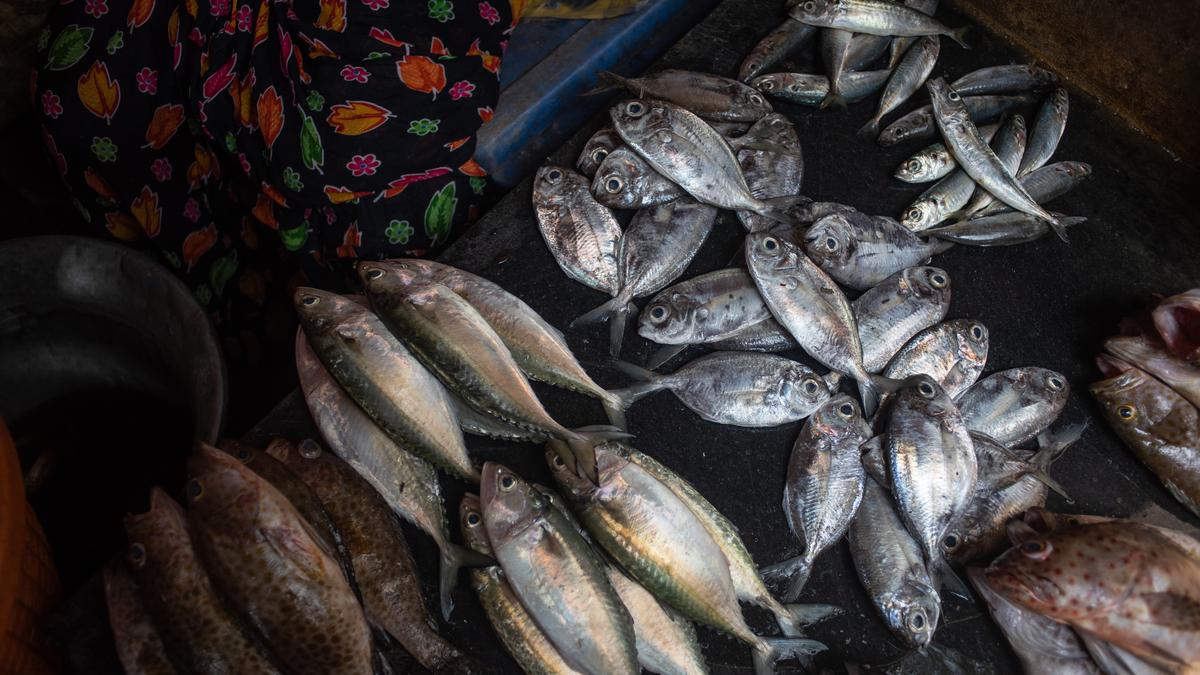
The best kind of fish are what fishermen recommend. But most consumers of seafood go in for varieties that they have been cooking for years. The annual 61-day ban on mechanised boats is now on in Tamil Nadu, and there is no better time to veer from pomfret and seer and try something new.
S Ethiraj, a fisherman from Nochi Kuppam, recommends kilicha. “It is pure white in colour and has a grey upper body. The size of a finger, it can be used to make kuzhambu as well as varuval,” he says. The 38-year-old owns a fibre boat and says that he usually hauls in a mix of fish varieties every day. “I spread these out on the side of the road at Nochi Kuppam and sell them for either ₹100 or ₹200 depending on how much the customer wants,” he says.
The varieties he catches vary through the year, based on wind and water currents. “These days, apart from a lot of kilicha, we are also bringing in muliyan,” he says, adding that it too is pure white with a tinge of grey. “I recommend that it be cut into three pieces and fried,” says Ethiraj. Kili meen (parrot fish) is also in this season. “The flesh is sweet, just like crab meat,” he adds.
Another small fish that can be bought off fibre boats is velli udan, named after the sheen of the moon. “The flesh is soft, and one can keep eating it,” he says, adding that he can pop in up to 50 of these tiny fish during a meal. Karapodi, the flat, diamond-shaped fish, is another favourite of the fisherfolk, often caught by fibre boats. “An adult can consume up to 25 of these fish at one go,” he says.
Independent researcher A Bhagath Singh, one of the authors of the recently-released book Seasoned by the Sea, says that now that the bigger boats don’t head out to sea, those who ply smaller vessels try their hand at line fishing. “Sheela is among the varieties that they catch and can also be spotted at the city’s markets,” he points out, adding that it can be cooked in a fragrant kuzhambu cooked in a base of tamarind and cut sour mangoes. “Mango adds a delicious sourness to the kuzhambu that enhances the flavour of tamarind,” he explains.
Mathi (sardines), a mainstay of the West Coast, is also making its way into the nets of fibre boat fishermen of the Coromandel Coast this past few weeks, according to Bhagath. “They seem to be migrating along this route due to the water currents,” he says: “This season’s mathi is also oily and will be delicious if fried with just a little bit of spice.”
Fishermen also sell what they refer to as ‘periya sankara’. “This is a variety called thendal, that looks like sankara, but is much bigger,” says Bhagath. Jai Vinodh, a fisherman who has a shop near the Ashtalakshmi temple at Elliot’s beach, says that the ban period is also when fibre boat fishermen can work in peace. “They can go to sea without the fear of their nets being cut off by the trawlers,” he says. While some of these fishermen also own large nets and motors that power their vessels deep into the sea to catch big fish, many of them have small nets weighing around just five kilograms.


Rampant encroachments in Tiruchi threaten pedestrian safety and traffic flow, undermining smart pavement initiatives and exacerbating congestion.

Discover Kerala's electoral history in 'Vottarivu,' a 201-page booklet released ahead of the 2026 Assembly elections.

Experts at a floriculture conference in Shivamogga stress the need to reduce greenhouse gas emissions and enhance soil carbon levels.

First randomisation of EVMs and VVPATs for Tiruchi and Perambalur districts completed with political party representatives present.

Puducherry elections see ongoing DMK-Congress rift over seat-sharing, leading to candidate conflicts on nomination day.

Einstein College and Sri Sarada College in Tirunelveli celebrated significant events, honoring academic excellence and cultural heritage.

Priyanka Gandhi criticises PM Modi's West Asia remarks, urging for a comprehensive Parliament discussion on the matter.

Learn who can vote by postal ballot in the upcoming Tamil Nadu Assembly election, including seniors and persons with disabilities.

Decomposed body of a missing 25-year-old man discovered in Dindigul stone quarry, prompting calls for investigation and quarry closure.

SVEEP activities launched in The Nilgiris aim to boost voter turnout at 13 polling booths with low participation rates.

Learn who can vote by postal ballot in the upcoming Tamil Nadu Assembly election, including seniors and persons with disabilities.

Shorts News:Watch: UDF linked to communal forces in Kerala: CPI(M) leader A Vijayaraghavan

Karnataka government postpones Deendayal Upadhyaya event at KSOU Mysuru due to protocol violations and lack of government involvement.