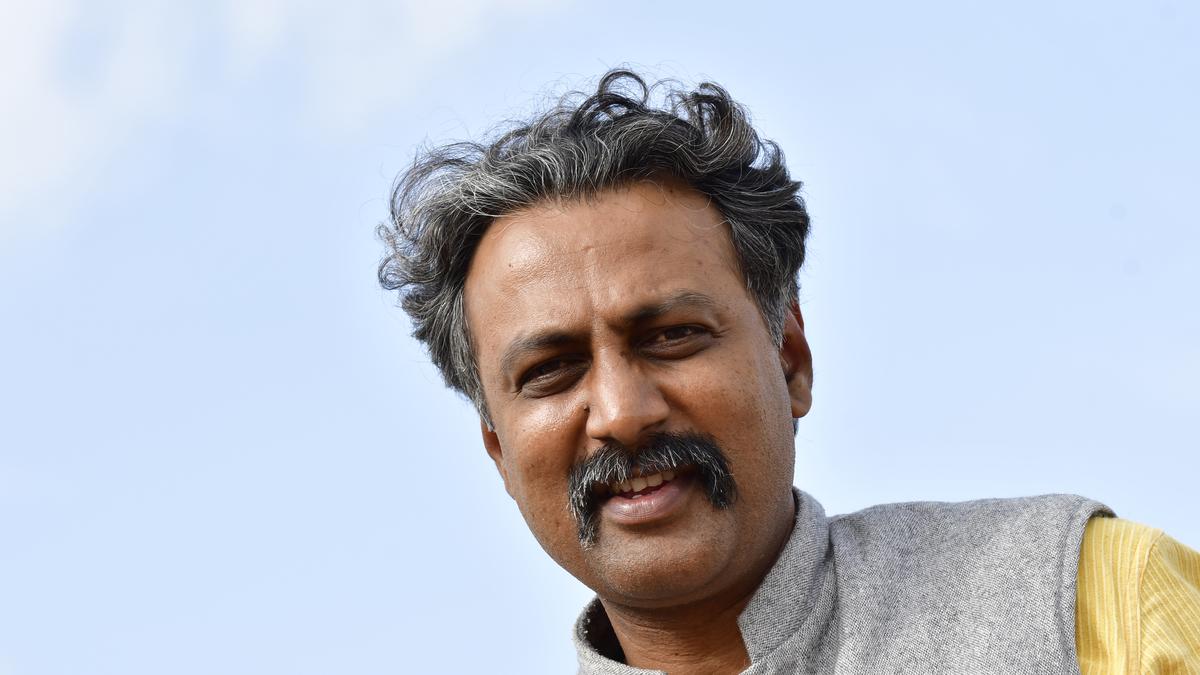
A four-day retrospective, Samagama, will be held at Suchitra Film Society, where actor-director Suchendra Prasad’s films will be screened
The Hindu
A four-day retrospective, Samagama, will be held at Suchitra Film Society, where actor-director Suchendra Prasad’s films will be screened
Voicing Silence, a film production company, founded by actor-director and theatre practitioner Suchendra Prasad and Suchitra Film Society, Bengaluru, join hands to organise a four-day retrospective of the actor’s body of work, titled Samagama. The event commences on May 1 to mark Suchendra’s birthday and continues till May 4 and will screen six films written and directed by him including Prapaatha, Ekachakram (Sanskrit), Ekachara (Kannada), Sangdhigdha, Maabvu Bevu and his yet-to-be-released directorial venture, Padma Gandhi.
Besides this, the event also aims to celebrate every medium the actor has worked in for over three-decade including theatre, cinema, Sanskrit and child rights. These topics will be the focus of discussions, activities and events by theatre and film personalities and Sanskrit scholars from Karnataka.
Suchendra, who ventured into theatre in the early 90s made his film debut in Girish Karnad’s Kanooru Heggadithi (1999). This paved the way for him to switch between parallel cinema and theatre, working with directors including BV Karanth and DR Ankur.
Not being able to sustain himself financially, with parallel cinema and theatre, drove Suchendra to commercial cinema. He was successful, shining in roles as a comedian, cop, hen-pecked husband or a judge. While on one side he was sharing the screen with stars such as Malashri (Election), Yash (Drama) or Darshan (Roberrt) on the other, he continued to work and thrive in parallel cinema with films such as Haggada Kone and Bettada Jeevi.
Speaking from Ahmedabad, where his Sanskrit language full-length feature film, Ekachakram was screened at the Ahmedabad International Film Festival 2025, Suchendra says, he is humbled by Samagama.
“The event is organised by my colleagues and friends from theatre and cinema, Sanskrit scholars, writers that I have worked with during my professional journey.” Grateful to Suchitra for providing their space and collaborating for this festival, Suchendra says, “Having them on board has made this event easier to organise.”
His films may not have thrived at the box-office, but Suchendra says: “tough as it is, I make cinema, because I am passionate about these issues. We have people who use the medium of cinema and theatre for entertainment, and wealth. I choose to use the medium to communicate about issues that touch me deeply. Visual media can become a tool to talk about burning issues such as child marriage, girl child education, our land, its history and heritage, which is what I have attempted to do. These issues are etched deep in my heart due to my past association with UNICEF.”


CM A. Revanth Reddy distributes ₹1 crore insurance cheques to families of deceased Electricity department employees, enhancing financial security for workers.

The Bengaluru Traffic Police (BTP) registered 634 cases of drunk driving during a week-long special enforcement drive conducted across the city between March 16 and March 22.

GHMC intensifies action against property tax defaulters, seizing properties and offering a One Time Settlement scheme for payments.

CCB arrests three drug peddlers in Mangaluru, seizing ₹2.5 lakh worth of MDMA and other valuables.

TVK's 28 candidates in Puducherry include former BJP MLAs, a sitting Independent, and a retired police IG.

BRS submits notice on private member bill to Speaker

CPI-M accepts DMK's five-seat offer for Tamil Nadu Assembly elections, prioritizing INDIA bloc unity over seat demands.

Ricky Rai, son of former underworld operative Muthappa Rai, on Monday appeared before the Bengaluru Traffic Police for questioning in connection with a case involving a Lamborghini performing dangerous stunts at Anil Kumble Circle on March 21.

The Dispur election heats up as 'CongBJP' defections shape a high-stakes contest between veteran candidates from BJP and Congress.

Bengaluru's M. Chinnaswamy Stadium conducts readiness drill ahead of IPL 2026, ensuring upgrades and technical preparations are complete.

First-level randomisation of EVMs completed in Nagapattinam for upcoming elections, ensuring transparency and security.

A district-level committee in Krishnagiri has been formed to assess and verify seizure claims of goods and cash.

Minister Anam Ramanarayana Reddy pledges government support for local fishermen and farmers facing challenges in Andhra Pradesh.