100 years of electroencephalography (EEG) in human medicine Premium
The Hindu
The marvel of EEG reveals brain activity non-invasively, aiding in diagnosis and research with simple, cost-effective technology.
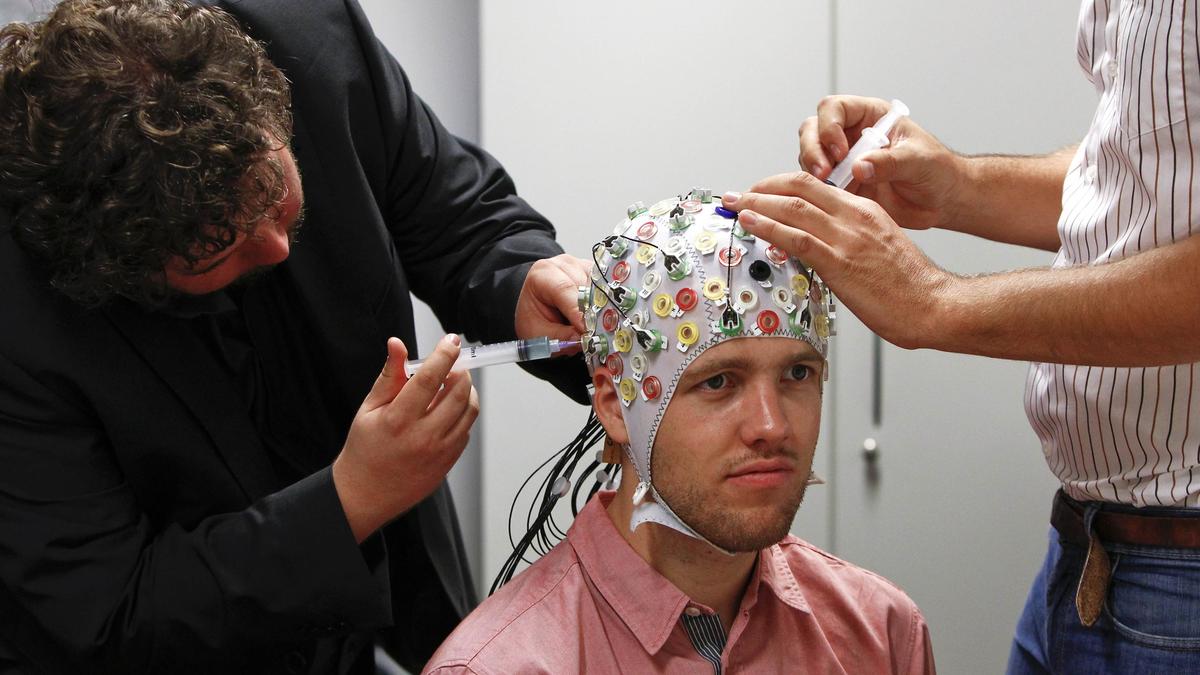
The EEG is a marvel of physics and neurobiology that opens a simple window into the human brain. This window is often small and yet it reveals so much. But not least is the wonder that it reveals anything at all without having to break open the skull first. This year is the centenary of the first human EEG, produced by German physiologist Hans Berger.
Berger’s feat was preceded by incremental but significant advances across Europe from the late 19th century. In 1875, British physician Richard Caton reported evidence of electrical activity in the brains of monkeys and rabbits. Fifteen years on, his Polish peer Adolf Beck found evidence of fluctuating activity in the brains of dogs and rabbits when he stimulated their senses.
In 1912, Vladimir Pravdich-Neminsky produced the first mammalian EEG, of a dog’s brain. Berger succeeded him in 1924 with the human counterpart. He is also credited with inventing the EEG, naming it, and introducing its utility in clinical settings.
EEG stands for electroencephalography. ‘Electro-’ pertains to electricity; ‘-encephalo-’ refers to the brain; and ‘-graphy’ is a suffix meaning to show or to represent.
Neurons in the brain perform various functions by moving electrically charged particles such as ions. The movement of these particles gives rise to electrical activity that a health worker can use an EEG test to visualise. Researchers have also been able to relate data obtained from an EEG with different levels and modes of brain activity, and can use it to distinguish reliably between normal and abnormal states.
EEG is not an uncommon diagnostic test in clinical settings. Among other applications, it is the reference standard — i.e. the best test available — to diagnose epilepsy. An EEG test can also reveal the effects of anaesthesia, sleeping patterns, neurological activity during a coma, and availability of oxygen. EEG can also confirm brain death, one of the two legally recognised forms of death in India.
In research, scientists use EEG for neuroscience, cognitive psychology, neurolinguistics, and neuromarketing studies and to develop brain-computer interfaces.


Explore 2026's wallpaper trends in India, highlighting botanicals and handmade designs that enhance modern homes with nature-inspired aesthetics.

Mercedes-Benz CLA 250+ with EQ Technology review: design, performance, range and features explained. Discover how the new electric CLA combines advanced AI, long range, fast charging and futuristic styling for the next generation of luxury EVs.

AI tool for sparrow conservation

BTS’s comeback with ‘Arirang’ marks a major global music event. When does the album release, and where can you watch their concert live stream? We have all the details

The 2026 U.S. cholesterol guidelines urge starting screening and treatment at 30 to prevent cardiovascular disease effectively.

Olam Festival 2026 in Thiruvananthapuram returns March 27-29 with 120+ vendors, music, art, and cultural zones.

A few storytellers in Thiruvananthapuram share their journeys, challenges, and evolving methods on World Storytelling Day, inspiring young minds.

76-year-old Kurian Jacob from Kerala triumphs with seven medals, including five golds, at the Open Masters Games in Abu Dhabi.

Explore the nature of the human mind as an emergent property of brain activity and complex neural interactions.

CERN's Large Hadron Collider discovers the Xi-cc-plus particle, enhancing understanding of quantum mechanics and baryon behavior.

Vibha Batra’s latest book, Spotless (Hachette India) is a novel in verse for young adults

In its first edition, the Madras Art Salon spotlights the works of journalist and artist Narayan Lakshman at The Botanical Club, a social space in the British Deputy High Commission, Chennai

Cholesterol enhances melanoma cell invasion by making nuclei squishier, revealing a potential treatment target in cancer progression.