Xi’s AI ambitions collide with China’s fragile employment market
The Straits Times
China installs more factory robots each year than all other countries combined. Read more at straitstimes.com.
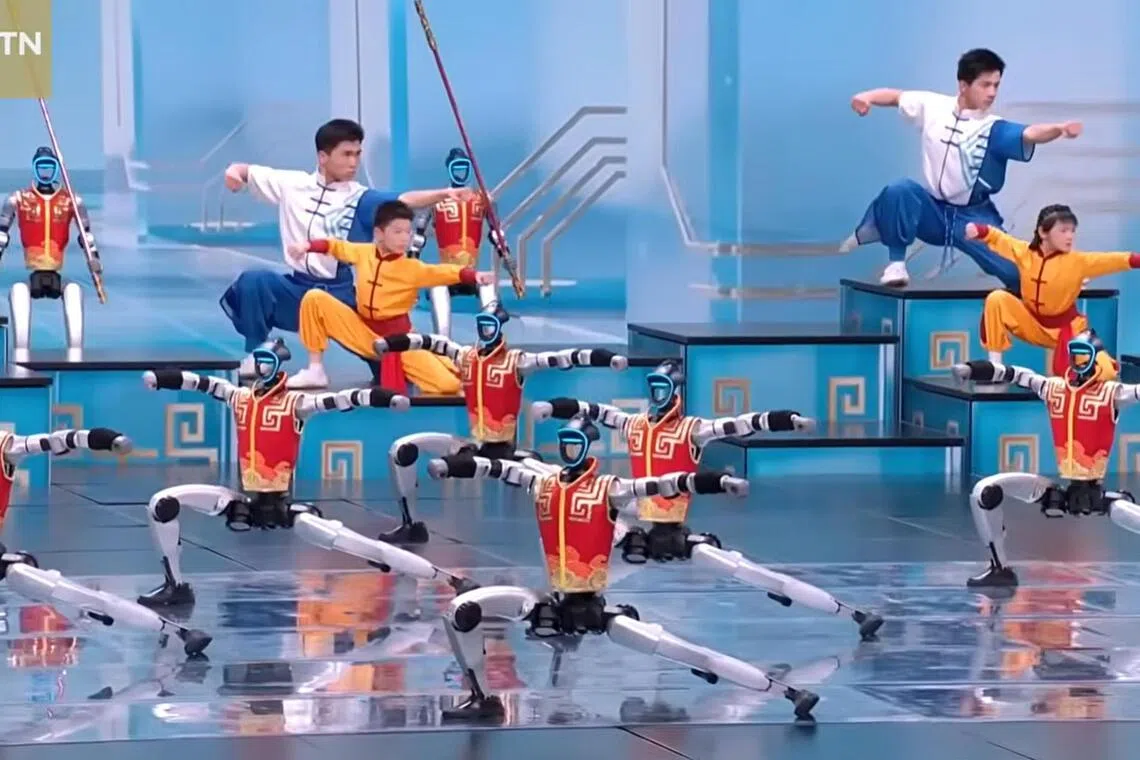
BEIJING - Days after back-flipping AI humanoids dazzled China with a new year performance alongside dancers, a small research firm jolted US markets with a stark warning about how automation could trigger an economic spiral by displacing workers.
Intended or not, images of robots swinging nunchucks alongside their human counterparts threw a spotlight on Beijing’s challenge of balancing productivity gains with jobs. While no Chinese companies were referenced in Citrini Research’s dystopian report, similar risks loom for China – America’s most formidable AI rival and home to the world’s largest labor fource.
That’s leaving President Xi Jinping with a dilemma. China can’t afford to hobble itself in the race with Washington for AI capabilities that will underpin advanced manufacturing and technology critical to military advancement. At the same time, the Communist Party needs to ensure enough job creation to prevent social unrest.
“Beijing is aware of the potential for this process to have major societal impacts,” said Paul Triolo, a former US government official and partner at DGA-Albright Stonebridge Group who specialises in China and tech policy. “Officials are also already grappling with high levels of youth unemployment,” making another wave of job displacement harder to deal with, he added.
Only last month, China’s Ministry of Human Resources announced it was drafting policy guidance to address AI’s impact on jobs ahead of March’s release of the country’s five-year development plan. Zhang Yunming, vice industry and technology minister, also in January described employment pressures from AI as “inevitable.”
Despite that, the Asian powerhouse has pushed to embed AI across its economy. China installs more factory robots each year than all other countries combined, leads the world in drone delivery and tests more autonomous cars than anywhere else. Goldman Sachs estimates China will lead the world in adopting autonomous vehicles, with 90 per cent of cars sold there expected to have advanced self-driving ability by 2040.


About 3 in 4 executive directors are substantial shareholders or are family members, the study found. Read more at straitstimes.com.

The producer is supplying only Arab Light crude exported from the Red Sea port of Yanbu to term customers in April. Read more at straitstimes.com.

As at last November, digital renminbi transactions had notched a cumulative value of $3.1 trillion since launch. Read more at straitstimes.com.
As at last November, digital renminbi transactions had notched a cumulative value of $3.1 trillion since launch. Read more at straitstimes.com.

Property stocks fell this week as the US Federal Reserve signalled rates may stay higher for longer. Read more at straitstimes.com.

A couple's $1 million luxury watch and handbag collection becomes a point of contention during their divorce, raising questions about matrimonial assets. Read more at straitstimes.com.

The S&P 500 declined 1.51 per cent to end the session at 6,506.48 points, its lowest since September. Read more at straitstimes.com.

Understand the rules around sharing wedding rings and jewellery in a divorce, and what assets are considered matrimonial. Read more at straitstimes.com.

S’pore ready to step in to help businesses, households if Middle East conflict worsens: Tan See Leng
Singapore has not yet needed to dip into its energy stockpiles, which are enough to last for months. Read more at straitstimes.com.

The iEdge Singapore Next 50 Index declines 0.9% to 1,464.78. Read more at straitstimes.com.

Goldheart jewellers opens its 24th boutique in Singapore at 313@Somerset, marking its return to the Orchard Road shopping district. Read more at straitstimes.com.

The market punished Alibaba and Tencent for failing to lay out clear visions for how to profit off AI. Read more at straitstimes.com.

The arbitration is based on the Panama-Singapore Free Trade Agreement, Sinolam said. Read more at straitstimes.com.