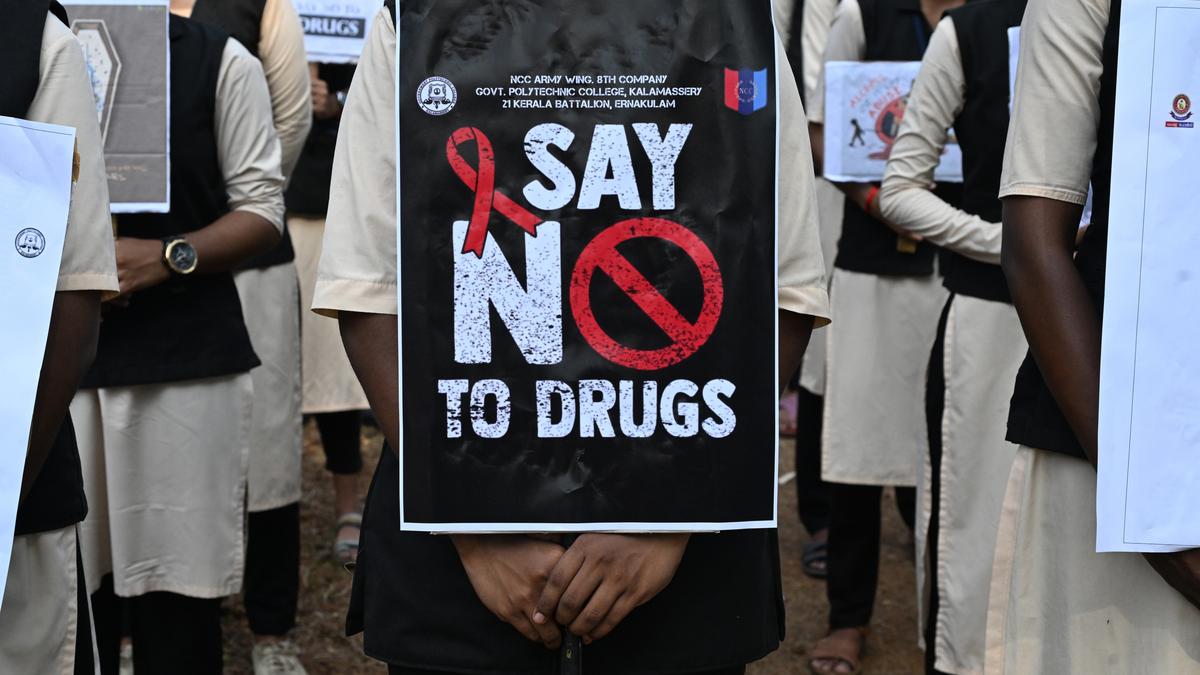
With over 500 cases in every district, Kerala’s drug menace is widespread and escalating
The Hindu
In 2022, every district in Kerala recorded at least 500 cases under the Narcotics Drugs and Psychotropic Substances Act. This was not seen in any other State
Over the past three years, there has been a sudden surge in drug abuse in Kerala, sparking widespread concern. In March, the Kerala High Court warned of the “poisonous fangs of the drug mafia”, while the Governor met with university Vice-Chancellors to address student drug use.
The State Higher Education Department launched a ‘Love-a-Thon’ campaign against substance abuse, and Chief Minister Pinarayi Vijayan urged new Sub-Inspectors to take a lead in combating the drug trade. Last month, the State Assembly suspended regular business to discuss the growing crisis.
The reactions are well-founded. Chart 1 shows the State-wise number of cases filed under the Narcotics Drugs and Psychotropic Substances (NDPS) Act, 1985, between 2017 and 2024. The number of cases under the Act surged from 5,695 in 2021 to 26,619 in 2022 and surpassed 30,000 in 2023. In 2024, over 27,701 cases were recorded.
Chart 1 | Number of cases filed under the NDPS Act
While drug abuse has long been a concern in Kerala and in States such as Punjab, Maharashtra, Tamil Nadu, and Uttar Pradesh, the recent spike is alarming. For instance, in 2023, Maharashtra, which had recorded the second-highest number of cases under the NDPS Act, recorded only half as many cases as Kerala.
In 2024, the gap widened further, with Punjab recording the second-highest number of cases that year — yet only a third of Kerala’s total. Several States appear to show a decline in cases in 2023 and 2024. This should be read with caution, as the latest data may be provisional.
Chart 2 highlights the severity of the crisis more clearly. It plots the number of cases filed under the NDPS Act in 2024 for every one lakh people in a State (case rate) on the horizontal axis. It plots the absolute number of cases on the vertical axis. The circle sizes correspond to population estimates for 2022.


Sobha Surendran refutes V.D. Satheesan's claims of a BJP-CPI(M) deal, attributing them to fear of electoral defeat.

V.D. Satheesan praises G. Sudhakaran as a just administrator, highlighting respect amid political differences in Kerala Assembly polls.

Kerala court sentences G. Sandeep to life imprisonment for the murder of Dr. Vandana Das, with appeals for a death penalty pending.

Erode (East) voters prioritize pollution control, traffic solutions, and urban infrastructure as key issues ahead of upcoming elections.

Civil supplies department seizes 55 illegal LPG cylinders, booking 19 individuals to prevent domestic supply shortages in Vizianagaram.

Hyderabad police bust illegal samosa unit, seizing 500 stale eggs and used cooking oil, risking public health.

Eid prayers are held in Delhi's Uttam Nagar under heavy police presence amid heightened communal tensions and security measures.

Tensions rise in Mathura as locals protest cow vigilante's death, prompting a strong response from authorities and police.

Join the Met Centre Hyderabad's open house on March 23 to learn about weather forecasting and its real-life applications.

Kerala CM Pinarayi Vijayan blames Congress and BJP for India's cooking gas crisis, citing failures in energy policy and corporate interests.

An 81-year-old businessman loses ₹15.4 crore in a digital arrest scam involving fake CBI and RBI officials.

AP cadre IAS officer A. Vani Prasad is reallocated to Telangana cadre following a Telangana High Court order.

TMMK hosts special Eid prayers in Chennai, emphasizing peace amid ongoing West Asia conflicts and supporting those in need.