With its shoot-first style, Trump team often shoots itself in the foot
CNN
A telling moment early in President Donald Trump’s second term foreshadowed how the administration is often now operating.
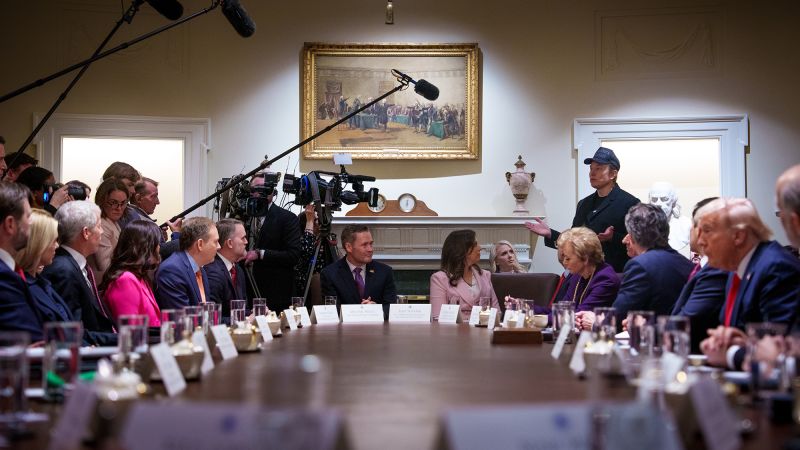
A telling moment early in President Donald Trump’s second term foreshadowed how the administration is often now operating. Appearing at a Cabinet meeting in late February, Elon Musk said the Department of Government Efficiency had “accidentally canceled” Ebola prevention programs. “We will make mistakes. We won’t be perfect. But when we make a mistake, we’ll fix it very quickly,” Musk said. “So we restored the Ebola prevention immediately. And there was no interruption.” It wasn’t the first time Musk – who has since left the government – had acknowledged he and his team would make mistakes. But it was especially striking given the subject matter. Ebola prevention is literally a matter of life and death, but Musk mentioned it off-hand as if it were just some anecdote about DOGE’s growing pains. (Musk’s claim that there was “no interruption” has also been called into question.) In the months since, though, that attitude has become emblematic of the Trump administration’s approach to the country’s business. Over and over again, it has employed shoot-first mentality with its public pronouncements and actions.


A statue of Christopher Columbus has been erected outside of an ornate federal office building on the White House grounds — the latest sign of the Trump administration’s efforts to reshape cultural and historical representations across the nation’s capital.

Kentucky Gov. Andy Beshear, speaking in JD Vance’s home state of Ohio on Saturday, tore into the vice president, questioning his Appalachian roots and telling voters they “deserve better.”

President Donald Trump has said ICE agents will head to US airports tomorrow amid a partial government shutdown. Follow for live updates

Cuba is working to restore the electricity supply after another island-wide blackout left more than 10 million people without power.

President Donald Trump said Sunday border czar Tom Homan will be in charge of deploying Immigration and Customs Enforcement agents to airports on Monday, with Homan telling CNN the agents will help with security at entrances and exits to ease the Transportation Security Administration’s workload.

Donald Trump wants us to believe that a deal with Cuba is close at hand. After this past week, I am not so sure.

President Donald Trump has said ICE agents will head to US airports tomorrow amid a partial government shutdown. Follow for live updates

President Donald Trump said Sunday border czar Tom Homan will be in charge of deploying Immigration and Customs Enforcement agents to airports on Monday, with Homan telling CNN the agents will assist with security at entrances and exits to ease TSA workload amid a partial government shutdown.

Janet Mills and her allies are counting on a gender gap to narrow Platner’s wide lead ahead of the June 9 primary to decide who will face incumbent Republican Sen. Susan Collins. They are betting that the unfiltered style that has brought Platner widespread attention as someone who could help Democrats reach young men will backfire with women.

Why do people “pledge allegiance” to a “state” that is no longer a state? And what spurs someone to not just attack innocent people, but to then make a statement of loyalty while doing so?

A Supreme Court case examining state deadlines for election ballots sent in the mail is just the tip of the spear in President Donald Trump’s war on mail-in voting.

As a shrinking number of Transportation Security Administration agents work to keep hourslong security lines moving despite not being paid, President Donald Trump stepped into the fray Saturday, announcing he will send Immigration and Customs Enforcement officers to airports by Monday if Congress doesn’t agree to a plan to end the partial government shutdown.

Donald Trump wants us to believe that a deal with Cuba is close at hand. After this past week, I am not so sure.