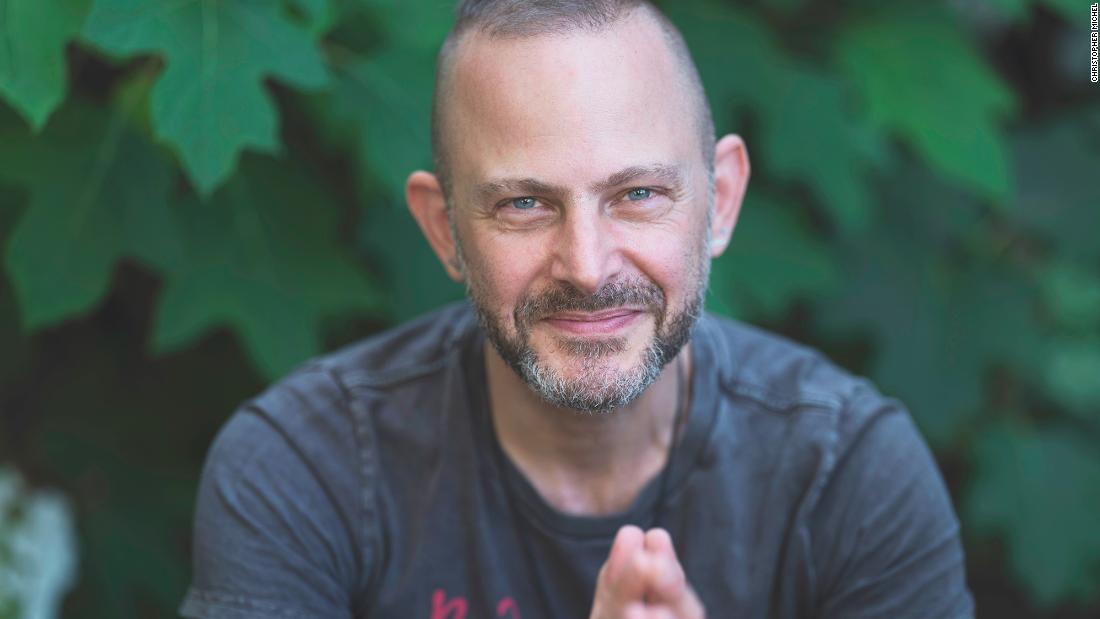
Wired's top editor: Metaverse 'feels like a terminological land grab'
CNN
The word "metaverse" is popping up everywhere. Facebook recently changed its name to Meta Platforms. Nike bought a virtual shoe company to help it expand to the metaverse. And other brands like Gucci and Ralph Lauren have been considering the future of fashion with digital personas.
With all the attention, it can be difficult for general news consumers to parse through what is a marketing gimmick versus what really matters. It requires journalists to approach the tech industry's new favorite buzzword with an open mind and with nuance, something that the media hasn't always been consistent with in years past, according to Gideon Lichfield, global editorial director of Wired.
"Every time the industry goes after a new name for something and tries to pivot, something new inevitably comes out of it. It's just not clear yet what it will be," Lichfield said. "I think one has to be really critical of this tendency and call out what is just marketing and hype, which is a large part of it, whilst remaining open-minded to the fact that something new does emerge."


The House Intelligence Committee voted Tuesday to give federal prosecutors classified records related to John Brennan, according to a committee spokesperson, signaling the Justice Department’s investigation into the former CIA director may be heading towards possible charges.

North Carolina State Senate leader Phil Berger on Tuesday conceded his primary race to Rockingham County Sheriff Sam Page, a political earthquake that took down arguably the most powerful politician in a pivotal swing state.

It’s looking like the Department of Homeland Security shutdown could soon be over. The two sides seem to have made serious progress, and President Donald Trump hasn’t rejected anything, even if he’s a little sour. But it’s likely the resolution will disappoint many Democrats.

California Gov. Gavin Newsom said that he regretted using the word “apartheid” to describe the Israeli government’s treatment of Palestinians, though he warned “that’s a word you may hear others use” if Prime Minister Benjamin Netanyahu pushes for territorial gains.

Haiti is about to get a new set of foreign boots on the ground. The goal sounds simple: fight the gangs that have brought life to a standstill.

Oklahoma’s governor picks energy executive Alan Armstrong to fill US Senate seat through end of year
Oklahoma’s governor on Tuesday appointed energy executive Alan Armstrong to serve in the US Senate through the end of the year and finish the term of Republican Markwayne Mullin, the new homeland security secretary.

Newly confirmed Homeland Security Secretary Markwayne Mullin told senators during his confirmation hearing that he wanted to keep the department out of the headlines. That won’t be easy.

A trader made nearly $1 million since 2024 from dozens of well-timed Polymarket bets that correctly predicted US and Israeli military actions against Iran, according to an analysis shared with CNN.

Travelers have been dealing with worsening airport wait times as ICE agents deploy to more than a dozen airports. Follow for live news updates.

President Donald Trump voted in Tuesday’s state House special election by mail even as he suggested on Monday that “mail-in voting means mail-in cheating.”

CNN’s 5 Things AM brings you the news you need to know every morning.

The Supreme Court on Tuesday will consider the legality of a policy championed by President Donald Trump during his first term that prevented scores of migrants arriving at the southern border from starting the process of applying for asylum.

A young, well-liked facilities manager at the Kennedy Center has gone from being described as “in charge of HVAC and toilets” to head of the renowned arts institution.