Why the Sun Belt may pick the next president
CNN
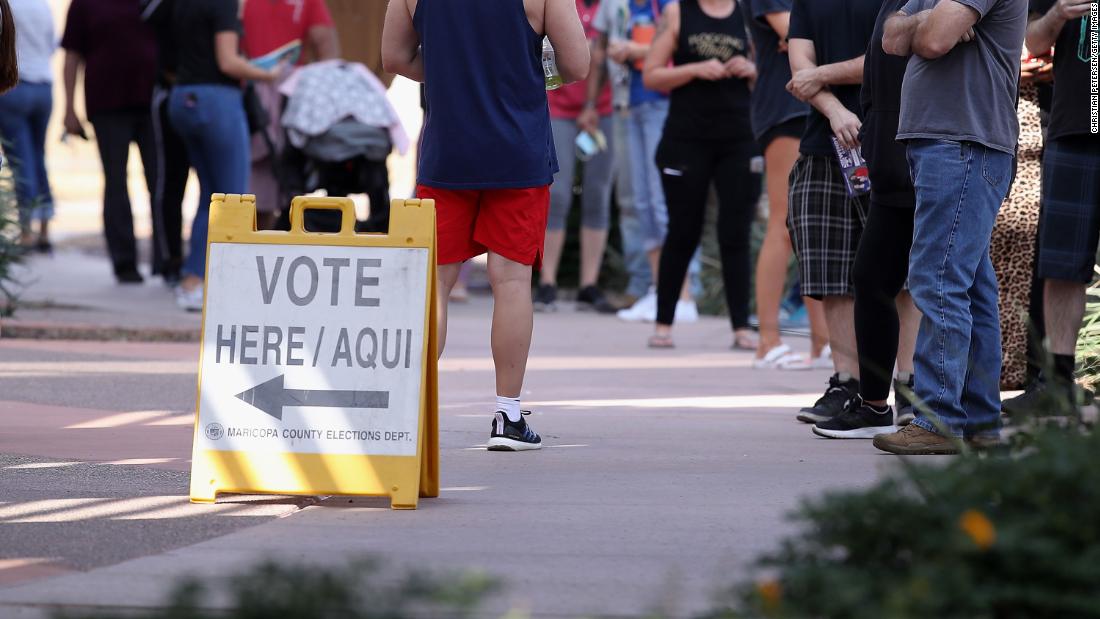
The battleground states across the industrial Midwest have functioned as the decisive tipping point of American politics for at least 30 years, especially in presidential elections. But the latest Census Bureau findings on both overall population growth and voter turnout in 2020 signal that the Sun Belt will increasingly rival, and potentially replace, the Rust Belt as the central battlefield in US elections.
Continuing a decades-long trend, the latest census numbers on total growth show a shift in population, and with it Electoral College votes and seats in the House of Representatives, away from Rust Belt states in the Northeast and upper Midwest -- such as Ohio and Pennsylvania -- toward Sun Belt states across the South and West -- like North Carolina, Texas and Colorado. Simultaneously, the new census results on voting show that compared with the Rust Belt, the electorate in the Sun Belt is evolving more rapidly in a direction that benefits Democrats, with a growing share of non-White voters and a shrinking share of blue-collar Whites. That means the Sun Belt states, most of which leaned solidly Republican until recently, are likely to grow more competitive, even as their clout in the House and Electoral College steadily increases.

President Donald Trump issued a stark threat to defense contracting companies on Wednesday, saying he would seek to limit stock buybacks and executive salaries unless they improve their delivery of weapons systems to the US military hours before saying he’d decided to substantially increase the defense budget.

Temir Porras, who was ousted President Nicolás Maduro’s chief of staff from 2007-2013, tells CNN’s Isa Soares that he cares about the stability of his country and that the leadership in Venezuela is showing “maturity and balance in the movement they’re making.”

GOP Sen. Thom Tillis strongly criticized White House deputy chief of staff Stephen Miller’s recent comments suggesting the US should take control of Greenland, calling the remarks “amateurish” and “absurd,” and urging President Donald Trump to fire people who give that kind of advice.

It was as telling a moment as any when it comes to the Republican Party’s relationship with President Donald Trump.

While the Trump administration insists the US will run Venezuela, it’s not that simple. Many of President Nicolás Maduro’s loyalists are still in positions of power. CNN’s Rafael Romo reports.

Four days since US President Donald Trump’s most strident military move yet, the gulf grows between his claim that the United States will “run” Venezuela and the reality of a continued dictatorship on the ground.

Florida Gov. Ron DeSantis said Wednesday he plans to call a special session in April for the Republican-dominated legislature to draw new congressional districts, joining the redistricting arms race.

As part of its claims of widespread fraud in the federal safety net, the Trump administration is halting $10 billion in funding for several programs in five Democrat-led states.

The Trump administration has outlined a number of demands that Venezuela must agree to order to resume oil production, two senior White House officials told CNN.

Minnesota state representatives are set to testify during a Republican-led House Oversight Committee hearing on allegations of fraud and misuse of federal funds in the state. Follow for live updates

On the heels of the US capture of Venezuelan leader Nícolas Maduro, President Donald Trump has ramped up his rhetoric around his desire to acquire Greenland, once again raising the prospect of military intervention, sparking fears across Europe and widespread condemnation.

Parched soil crunched under Jessica Rogers’ boots as she crossed the empty lot overlooking Palisades’ Stadium By the Sea. She sprayed her hose towards a cluster of leafy bushes growing at the base of a blackened tree.

The fate of hundreds of thousands of Venezuelan migrants in the United States remains in limbo after the capture of Venezuelan President Nicolas Maduro.