Why Kannada celluloid needs more local stories
The Hindu
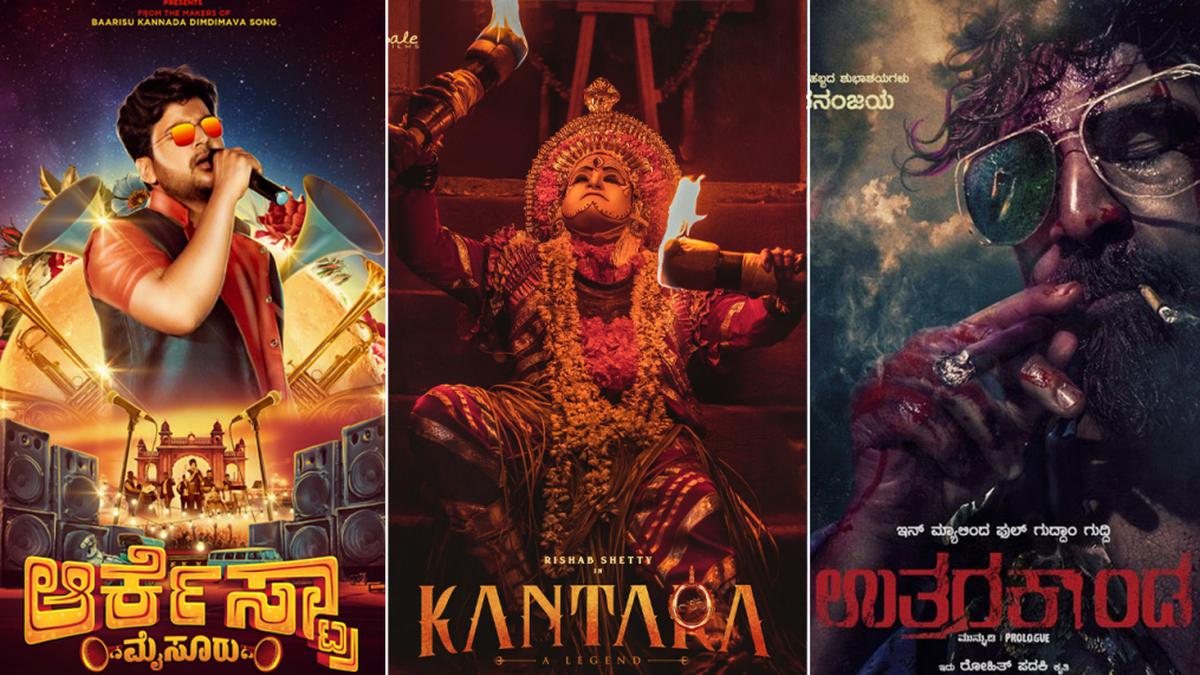
The three Shettys — Rakshit, Raj and Rishab — have championed stories of Dakshina Kannada, but other regions of the state lack a solid representation in Kannada films
In the final shot of the trailer of Ulidavaru Kandante (2014), Rakshit Shetty kicks down a door before his name arrives on-screen under the writer-director credit. Looking back, it’s undeniable that the Rashomon (Akira Kurosawa’s 1950 classic)-inspired film also opened the doors to establishing the coastal culture in mainstream Kannada cinema.
A cult favourite today, Ulidavaru Kandante was a neo-noir gangster film set in Udupi, Karnataka. This highly-rooted film gave birth to more stories from Dakshina Kannada, as Rishab Shetty, Raj B Shetty, and Anup Bhandari established themselves in the mainstream field.
S Shyam Prasad, senior film writer, explains why. “Kannada films, for a long time, were basically ‘Mysore films.’ It takes a long time to recourse history,” he observes. “All regions of Karnataka got integrated into a single entity in 1956, which was named Mysore State. The Kannada talkie movies had already started in 1934 and were Mysore-based. The early talkie era based in Madras had mainly Old Mysore Brahmins. Even when the film industry shifted to Bengaluru, the films still had a strong representation of Old Mysore.”
The representation of a region in a film depends on how close the story is to the personal life of the filmmaker. “S Siddalingaiah was the master of portraying village life, probably due to his real-life experiences,” points out Shyam. “His most popular films, Bangaarada Manushya, Bhootayyana Maga Ayyu, and Doorada Betta, showcased the village life from the Old Mysore Region. So, the director’s experience plays a big role in representing the local themes and language in a film.”
Off-beat or parallel movies have depicted the way of life present in several small towns and districts of Karnataka. Girish Kasaravalli’s Dweepa mirrored the life of people in Sagara in Shivamogga. One could hear the dialect of North Karnataka in Sundar Krishna Urs’ Sangya Balya (shot in Belagavi).
ALSO READ:The resurgence of Kannada parallel cinema
In the present-day too group of parallel cinema makers aren’t shy of setting films in the ethos of their hometowns. Natesh Hegde’s Pedro, about anoutcast who faces opposition from an entire community, is set in Natesh’s village in the Western Ghats, while Utsav Gonwar’s Photo shows the fate of a Raichur boy in the wake of the migrant exodus during the Covid-19 outbreak.


The actor, along with director Sushant Shah, speak about their upcoming series ‘Chiraiya’, Divya’s process of working on the dialect, Sushant’s approach to telling a story about women, and more

An independent video, ‘Feel the Spark’ by Raleigh Rajan with vocals by Ciera Dumas that celebrates Tamil literary giants, garnered 1.4 million views in less than 36 hours.

In ‘Jack Ryan: Ghost War’, John Krasinski is back as the savvy CIA analyst, diving headfirst into a high-stakes mission that unravels a deadly conspiracy and pits him against a rogue black-ops unit

Shriram Bharatiya Kala Kendra’s Shankarlal festival showcased rare ragas, radiant artistry, and inclusive performances, from Pt Madhup Mudgal’s serene morning ragas to Ramana Balachandran’s Saraswati veena.

Explore "Threads that Bind: The Kantha Project," an exhibition in Delhi reimagining kantha as a medium of repair and renewal.

Sean Penn skips the Oscars to meet Ukraine's Zelenskyy, who praises him as a "true friend" amid the war.

The teaser of Tamil star Suriya’s much-awaited film with director Venky Atluri, titled Vishwanath and Sons, was unveiled by the makers on Monday

A 'Golden' moment for a K-pop track at the Oscars.

Parvathi Nayar’s new exhibition, The Primordial, in Mumbai, traces oceans, pepper and climate change
Opened on March 12, the exhibition marks the artist’s first solo show in Mumbai in nearly two decades. Known for her intricate graphite drawings and multidisciplinary practice spanning installation, photography, video, and climate change, her artistic journey has long engaged with the themes of ecology, climate change and the natural world. In this ongoing exhibition, these strands converge through a series of works centred on water, salt, and pepper — materials that carry natural and historic weight across centuries.

Explore the highlights and key winners of the 98th Academy Awards, featuring memorable moments and historic achievements from Oscars 2026.

Spring season celebrated at Ramakrishna Mission Institute, Kolkata, with ‘Evening of Basant’

The Spirit of the Land, a solo show by artist Shivakumar Sunagar, is a vista of Nature-inspired emotions

Tal Fry is all set for an exciting new performance season