Why it matters that scientists modified a ‘sexual’ fruit fly to be asexual Premium
The Hindu
Decades of research on fruit flies led to a groundbreaking discovery of parthenogenetic asexual reproduction in Drosophila species.
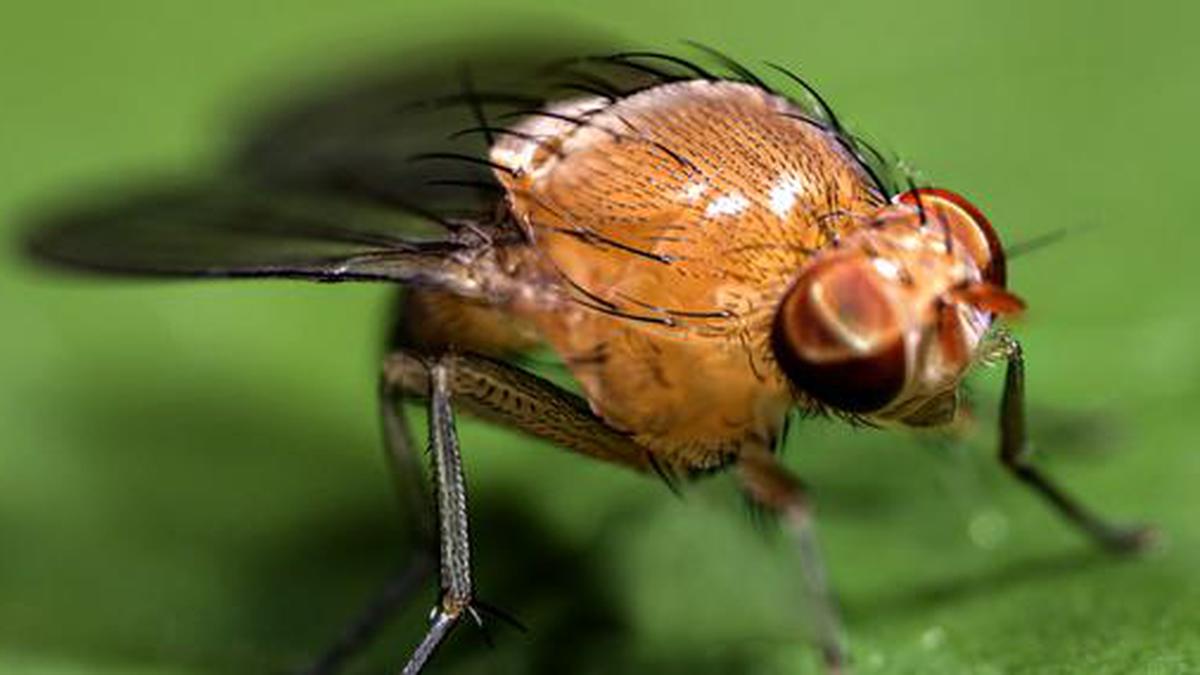
The fruit-fly (Drosophila melanogaster) has been among the favourite organisms of genetics researchers for more than a hundred years. Many years of intense research with these diminutive creatures have led to many breakthroughs in our understanding of biology and evolution.
Recently, researchers from Cambridge University and the California Institute of Technology reported yet another such breakthrough. They were able to ‘engineer’ a sexually reproducing fruit-fly species to reproduce asexually, demonstrating the profound biological consequences of relatively minor genetic manipulation.
The first study that reported this significant feat was published in July 2023; a follow-up study to it was published in the February 2024 issue of Heredity.
How was an organism that usually reproduces sexually turned into one that could reproduce asexually?
Fatherless reproduction is known as parthenogenesis.
Earlier, other researchers had collected fruit-fly-like specimens from diverse geographies and compared them in different ways with the canonical specimen and with each other, to gauge the extent of their natural diversity. The collection represented more than 1,600 Drosophila species.
Of these, one species, Drosophila mangebeirai, was found to consist only of females. The eggs produced by isolated females developed directly into female progeny without having to be fertilised by sperm from a male.


Explore 2026's wallpaper trends in India, highlighting botanicals and handmade designs that enhance modern homes with nature-inspired aesthetics.

Mercedes-Benz CLA 250+ with EQ Technology review: design, performance, range and features explained. Discover how the new electric CLA combines advanced AI, long range, fast charging and futuristic styling for the next generation of luxury EVs.

AI tool for sparrow conservation

BTS’s comeback with ‘Arirang’ marks a major global music event. When does the album release, and where can you watch their concert live stream? We have all the details

The 2026 U.S. cholesterol guidelines urge starting screening and treatment at 30 to prevent cardiovascular disease effectively.

Olam Festival 2026 in Thiruvananthapuram returns March 27-29 with 120+ vendors, music, art, and cultural zones.

A few storytellers in Thiruvananthapuram share their journeys, challenges, and evolving methods on World Storytelling Day, inspiring young minds.

76-year-old Kurian Jacob from Kerala triumphs with seven medals, including five golds, at the Open Masters Games in Abu Dhabi.

Explore the nature of the human mind as an emergent property of brain activity and complex neural interactions.

CERN's Large Hadron Collider discovers the Xi-cc-plus particle, enhancing understanding of quantum mechanics and baryon behavior.

Vibha Batra’s latest book, Spotless (Hachette India) is a novel in verse for young adults

In its first edition, the Madras Art Salon spotlights the works of journalist and artist Narayan Lakshman at The Botanical Club, a social space in the British Deputy High Commission, Chennai

Cholesterol enhances melanoma cell invasion by making nuclei squishier, revealing a potential treatment target in cancer progression.