Why countries struggle to eliminate fossil fuel subsidies | Explained Premium
The Hindu
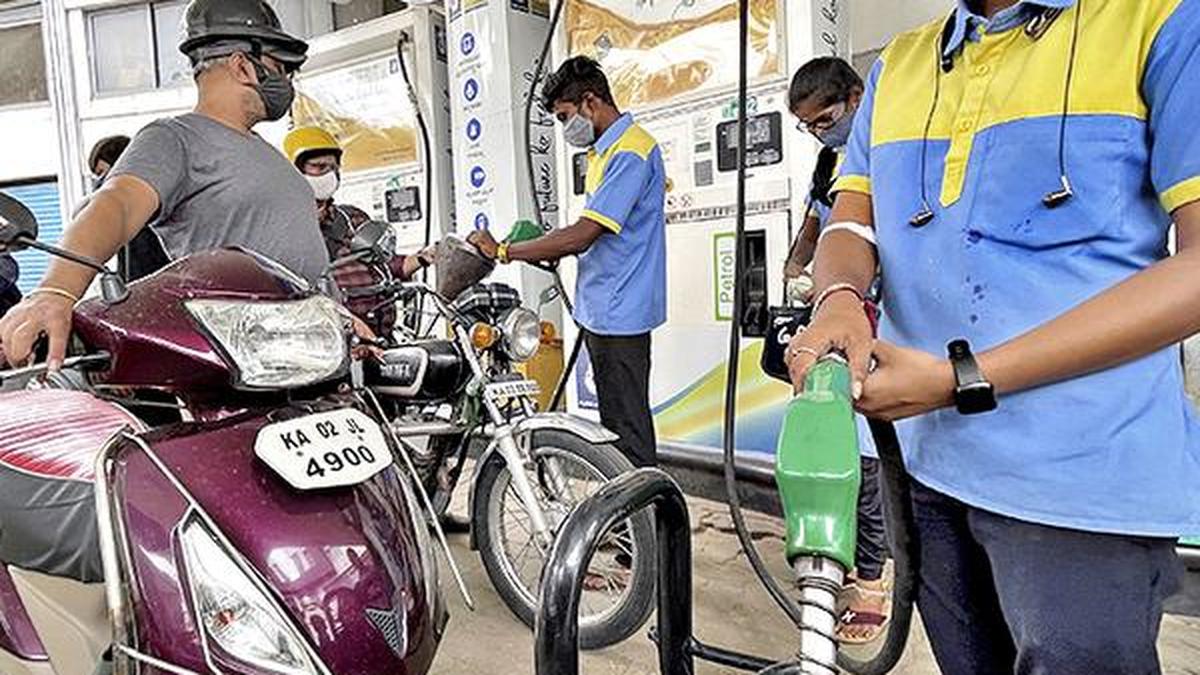
There are various reasons fossil fuel subsidies are hard to eliminate. Many subsidies directly affect the costs that fossil fuel producers face, so reducing subsidies tends to increase prices for consumers. Because fossil fuels touch nearly every economic sector, rising fuel costs elevate prices for countless goods and services.
Fossil fuels are the leading driver of climate change, yet they are still heavily subsidised by governments around the world.
Although many countries have explicitly promised to reduce fossil fuel subsidies to combat climate change, this has proven difficult to accomplish. As a result, fossil fuels remain relatively inexpensive, and their use and greenhouse gas emissions continue to grow.
I work in environmental and energy law and have studied the fossil fuel sector for years. Here’s how fossil fuel subsidies work and why they’re so stubborn.
A subsidy is a financial benefit given by a government to an entity or industry. Some subsidies are relatively obvious, such as publicly funded crop insurance or research grants to help pharmaceutical companies develop new drugs.
Others are less visible. A tariff on an imported product, for example, can subsidise domestic manufacturers of that product. More controversially, some would argue that when a government fails to make an industry pay for damage it causes, such as air or water pollution, that also amounts to a subsidy.
Subsidies, especially in this broader sense, are widespread throughout the global economy. Many industries receive benefits through public policies that are denied to other industries in the same jurisdiction, such as tax breaks, relaxed regulations or trade supports.
Governments employ subsidies for political and practical reasons. Politically, subsidies are useful for striking bargains or shoring up political support. In democracies, they can mollify constituencies otherwise unwilling to agree to a policy change. The 2022 Inflation Reduction Act, for example, squeaked through Congress by subsidizing both renewable energy and oil and gas production.


The ₹88.41 crore AMRUT scheme aims to eliminate Kavali's water scarcity, transforming the town’s infrastructure and services.

A 4.1 magnitude earthquake struck Sikkim's Mangan district; no casualties or property damage reported.

Telangana government updates building rules, increasing TDR usage, allowing more floors, and easing setback regulations for developers.

The escalating Israel-Iran conflict over the South Pars gas field threatens global energy security and impacts India's energy imports.

Delhi's weather forecast: clear skies, maximum temperature around 30°C, and moderate air quality with an AQI of 154.

Union Minister Kiren Rijiju meets Tamil Nadu Bishops and pastors to discuss minority welfare and counter anti-BJP narratives.

Japan may consider minesweeping in the Strait of Hormuz post-ceasefire, says Foreign Minister Motegi, amid ongoing regional tensions.

Delhi University job fair guidelines excluding School of Open Learning students spark protests over equity and access to opportunities.

Rwanda's Fanny Utagushimaninde, at 15, becomes the youngest player to score a T20 international century.

Assembly polls 2026: Follow updates from The Hindu on the upcoming elections in five States, on March 22, 2026

Currently, only the services in the 32 series stop at the section of the road adjacent to the Broadway terminus, temporarily closed on account of reconstruction work. Small traders association tells R. Ragu that ensuring the services now accommodated at the temporary terminus at Island Grounds stop at NSC Bose road would benefit visitors to the markets in Parrys

The Hindu photo feature on Aragam which is now known as book village. Photos and text by Imran Nissar

The silent reading movement in the Mylapore-Mandaveli-RA Puram area showed up first at Nageswara Rao Park around two years ago, with modest ambitions, when Balaji launched it along with other reading enthusiasts from the region. This initiative has now moved parks, and seems to set to get entrenched in one. Due to renovation work at Nageswara Park, the reading session became irregular. With the Nageswara Rao park work gaining more surface area, it had to be shifted elsewhere. And it seems set to continue with a newly discovered green patch in RK Nagar in the Sundays to follow.