Why are cyclones in the Arabian Sea so uncommon? Premium
The Hindu
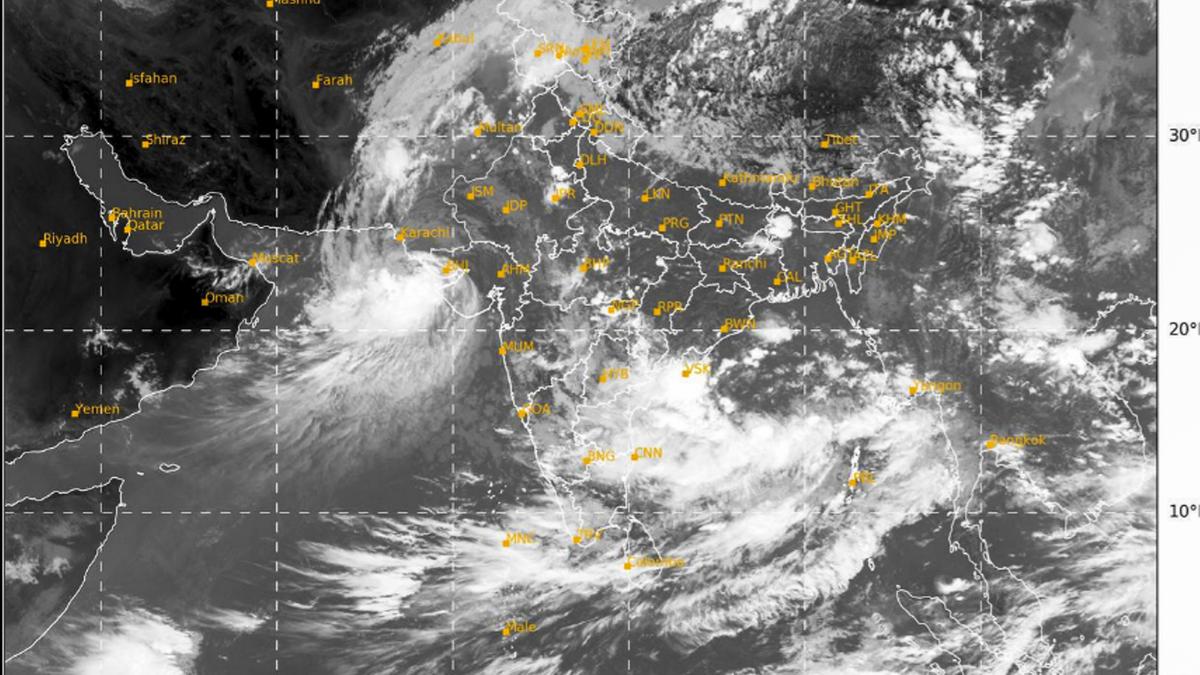
A rare August cyclone, named ‘Asna’, currently lying off the Kutch coast is more unusual for being land-born. Prof. Raghu Murtugudde explains how it took shape and why cyclones are so uncommon in the Arabian Sea.
The North Indian Ocean supplies a large part of the moisture required to generate the 200 lakh crore or so buckets of water during the summer monsoon. That implies a lot of evaporation from the Arabian Sea and the Bay of Bengal, which requires these seas to be warm enough to allow evaporation. This is why warm tropical oceans also tend to lend themselves lots of cyclones.
And yet, the North Indian Ocean is the least active region of the world’s oceans vis-à-vis the number of cyclones. The combination of some factors that favour cyclogenesis and some that suppress it make this area unusual in terms of cyclone seasons, numbers, and the response of the ocean and the cyclones to global warming.
The Indian Ocean receives a lot of attention for its monsoonal circulation and the dramatic seasonal wind reversals to the north of the equator. But it’s also unique because it has ‘oceanic tunnels’ connecting it to the Pacific Ocean and the Southern Ocean. The Pacific tunnel brings a significant amount of warm water every year in the upper 500 m while the Southern Ocean tunnel brings in cooler waters under about 1 km.
The Arabian Sea warms rapidly during the pre-monsoon season as the Sun crosses over to the Northern Hemisphere. The Bay of Bengal is relatively warmer than the Arabian Sea but warms further and begins to produce atmospheric convection and rainfall. The trough that eventually leads to the monsoon onset over Kerala arrives in mid-May itself over the Bay of Bengal.
The post-monsoon season is the northeast monsoon season for India, and produces significant amounts of rain over several states.
All these wind patterns and sea surface temperatures influence cyclogenesis throughout the year over the North Indian Ocean and sustain the stark contrast in cyclogenesis between the Arabian Sea and the Bay of Bengal.
Climate change amplifies the uniqueness of the Indian Ocean. More heat is coming in from the Pacific Ocean now while the Southern Ocean also is pushing in warmer waters. The Indian Ocean is warming rapidly due to these inputs, plus atmospheric changes in winds and humidity.


Discover the Minor Planet Centre, the key hub for tracking and verifying observations of small solar system bodies.

Discover the Minor Planet Centre, the key hub for tracking and verifying observations of small solar system bodies.

In this week's Science for All newsletter, XX explains

Test your knowledge with the quiz on Science films at the Oscars through history

Set between the Siwalik hills and the plains, Butwal offers travellers a mix of regional cuisine, pilgrimage trails to Lumbini and the comfort of Hyatt’s new hospitality landmark

Explore 2026's wallpaper trends in India, highlighting botanicals and handmade designs that enhance modern homes with nature-inspired aesthetics.

Mercedes-Benz CLA 250+ with EQ Technology review: design, performance, range and features explained. Discover how the new electric CLA combines advanced AI, long range, fast charging and futuristic styling for the next generation of luxury EVs.

AI tool for sparrow conservation

BTS’s comeback with ‘Arirang’ marks a major global music event. When does the album release, and where can you watch their concert live stream? We have all the details

The 2026 U.S. cholesterol guidelines urge starting screening and treatment at 30 to prevent cardiovascular disease effectively.

Olam Festival 2026 in Thiruvananthapuram returns March 27-29 with 120+ vendors, music, art, and cultural zones.

A few storytellers in Thiruvananthapuram share their journeys, challenges, and evolving methods on World Storytelling Day, inspiring young minds.

76-year-old Kurian Jacob from Kerala triumphs with seven medals, including five golds, at the Open Masters Games in Abu Dhabi.