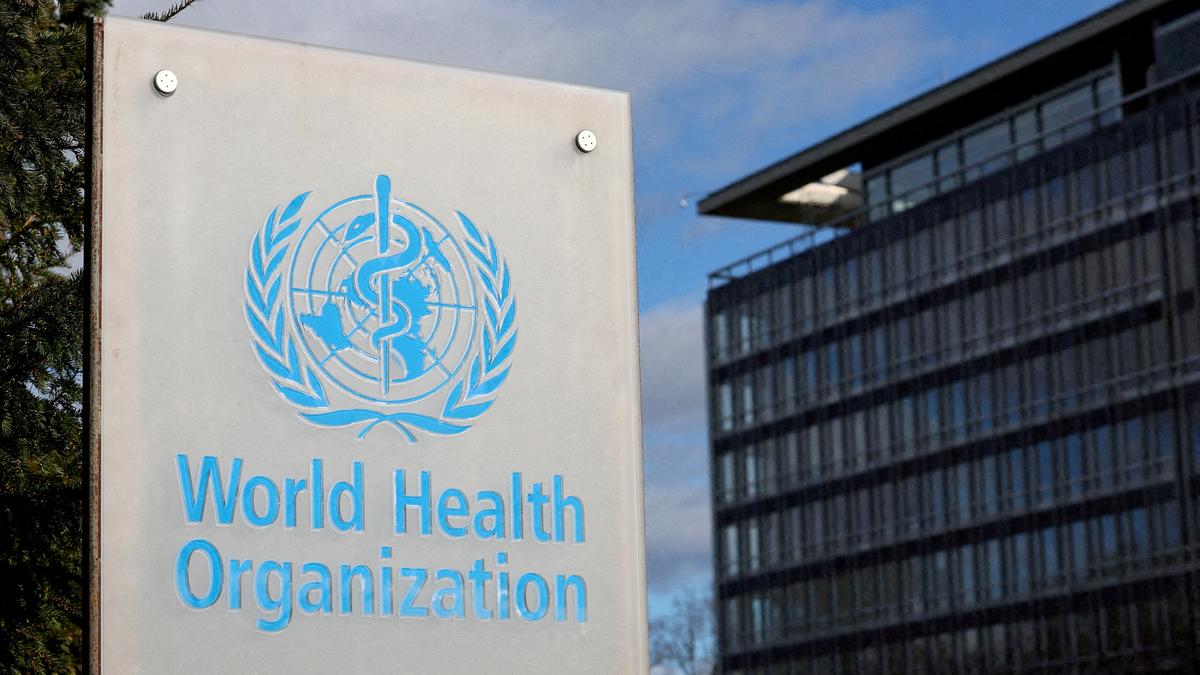
WHO looks ahead to life after the US
The Hindu
World Health Organisation officials gather in Geneva to address funding cuts and plan for a post-US future.
Hundreds of officials from the World Health Organisation (WHO) will join donors and diplomats in Geneva from May 19 with one question dominating their thoughts: how to cope with crises from mpox to cholera without their main funder, the US.
The annual assembly, with its week of sessions, votes, and policy decisions, usually showcases the scale of the UN agency set up to tackle disease outbreaks, approve vaccines, and support health systems worldwide.
This year, since US President Donald Trump started the year-long process to leave the WHO with an executive order on his first day in office in January, the main theme is scaling down.
"Our goal is to focus on the high-value stuff," Daniel Thornton, the WHO's director of coordinated resource mobilisation, told Reuters.
Just what that "high-value stuff" will be is up for discussion. Health officials have said the WHO's work in providing guidelines for countries on new vaccines and treatments for conditions from obesity to HIV will remain a priority.
One WHO slideshow for the event, shared with donors and seen by Reuters, suggested work on approving new medicines and responding to outbreaks would be protected, while training programmes and offices in wealthier countries could be closed.
The United States had provided around 18% of the WHO's funding. "We've got to make do with what we have," said one Western diplomat who asked not to be named.


Russia claims control of Potapivka village in Ukraine's Sumy region amid ongoing military efforts to establish a buffer zone.

Iranian missile strikes on Israeli towns cause widespread damage and injuries, marking a significant escalation in the ongoing conflict.

As Gor makes first trip as U.S. Special envoy to South Asia, Delhi watches strategic signals closely
Sergio Gor's inaugural trip as U.S. Special Envoy to South Asia signals strategic U.S. engagement amid regional tensions.

Slovenians vote in a tight election between liberal and populist candidates, impacting the country's future domestic and foreign policies.

Netanyahu asserts U.S.-Israel alliance fights Iranian threats, emphasizing global security after missile strikes on Israeli and European targets.

Israeli settlers attack Palestinian villages in the West Bank, causing injuries and destruction amid ongoing settlement expansion.

Britain asserts no evidence of Iran planning missile strikes on Europe, despite Israeli claims of missile capabilities.

UNESCO reports over half of countries have banned phones in schools due to concerns about attention, cyberbullying, and social media impact.

Analysis reveals a U.S.-operated Patriot missile likely caused a pre-dawn explosion in Bahrain, injuring numerous civilians.

Sri Lanka raises fuel prices by 25% amid ongoing West Asia conflict, impacting petrol and diesel costs significantly.

Iran strikes near Israeli nuclear research center as Trump threatens attacks on Iranian power plants
Iran's missile strikes near Israel's nuclear site escalate tensions as Trump threatens retaliation against Iranian power plants.

Saudi Arabia intercepts one of three ballistic missiles targeting Riyadh amid ongoing regional tensions and threats from Iran.

Iran's death toll exceeds 1,500 amid escalating war, with heavy airstrikes and shifting U.S. and Israel strategies reported.