When the stars came out
The Hindu
The James Webb telescope is an exemplar of collaborative science and human ingenuity
The dominant narrative these days across much of the world is, as Ayn Rand said about her novel The Fountainhead, the story of ‘individualism versus collectivism, not in politics, but in man’s soul’. In India, we too celebrate such individualism where heroic individuals, through their will power, strategic vision, perseverance and unique personal qualities, lift society up by its bootstraps and, like Nietzsche’s superman, and create a new moral order. This new social order will, ostensibly, enjoy a higher level of human creativity and human freedom. In this narrative, individualism has built the modern world.
This is, however, only half the story. While Elon Musk, Jeff Bezos, Stephen Schwarzman, N.R. Narayana Murthy, Mukesh Ambani have made a significant difference as individuals, as also countless others who have passed away, there is another perspective that is equally significant but has rarely been celebrated. Obscured by the dominant narrative, this other account applauds the contribution of groups. Working together in collaborations, such groups, through sharing and cooperation, produce outcomes that are no less beneficial for society. In this story, there are no supermen just worker bees.
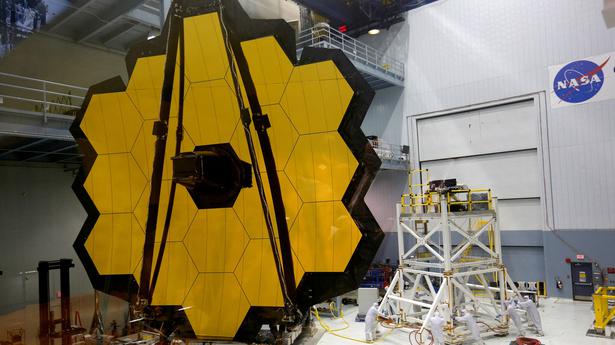
The making of the $9.7 billion James Webb telescope is one such story. One of the most significant technological achievements of the last few years, that involved construction, transportation, launching, alignment, and deployment in deep space, the James Webb Space Telescope (JWST) is a project that marked twenty plus years of continuous collaboration between many teams. Its successful placement in deep space is a defining moment in humankind’s history of reaching for the stars. Another journey into ‘man’s soul’ has just begun.
There are four aspects in this other narrative, that are complementary to, and not competitive with, that of the superman. These are, the ambitions of the project; how it was put together; the technologies involved; and its implications for human society. Taken together, they constitute an illustrative case of the collective production of a common good.
The James Webb telescope was imagined by its initiators as the coming together of many cutting-edge technologies. It was planned to enable humanity to peer deeper into space and to look further back in time. The telescope will give us new knowledge about the origins of the universe. Because it is essentially an Infra-red spectrum telescope, as compared to the Hubble which worked largely in the UV and visible light range, it will allow us to stare into the beginnings of the ‘cosmic dawn’, a period 250 million years after the big bang when light began to break through the cloud of mist and the first stars and galaxies began to form. The JWST will take us back about 150 million years further than Hubble, closer to when it all began.
The project seeks to understand how galaxies form and evolve. It will look for evidence of dark matter, study exoplanets, capture images of planets in our solar system, and other such cosmic curiosities. This knowledge will impact not just the physical sciences but also the humanities and social sciences as we attempt to understand our own place in the universe and ask those perennial questions such as: Is there other life in the universe? Will it look like us and, more worrying, will it look for us? What is the relation between ‘chance’ and ‘necessity’, to use Jacques Monod’s thesis, in the emergence of life? In this ambition, the JWST belongs to the classical tradition of scientific inquiry: the pursuit of fundamental curiosity untouched by special interests.
The CEO of Northrop Grumman, an aerospace and defence company and the primary contractor of the project, has gone on record to announce that because of the delays and production lapses, the company would only book profits after the successful deployment of the telescope.


Explore 2026's wallpaper trends in India, highlighting botanicals and handmade designs that enhance modern homes with nature-inspired aesthetics.

Mercedes-Benz CLA 250+ with EQ Technology review: design, performance, range and features explained. Discover how the new electric CLA combines advanced AI, long range, fast charging and futuristic styling for the next generation of luxury EVs.

AI tool for sparrow conservation

BTS’s comeback with ‘Arirang’ marks a major global music event. When does the album release, and where can you watch their concert live stream? We have all the details

The 2026 U.S. cholesterol guidelines urge starting screening and treatment at 30 to prevent cardiovascular disease effectively.

Olam Festival 2026 in Thiruvananthapuram returns March 27-29 with 120+ vendors, music, art, and cultural zones.

A few storytellers in Thiruvananthapuram share their journeys, challenges, and evolving methods on World Storytelling Day, inspiring young minds.

76-year-old Kurian Jacob from Kerala triumphs with seven medals, including five golds, at the Open Masters Games in Abu Dhabi.

Explore the nature of the human mind as an emergent property of brain activity and complex neural interactions.

CERN's Large Hadron Collider discovers the Xi-cc-plus particle, enhancing understanding of quantum mechanics and baryon behavior.

Vibha Batra’s latest book, Spotless (Hachette India) is a novel in verse for young adults

In its first edition, the Madras Art Salon spotlights the works of journalist and artist Narayan Lakshman at The Botanical Club, a social space in the British Deputy High Commission, Chennai

Cholesterol enhances melanoma cell invasion by making nuclei squishier, revealing a potential treatment target in cancer progression.