When palaces rise like the phoenix Premium
The Hindu
Discover fading palaces in rural Tamil Nadu, restored by PWD to create unique tourist destinations beyond the norm.
Tucked away in the heart of rural Tamil Nadu, centuries-old palaces and mansions stand as fading testaments to a bygone era. From the opulent palaces of Nayaks and Nawabs to the grand zamin structures, these architectural wonders, embedded in the tales of dynasties, art and culture, are crumbling under the weight of time and neglect.
The Public Works Department (PWD) has turned the spotlight on the restoration of a wide range of such heritage structures. The exercise is driven by the belief that if restored, these under-explored places can be turned into unique destinations for those seeking something beyond the tourist circuits.
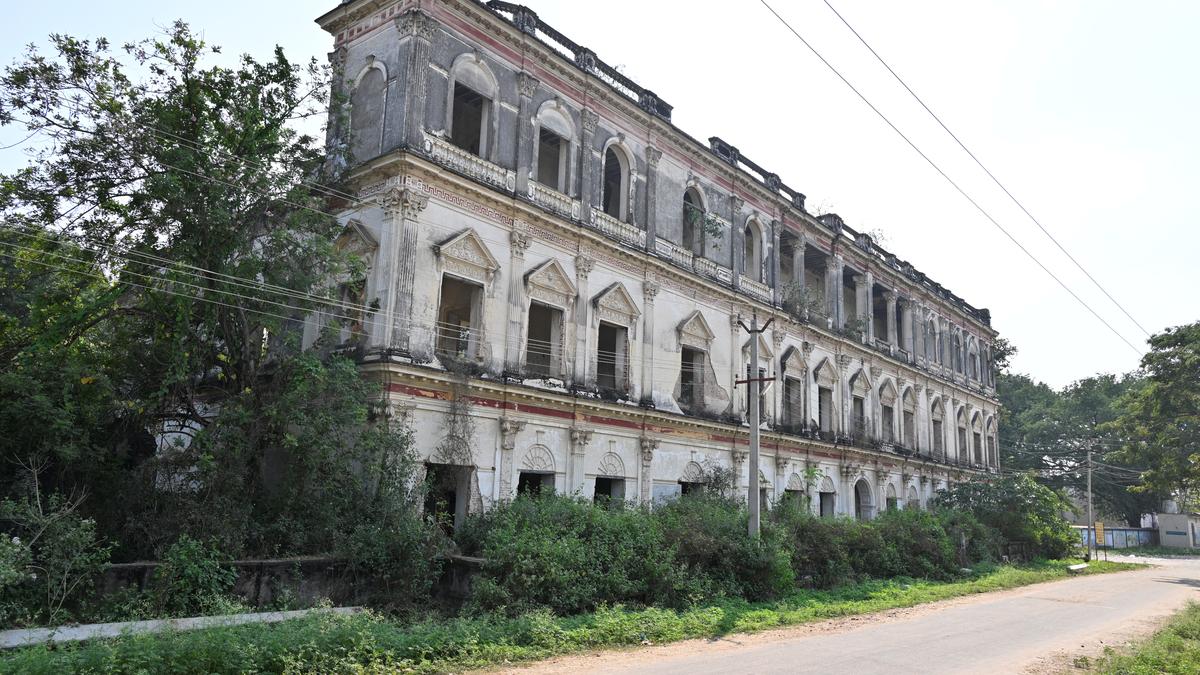
Nestled at a place a few kilometres from Arani, a town known for its silk heritage in Tiruvannamalai district, the historic Sathya Vijaya Nagaram Palace, better called the Arani Jagir palace, stands tall as one of the forgotten gems of Tamil Nadu. A ride through the narrow village roads leads to the grand structure.
This example of ‘Stuart Architecture’, spread over 4,600 square metres, is falling apart. The two-storey building has multiple windows with striking motifs on its facade. Such stucco works, with figures such as lions, flowers, and human faces, have filled the walls and pillars. The S.V. Nagaram Raja Palace was constructed by Jagir (Zamindar) Venkatanatha Rao Sahib in 1825. With vegetation creeping through its cracks and debris scattered across its once-grand interiors, the palace has been left neglected and unoccupied for over three decades. Among the stunning architectural features is a pipeline made of curved terracotta tiles jutting out of the wall to convey rainwater to the ground.
Pointing to the board at the entrance of the campus, officials of the Building Centre and Conservation Division (BCCD), the heritage wing of the PWD, say it was once used as an office and training centre by the Regional Institute of Rural Development and Panchayat Raj. An estimate of nearly ₹60 crore has been prepared for restoring it. The proposal awaits the government’s approval. The complex includes a two-storey Queen’s Palace, spread over 2,950 square metres and with a fountain at its rear. This structure is in a better shape with its Madras terrace roof nearly intact. A plaque in the dancing or durbar hall reads that it was renovated in 2009 with aid from Anna University. This site is waiting for a ₹13-crore project to take off.
Noting that similar structures in other districts have gained prominence as tourist destinations, particularly the Chettinad region, residents want the area to become a tourist hub even as the PWD is planning to renovate such lesser-known royal sites in the North Arcot region. A number of heritage structures, including those from the colonial era, have been identified. On the list is the 17th Century Nawab’s bungalow in Walajah, Ranipet district. Two major structures in the region will be restored in two phases this year. The PWD is conserving the Desingu Raja Rani Memorial in Ranipet district, which was built in 1771. Work is under way to restore the two tomb-like structures in an octagonal shape at a cost of ₹2.5 crore. Landscaping, an ornamental water fountain, a memorial park with a statue of Desingu Raja, and a gallery showcasing the monument’s history are part of the project.
Tiruvannamalai district also boasts of another magnificent structure, Poosimalaikuppam Palace, known by several other names — French castle, shooting box, and ‘Kannadi Maaligai’ (a mirror palace). Located in Arani taluk at the base of a range of small hills, the forest palace is attracting tourists and adventure-seekers, say officials. Constructed by the 10th Arni Jagir, Srinivasa Rao Sahib, in 1850, the palace included a building that housed a kitchen. It was used as a school and shelter for Sri Lankan Tamil refugees till the 1990s. The PWD is set to complete the Herculean task of raising it from a skeleton without roof. Officials say ornamental cornices of the roof and rooms with attached dressing rooms and verandahs are being redone on the basis of old photographs. The two-storey palace also had chimneys for the fireplace. Traditional square tiles from Pavoorchatram are being fixed on its Mangalore-tiled roof. Once the work is completed by August, it can be developed as a tourist spot with a library or a museum, officials say.


Anuradha Jonnalagadda took over as in-charge Vice-Chancellor of the University of Hyderabad, focusing on continuity during the transition.

Telangana government awaits committee report on TGSRTC staff absorption, with decisions to be made at an appropriate time.

Telangana's revised pay scale implementation for employees will take timer. The tenure of Pay Revision Commission extended. Govt likely to take decision on reccomendation based on its report.

Vizianagaram's SP A.R. Damodar highlights 20 accident-prone areas and urges drivers to prioritize safety with helmets and seat belts.

Kerala HC stays disqualification of SNDP Yogam leaders, reversing a single judge's order regarding financial and regulatory compliance issues.

Karnataka announces daily supply of 10,000 LPG cylinders to hotels, easing the commercial shortage for the hospitality industry.

Malayalam superstar Mohanlal will be reuniting with filmmaker Priyadarshan, it was announced recently. It will mark the 100th film of Priyadarshan and is backed by Mohanlal’s longtime collaborator, Antony Perumbavoor

Gautham Vasudev Menon loses Madras High Court appeal, ordered to pay ₹4.25 crore to R.S. Infotainment with interest.

AIADMK faces its toughest challenge in 53 years as it prepares for the crucial 2026 T.N. Assembly elections.

Lakmé Fashion Week x FDCI 2026 in Mumbai: What worked and what didn’t

Telangana CM announces underpass beneath Begumpet Airport runway to alleviate traffic congestion in Hyderabad.

Congress leader Ramesh Chennithala claims an alliance between Pinarayi Vijayan, Modi, and Shah aims to undermine UDF in Kerala elections.

CCB arrests Bengaluru couple for running a fake government job scam, cheating over 100 victims out of crores.