What was the tussle over Covaxin IPR? | Explained Premium
The Hindu
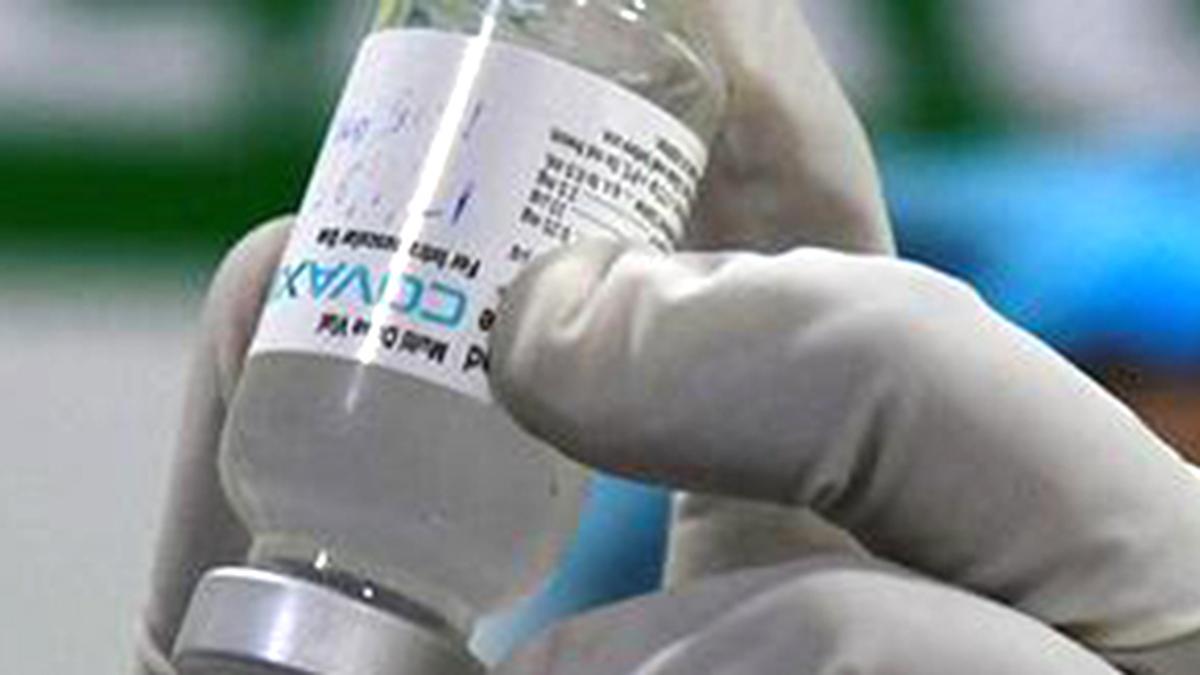
Bharat Biotech, maker of Covaxin,admitted to an “inadvertent error” in patent filings to protect the vaccine’s Intellectual Property Rights, failing to include scientists from the Indian Council of Medical Research (ICMR) as co-inventors in the filings.
The story so far: The maker of the indigenous coronavirus vaccine, Covaxin, Bharat Biotech International Limited (BBIL), has admitted to an “inadvertent error” in patent filings to protect the vaccine’s Intellectual Property Rights (IPR). One of India’s leading biotechnology companies, it had failed to include scientists from the Indian Council of Medical Research (ICMR) as co-inventors in the Covaxin patent filings.
India’s patent laws govern both product and process patents. Product patents grant an inventor a monopoly over, say, a drug. Process patents bar competitors from making a similar drug using the same sequence of steps. In response to queries from The Hindu, Bharat Biotech said it had patented the process, namely of making a batch of vaccines from the virus strains that were provided by the ICMR-NIV (National Institute of Virology). This is the lab that has expertise in extracting viruses from blood samples, identifying its characteristics, conducting various tests to gauge its infectiousness and qualify it in comparison to related strains. However, preparing a vaccine out of this at an industrial scale is beyond the capabilities of a lab and requires a different order of facilities that only established vaccine manufacturers have. Covaxin is an inactivated version of COVID-causing coronavirus; once injected into the body it coaxes it into producing antibodies that can potentially protect against severe disease from a coronavirus infection. To do this effectively, an ‘adjuvant’ is added which increases the vaccine’s potency. Vaccine makers may have their own ways of bringing all of these steps together and, given the competitive nature of the field, strive to ward off competitors from imitating these processes to gain a temporary monopoly in the market and rake profits.
To be sure, while companies are free to file for a product or process patent in as many countries as they can afford, a patent is only granted after regulatory authorities grant them one or are convinced that this process is indeed novel or inventive. BBIL, as far is publicly known, hasn’t yet been granted these patents.
BBIL had collaborated with the ICMR-NIV for all the steps in developing a vaccine. The two organisations had signed an agreement that spelt out each entity’s responsibilities. As ICMR is a public entity and because of the scale of the COVID crisis, there were Right To Information requests to make this agreement public. However, it was only in July 2021, that parts of the agreement were made public in Rajya Sabha.
Beyond transferring the strains and making vaccines, the agreement said, ICMR would also test these vaccines on animals — rodents to monkeys — and then on people to establish that the vaccine worked as intended. The ICMR also funded these clinical trials — ₹35 crore — and incurred costs in developing Covaxin. In return it was to get 5% of royalties that BBIL earned from the sale of Covaxin. Since the announcement of the BBIL and ICMR collaboration, it was generally accepted that both entities would contribute to the vaccine and would therefore hold “joint intellectual property rights,” as was stated in Parliament.
However, BBIL first told The Hindu that it made a distinction between the rights governing the making of the vaccine and the rights over the data generated from clinical trials. The ICMR hadn’t invested in the actual making of the vaccine and so wasn’t included in patent applications. However, a day after the matter became public, BBIL said it had made a mistake, and that it would be making amends by filing fresh applications that listed ICMR personnel as inventors. It is unclear what prompted this.
IPR is a vast, complex domain and spans the minutest parts of the product invention process. As the development of pharmaceutical products involves a wide range of expertise, it is hard for single firms or entities to develop everything in-house. Just like the BBIL-ICMR collaboration, companies may enter into several licensing agreements — BBIL for instance had a technology licensing agreement with Virovax for the adjuvant — with other companies. If a single product thus involves multiple entities and collaborators, being listed as an inventor has a bearing on the sharing of intellectual property rights, royalties and even determining how a product can be used. There is no field of human activity that is untouched by disputes over IPR. In patent filings, not listing out all the inventors — in the U.S especially — could even lead to patent applications being rejected.


76-year-old Kurian Jacob from Kerala triumphs with seven medals, including five golds, at the Open Masters Games in Abu Dhabi.

Explore the nature of the human mind as an emergent property of brain activity and complex neural interactions.

CERN's Large Hadron Collider discovers the Xi-cc-plus particle, enhancing understanding of quantum mechanics and baryon behavior.

Vibha Batra’s latest book, Spotless (Hachette India) is a novel in verse for young adults

In its first edition, the Madras Art Salon spotlights the works of journalist and artist Narayan Lakshman at The Botanical Club, a social space in the British Deputy High Commission, Chennai

Cholesterol enhances melanoma cell invasion by making nuclei squishier, revealing a potential treatment target in cancer progression.

The designers reinterpret the Swedish artist’s symbolic forms and colour energy through contemporary resortwear silhouettes

Discover the inspiring legacy of Bibha Chowdhuri, a pioneering woman in physics and a trailblazer in STEM history.

Discover the inspiring legacy of Bibha Chowdhuri, a pioneering woman in physics and a trailblazer in STEM history.

Ashdeen’s Spring 2026 collection features saris inspired by the designer’s Parsi gara archive

Red ochre burials, ritual markings and myths across cultures show that red repeatedly marks liminal thresholds such as puberty, sacrifice and death; anthropologists argue that the colour functions as a technology of collective ritual and value, binding communities through shared symbolic acts

India approves 23 institutions for quantum labs under the National Quantum Mission, aiming to advance quantum technology and research.

India approves 23 institutions for quantum labs under the National Quantum Mission, aiming to advance quantum technology and research.