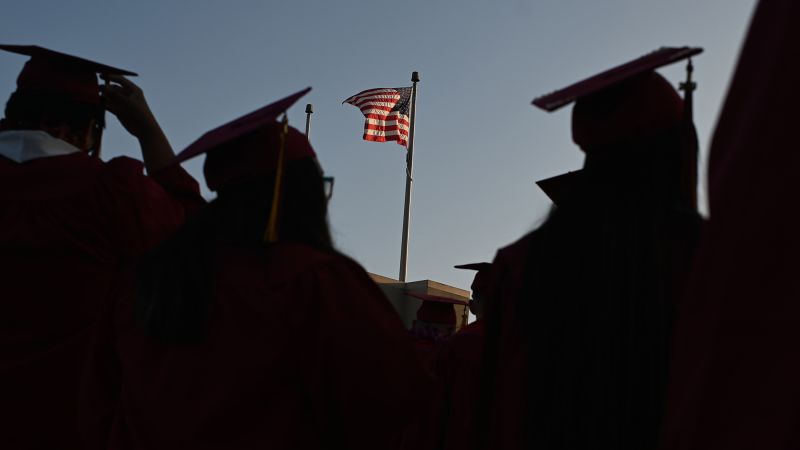
What the restart of defaulted student loan collection means for borrowers
CNN
The Department of Education restarted collections of loans in default on Monday, putting millions of borrowers at risk of having their benefits and wages garnished. Here’s what to know.
The Department of Education restarts collections of loans in default on Monday, putting millions of borrowers at risk of having their benefits and wages garnished. The move arrives as the Trump administration works to dismantle the Education Department and aggressively roll back former President Joe Biden’s policies, including those around student loan forgiveness. It’s expected to affect the more than 5 million borrowers who are in default. And that number could rise over the next few months: There are 4 million additional borrowers in “late-stage delinquency,” which occurs after 90 days without payment, the department said in a news release last month. Here’s what we know so far: Federal student loans go into default after 270 days without payment. If you are not in default, the move to restart sending loans in default to collections will not affect you. When a student loan goes in default, it will be reflected on your credit report. You can check on the status of your loan by reaching out to your student loan servicer or visiting the Federal Student Aid website for more information. Experts who spoke with CNN recommend that even if you know your loans aren’t in default, you should still check on the status of your loans and stay informed on options available to you.


Tens of thousands of taxpayer dollars were spent on expenses for hair and makeup artists and a horse for the advertisement showcasing outgoing Department of Homeland Security Secretary Kristi Noem in front of Mount Rushmore, according to invoices seen by CNN.

President Donald Trump was presented Sunday with a potential off-ramp to the more than month-long Department of Homeland Security shutdown: fund every part of the department except enforcement operations by Immigration and Customs Enforcement, two sources familiar with the conversations told CNN.

Immigration and Customs Enforcement agents are heading to 13 airports today to help with crowd management as travelers at some airports wait in hours-long security lines amid the DHS shutdown. Follow here for the latest.

A consortium of the nation’s top architectural and historic preservation groups is targeting President Donald Trump’s plans to temporarily close and extensively renovate the Kennedy Center, filing a new lawsuit Monday that asks a federal judge to indefinitely halt the project.

ICE agents sent to airports as TSA callouts remain high; separately, two people have died after a plane collided with a fire truck at New York’s second biggest airport. Follow for live updates

Mike Pence used to dream of following two successful Donald Trump terms with his own turn in the White House.

An Air Canada plane was damaged after colliding with a vehicle on a runway at New York’s LaGuardia Airport Monday, according to video from the scene and air traffic control audio.

A statue of Christopher Columbus has been erected outside of an ornate federal office building on the White House grounds — the latest sign of the Trump administration’s efforts to reshape cultural and historical representations across the nation’s capital.

Kentucky Gov. Andy Beshear, speaking in JD Vance’s home state of Ohio on Saturday, tore into the vice president, questioning his Appalachian roots and telling voters they “deserve better.”

President Donald Trump has said ICE agents will head to US airports tomorrow amid a partial government shutdown. Follow for live updates

Cuba is working to restore the electricity supply after another island-wide blackout left more than 10 million people without power.

President Donald Trump said Sunday border czar Tom Homan will be in charge of deploying Immigration and Customs Enforcement agents to airports on Monday, with Homan telling CNN the agents will help with security at entrances and exits to ease the Transportation Security Administration’s workload.

Donald Trump wants us to believe that a deal with Cuba is close at hand. After this past week, I am not so sure.