What science is finding about the Shroud of Turin and the controversy around it Premium
The Hindu
Millions of Christians around the world believe that this Shroud of Turin is the cloth that was used to bury Jesus after his crucifixion. The evidence, however, tells a different story.
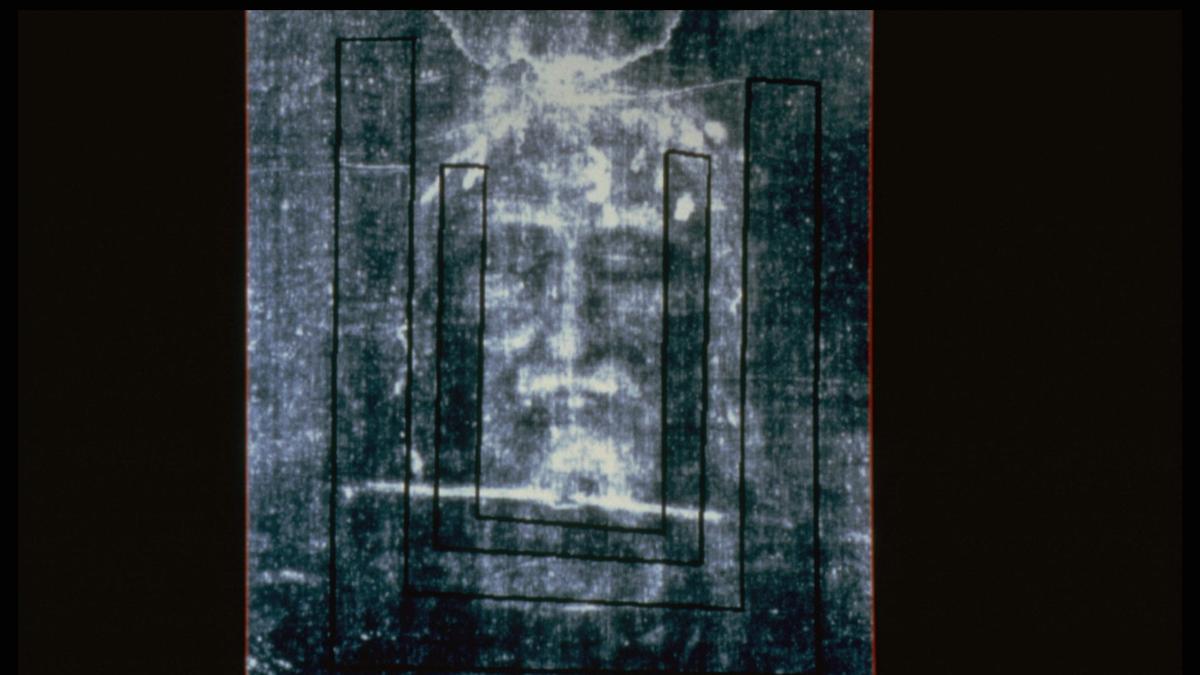
The Cathedral of St. John the Baptist in Turin, Italy, houses a fascinating artifact: a massive cloth shroud that bears the shadowy image of a man who appears to have been crucified. Millions of Christians around the world believe that this shroud – commonly called the Shroud of Turin – is the cloth that was used to bury Jesus after his crucifixion and that the image on the shroud was produced miraculously when he was resurrected.
The evidence, however, tells a different story.
Scientists have questioned the validity of the claims about the shroud being a first-century object. Evidence from carbon-14 dating points to the shroud being a creation from the Middle Ages. Skeptics, however, dismiss these tests as flawed. The shroud remains an object of faith, intrigue and controversy that reappears periodically in the public sphere, as it has in recent weeks.
As a scholar of early Christianity, I have long been interested in why people are motivated to create objects like the shroud and also why people are drawn to revere them as authentic.
The first public appearance of the shroud was in 1354, when it was displayed publicly in Lirey, a small commune in central France. Christian pilgrims traveled from all over to gaze upon the image of the crucified Jesus.
Pilgrimages like this were common during the Middle Ages, when relics of holy people began to appear throughout Europe. The relic trade was big business at the time; relics were bought and sold, and pilgrims often paid a fee to visit them.
Many believed that these relics were genuine. In addition to the shroud, pilgrims visited Jesus’ crib, splinters from the cross and Jesus’ foreskin, just to name a few.


BTS’s comeback with ‘Arirang’ marks a major global music event. When does the album release, and where can you watch their concert live stream? We have all the details

The 2026 U.S. cholesterol guidelines urge starting screening and treatment at 30 to prevent cardiovascular disease effectively.

Olam Festival 2026 in Thiruvananthapuram returns March 27-29 with 120+ vendors, music, art, and cultural zones.

A few storytellers in Thiruvananthapuram share their journeys, challenges, and evolving methods on World Storytelling Day, inspiring young minds.

76-year-old Kurian Jacob from Kerala triumphs with seven medals, including five golds, at the Open Masters Games in Abu Dhabi.

Explore the nature of the human mind as an emergent property of brain activity and complex neural interactions.

CERN's Large Hadron Collider discovers the Xi-cc-plus particle, enhancing understanding of quantum mechanics and baryon behavior.

Vibha Batra’s latest book, Spotless (Hachette India) is a novel in verse for young adults

In its first edition, the Madras Art Salon spotlights the works of journalist and artist Narayan Lakshman at The Botanical Club, a social space in the British Deputy High Commission, Chennai

Cholesterol enhances melanoma cell invasion by making nuclei squishier, revealing a potential treatment target in cancer progression.

The designers reinterpret the Swedish artist’s symbolic forms and colour energy through contemporary resortwear silhouettes

Discover the inspiring legacy of Bibha Chowdhuri, a pioneering woman in physics and a trailblazer in STEM history.

Discover the inspiring legacy of Bibha Chowdhuri, a pioneering woman in physics and a trailblazer in STEM history.