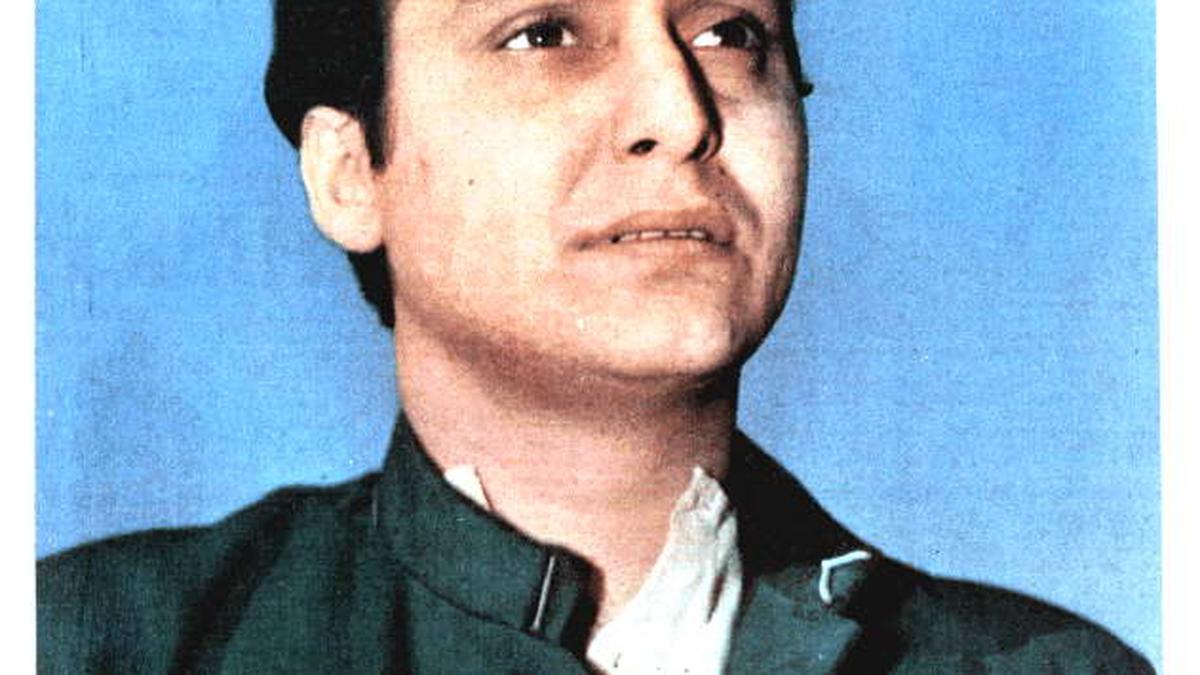
What made Soumitra Chatterjee Bengal’s much-loved actor?
The Hindu
A new biography sheds light on Soumitra Chatterjee’s cinematic journey
Two Indians of the 20th Century to have found among the greatest global recognition in the arts are Rabindranath Tagore and Satyajit Ray. And, closely tied to their life and work was Soumitra Chatterjee (1935-2020). Together, they played important roles in the flourishing of a culture that was simultaneously very Bengali yet universal. It was different from other parts of India — this was a world where Russian literature and German music mixed with Sanskrit and Bengali poetry.
Rabindranath, a friend of Satyajit’s grandfather, Upendra Kishore Roy Chowdhury, was a guru to Satyajit, who, in turn, was Soumitra’s mentor. The Indian government commissioned Satyajit to make a documentary on Rabindranath for the latter’s birth centenary (1961) — he also made films based on Rabindranath’s works, including Teen Kanya, 1961, Charulata (1964) and Ghare Baire (1984). In these films, Soumitra played a hero who seemed to be Rabindranath himself as much as one of his literary heroes, an ideal of the Bengali man.
Soumitra acted in 14, that is 50 per cent of the films Satyajit Ray made. He worked with other major directors, including Tapan Sinha and Mrinal Sen. He never worked with Ritwik Ghatak, whom he disliked intensely.
Soumitra had an elegance about him, in his refined looks and his great personal style. Like many legendary cinema actors, he was also trained in theatre, and worked closely with his directors to perfect his ‘less is more’ acting. His command of Bengali and its dialects and registers contributed immensely to his performances.
In these films, Soumitra often played an educated, cultural bhadralok figure, contemporary or historical, usually romantic, sometimes maudlin. It is easy to conflate the actor with the roles, and many continue to see him as Apu, after his first film with Satyajit, Apur Sansar (1959).
Sometimes, Soumitra played a more ambivalent character, notably as a seducer of unhappy wives — be it the innocent Amal of Charulata or the exploitative Sandip of Ghare Baire. He was convincing even as Narsingh in Abhijan, the inspiration for Scorsese’s Taxi Driver. Soumitra was also loved for his non-romantic Feluda, the Indian Sherlock Holmes, as Feluda himself acknowledges in the stories.
Although Amitabh Bachchan or Shah Rukh Khan may be among the better known Indian actors globally, Soumitra is known to all who watch world or arthouse cinema. He was by far the most handsome among of his highly talented contemporaries, which included greats such as Chabi Biswas, Robi Ghosh and Utpal Dutta. Soumitra acted with many of the smart and stylish actresses of his generation, including Madhabi Mukherjee, Supriya Choudhury, Aparna Sen and Sharmila Tagore, as well as Waheeda Rehman.


Kerala CM Pinarayi Vijayan condemns UDF's misogynistic attacks on CPI(M) legislator U. Prathibha, highlighting political degeneration.

Selected from 9,400 submissions across 37 countries, the 100 photographs on display traverse intimate and political terrains. In MRC Nagar, photographer Swastik Pal captures life in the Sundarbans, where severe climate change has brought humans and wildlife into closer contact. Shane Hynan’s Beneath Beofhod reflects on Ireland’s boglands as sites of memory and restoration, while Mateo Trevisan’s More than the Sun examines the impact of coal-driven industrialisation in the Western Balkans.

Hyderabad officials assure sufficient fuel supply for 60 days, warn against misinformation and illegal sales amid panic buying.

Telangana MP urges Centre to expedite ₹1,270 crore dues transfer from Andhra Pradesh for financial fairness and development.

A Karnataka man was detained with ₹62.5 lakh in cash during election checks on NH 544, claiming it was from a property sale.

Telangana Government issued 16 notifications to fill 31,798 vacancies, with 67,763 total recruitments since Congress took power.

Supreme Court directs Tarun Butolia's family to seek safety assessment from Delhi Police after fatal Uttam Nagar clash.

CM Stalin asserts unity in the DMK-led alliance, dismissing division attempts and emphasizing collaborative efforts for the upcoming elections.

Rahul Gandhi to skip Kerala rally due to Sonia Gandhi’s ill health; Kharge to attend Kozhikode event
Rahul Gandhi will miss the Kerala rally due to Sonia Gandhi's health; Congress president Kharge to attend instead.

Thunderstorms with lightning and gusty winds forecasted for 20 Telangana districts on March 26

TGSRTC reduces Metro AC and Deluxe bus fares by 30% in Hyderabad to encourage public transport amid the fuel crisis.

Supreme Court criticises Haryana Police for mishandling a four-year-old rape case, mandates swift action and oversight with a Special Investigation Team.

On World Theatre Day 2026, artists in Hyderabad call for affordable venues as rising costs and infrastructure gaps challenge the city’s theatre ecosystem.