What happens to Trump’s criminal and civil cases now that he’s been reelected
CNN
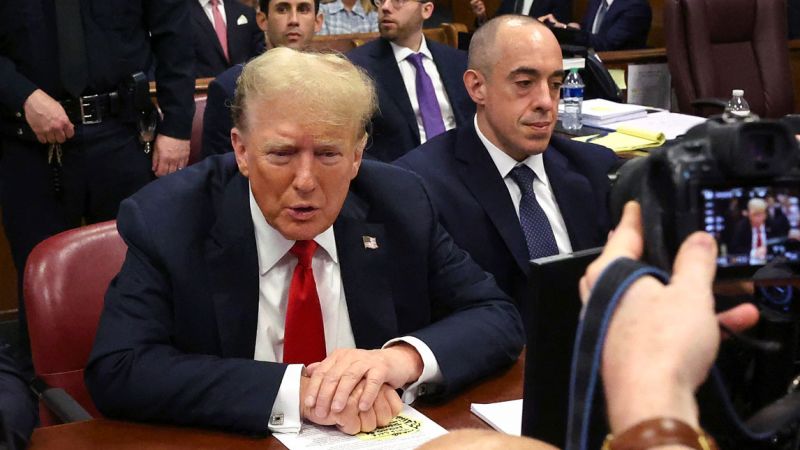
Donald Trump has been reelected to the White House as a convicted felon who is awaiting sentencing in his hush money case in New York and still working to stave off prosecution in other state and federal cases.
Donald Trump has been reelected to the White House as a convicted felon who is awaiting sentencing in his hush money case in New York and still working to stave off prosecution in other state and federal cases. It’s an extraordinarily unique position for him to be in: Never before has a criminal defendant been elected to the nation’s highest office, just as an ex-president had never been criminally charged until last year. Trump has said multiple times he plans to fire special counsel Jack Smith and end the federal cases against him for trying to overturn the 2020 presidential election and mishandling classified documents. “It clearly paid off to aggressively push to delay these cases as long as possible,” said Jessica Levinson, a constitutional law professor at Loyola Law School. In the meantime, a judge in New York is set to sentence the former president later this month after holding off on handing down the punishment ahead of Election Day to avoid any appearance of affecting the outcome of the presidential race – though Trump’s lawyers are expected to ask the judge to put off the sentencing now that he’s the president-elect. Trump has pleaded not guilty to all charges. Here’s what to know about the four criminal cases:


California Gov. Gavin Newsom said that he regretted using the word “apartheid” to describe the Israeli government’s treatment of Palestinians, though he warned “that’s a word you may hear others use” if Prime Minister Benjamin Netanyahu pushes for territorial gains.

Haiti is about to get a new set of foreign boots on the ground. The goal sounds simple: fight the gangs that have brought life to a standstill.

Oklahoma’s governor picks energy executive Alan Armstrong to fill US Senate seat through end of year
Oklahoma’s governor on Tuesday appointed energy executive Alan Armstrong to serve in the US Senate through the end of the year and finish the term of Republican Markwayne Mullin, the new homeland security secretary.

Newly confirmed Homeland Security Secretary Markwayne Mullin told senators during his confirmation hearing that he wanted to keep the department out of the headlines. That won’t be easy.

A trader made nearly $1 million since 2024 from dozens of well-timed Polymarket bets that correctly predicted US and Israeli military actions against Iran, according to an analysis shared with CNN.

Travelers have been dealing with worsening airport wait times as ICE agents deploy to more than a dozen airports. Follow for live news updates.

President Donald Trump voted in Tuesday’s state House special election by mail even as he suggested on Monday that “mail-in voting means mail-in cheating.”

CNN’s 5 Things AM brings you the news you need to know every morning.

The Supreme Court on Tuesday will consider the legality of a policy championed by President Donald Trump during his first term that prevented scores of migrants arriving at the southern border from starting the process of applying for asylum.

A young, well-liked facilities manager at the Kennedy Center has gone from being described as “in charge of HVAC and toilets” to head of the renowned arts institution.

Democrats in Florida are hoping to capitalize on the party’s recent special election overperformances and come out on top Tuesday in a special state House election for a Palm Beach district that includes President Donald Trump’s Mar-a-Lago residence.

The Supreme Court on Monday appeared ready to limit mail-in ballots, a move that would reinforce the justices’ pattern of shrinking voter protections and that has, at bottom, favored Republican interests and the Trump administration.

An Air Canada plane traveling from Montreal collided with an emergency vehicle on the runway at New York City’s LaGuardia Airport in the late hours of Sunday night, killing two pilots and injuring dozens of people.