Welcome to the London Zoo... Premium
The Hindu
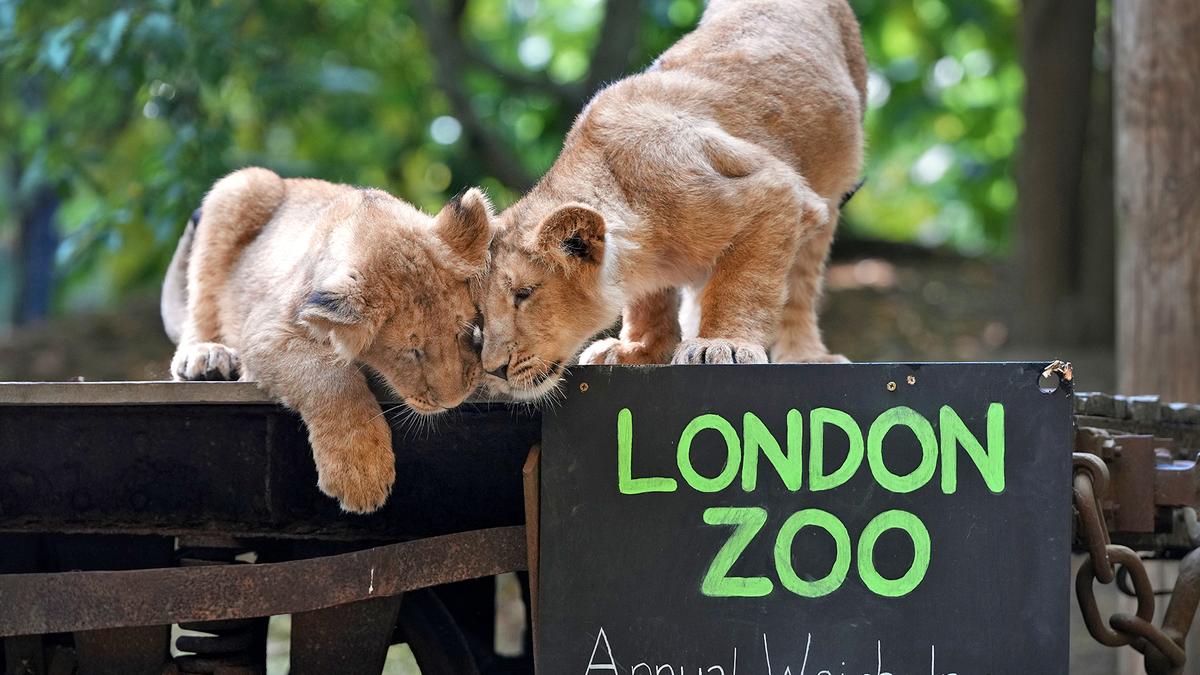
It’s been 197 years since the world’s oldest scientific zoo threw its doors open. What’s a scientific zoo? Who was responsible for setting up the London Zoo? What do the zookeepers do during a stocktake? A.S.Ganesh has the answers to all this and more…
Also called zoological gardens, scientific zoos are park-like areas housing animals primarily for the purpose of scientific study, conservation, and public education. Research and conservation efforts are often a priority for such scientific zoos, and they play a pivotal role in studying animal behaviour and genetics, and nurturing breeding programmes. Such zoos are also at the forefront of initiatives when it comes to educating the public about wildlife and conservation efforts. In addition to research, conservation efforts, and educational initiatives, welfare of the animals residing in the zoo is also of utmost importance.
The London Zoo is considered the world’s oldest scientific zoo. When it opened its doors on April 27, 1828, it was exclusively for the members of the Zoological Society of London – a society founded in 1826 to enable scientists to study animals kept in comparative freedom. It stayed that way for nearly two decades, before eventually opening its doors to the public in 1847 to help funding.
The London Zoo prides itself at being change-makers from its inception, often breaking new ground in conservation science while always passionately advocating for wildlife. With a focus on great architecture, they’ve constantly been able to spark a love of animals among its visitors. The animals’ enclosures are created with their interests in mind, while also creating spaces that foster wonder and learning among its visitors.
The London Zoo was the brainchild of Sir Thomas Stamford Raffles. Born in July 1781, Raffles had a short but adventurous life. His many accomplishments include founding modern Singapore and serving as the Lieutenant-Governor of Java. He also set up the oldest school in Singapore, which still bears his name – Raffles Institution.
A naturalist, Raffles built a huge collection of plants, animals, birds, and fish during his time in south-east Asia, in addition to thousands of drawings and paintings pertaining to natural history. This priceless collection, however, was lost as the ship carrying it back to England caught fire.
Not one to lose heart, Raffles set up the Zoological Society of London (ZSL) along with Sir Humphry Davy in 1826, following his return to England. Bringing together scientists and collectors in addition to other gentlemen (women were admitted from 1827 onwards), the Society’s objective was to form a collection of animals that could be studied by its members for the advancement of zoological knowledge. A lease on an area of Regent’s Park was obtained for this purpose in 1826 and Decimus Burton, a young architect, was roped in and tasked with planning the grounds of the zoo, which included designing accommodation for animals and laying out the gardens.
Shortly after setting up the ZSL and becoming its first president, Raffles unexpectedly died in July 1826, aged 45. Despite this setback, the members of ZSL ensured that Raffles’ dream came true and the London Zoo was set up and opened to its members on April 27, 1828.


The 2026 U.S. cholesterol guidelines urge starting screening and treatment at 30 to prevent cardiovascular disease effectively.

Olam Festival 2026 in Thiruvananthapuram returns March 27-29 with 120+ vendors, music, art, and cultural zones.

A few storytellers in Thiruvananthapuram share their journeys, challenges, and evolving methods on World Storytelling Day, inspiring young minds.

76-year-old Kurian Jacob from Kerala triumphs with seven medals, including five golds, at the Open Masters Games in Abu Dhabi.

Explore the nature of the human mind as an emergent property of brain activity and complex neural interactions.

CERN's Large Hadron Collider discovers the Xi-cc-plus particle, enhancing understanding of quantum mechanics and baryon behavior.

Vibha Batra’s latest book, Spotless (Hachette India) is a novel in verse for young adults

In its first edition, the Madras Art Salon spotlights the works of journalist and artist Narayan Lakshman at The Botanical Club, a social space in the British Deputy High Commission, Chennai

Cholesterol enhances melanoma cell invasion by making nuclei squishier, revealing a potential treatment target in cancer progression.

The designers reinterpret the Swedish artist’s symbolic forms and colour energy through contemporary resortwear silhouettes

Discover the inspiring legacy of Bibha Chowdhuri, a pioneering woman in physics and a trailblazer in STEM history.

Discover the inspiring legacy of Bibha Chowdhuri, a pioneering woman in physics and a trailblazer in STEM history.

Ashdeen’s Spring 2026 collection features saris inspired by the designer’s Parsi gara archive