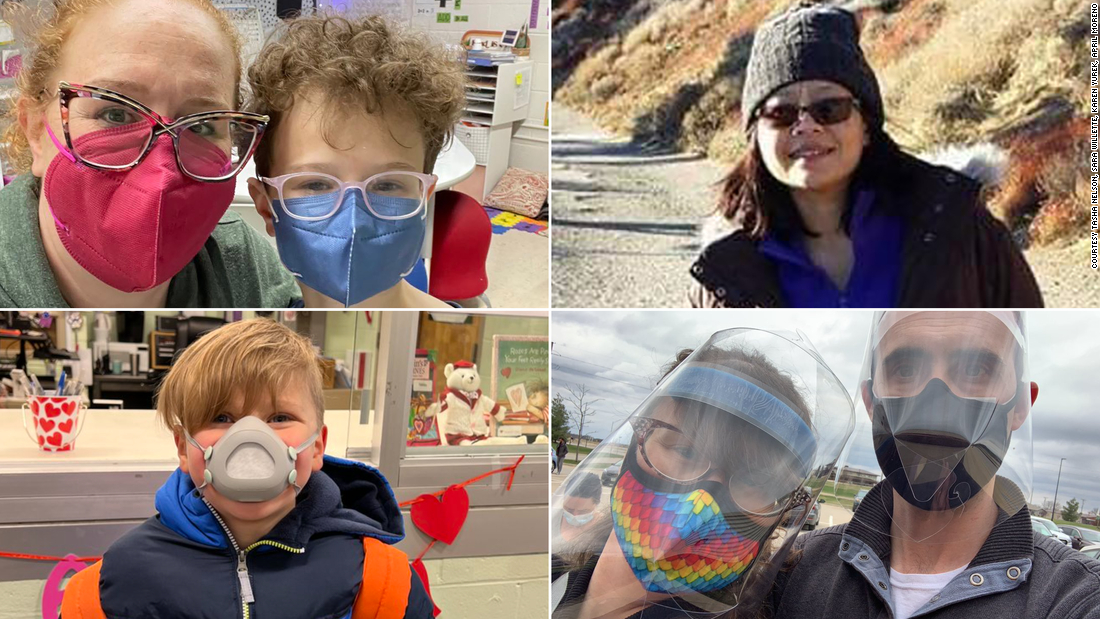
'We're doing everything we can to survive': As the US looks to move on from Covid-19, high-risk and disabled Americans feel forgotten
CNN
Tasha Nelson's 10-year-old son held back tears when he heard the news. The two were in the car when the announcement came through the radio: Virginia's freshly sworn-in governor had signed an order attempting to ban mask mandates in schools.
"My son looked up at me and he had tears in his eyes because he knew what it meant. He said, 'Mom, does that mean I can't go to school anymore?'" Nelson said. "He said, 'Can't we let the governor know about kids like me? I want to go to school too.'"
Jack, a fourth grader, has cystic fibrosis, a progressive genetic disease that causes persistent, damaging lung infections, making it harder to breathe over time. Like other immunocompromised, disabled and chronically ill Americans, Jack was taking measures, like masking, to dodge infections before the pandemic too. But with Covid-19 still rampant, it's not as easy. Even though he's vaccinated, the virus poses a serious, potentially deadly, risk to Jack. His 2-year-old brother, who is not yet eligible for the shots, is another concern.


Mike Pence used to dream of following two successful Donald Trump terms with his own turn in the White House.

An Air Canada plane was damaged after colliding with a vehicle on a runway at New York’s LaGuardia Airport Monday, according to video from the scene and air traffic control audio.

A statue of Christopher Columbus has been erected outside of an ornate federal office building on the White House grounds — the latest sign of the Trump administration’s efforts to reshape cultural and historical representations across the nation’s capital.

Kentucky Gov. Andy Beshear, speaking in JD Vance’s home state of Ohio on Saturday, tore into the vice president, questioning his Appalachian roots and telling voters they “deserve better.”

President Donald Trump has said ICE agents will head to US airports tomorrow amid a partial government shutdown. Follow for live updates

Cuba is working to restore the electricity supply after another island-wide blackout left more than 10 million people without power.

President Donald Trump said Sunday border czar Tom Homan will be in charge of deploying Immigration and Customs Enforcement agents to airports on Monday, with Homan telling CNN the agents will help with security at entrances and exits to ease the Transportation Security Administration’s workload.

Donald Trump wants us to believe that a deal with Cuba is close at hand. After this past week, I am not so sure.

President Donald Trump has said ICE agents will head to US airports tomorrow amid a partial government shutdown. Follow for live updates

President Donald Trump said Sunday border czar Tom Homan will be in charge of deploying Immigration and Customs Enforcement agents to airports on Monday, with Homan telling CNN the agents will assist with security at entrances and exits to ease TSA workload amid a partial government shutdown.

Janet Mills and her allies are counting on a gender gap to narrow Platner’s wide lead ahead of the June 9 primary to decide who will face incumbent Republican Sen. Susan Collins. They are betting that the unfiltered style that has brought Platner widespread attention as someone who could help Democrats reach young men will backfire with women.

Why do people “pledge allegiance” to a “state” that is no longer a state? And what spurs someone to not just attack innocent people, but to then make a statement of loyalty while doing so?

A Supreme Court case examining state deadlines for election ballots sent in the mail is just the tip of the spear in President Donald Trump’s war on mail-in voting.