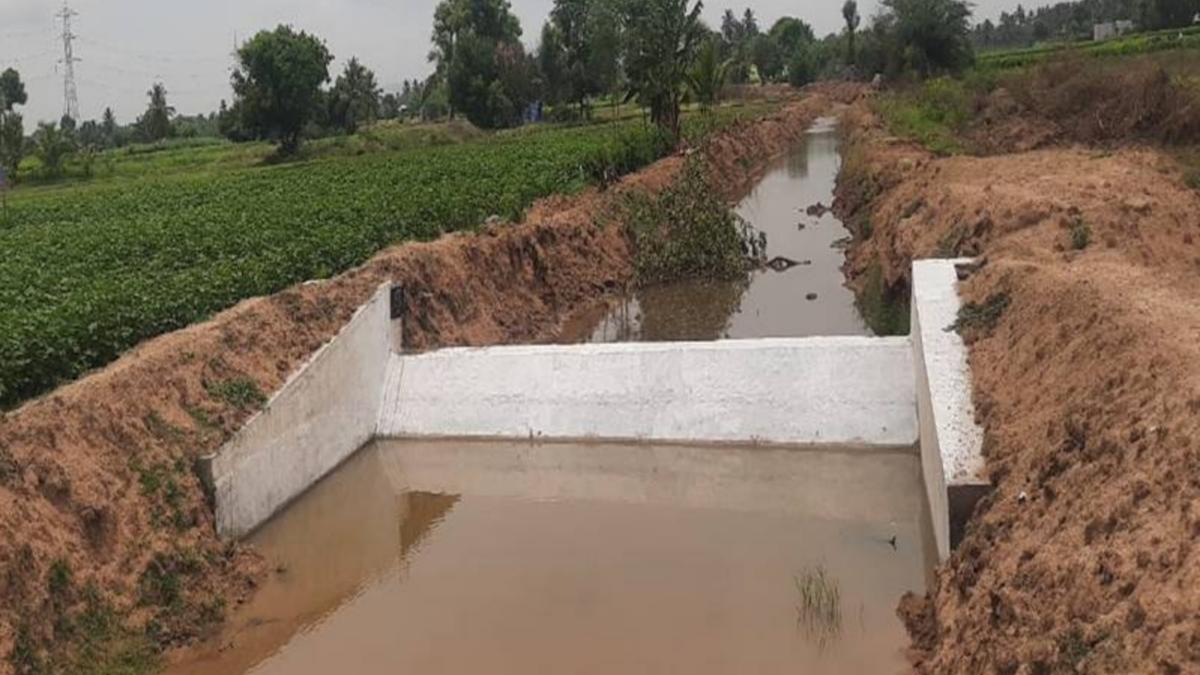
Watershed management works deliver promising results in Dharmapuri
The Hindu
Dharmapuri’s watershed management initiatives, executed by the Tamil Nadu Watershed Development Agency, showcase a 10-meter rise in the water table, a 10% reduction in soil erosion, and a substantial expansion of cultivable land. Pioneering strategies revive paddy cultivation, offering respite to water-scarce regions and fostering agricultural resurgence.
The watershed management initiatives spearheaded by the Dharmapuri district administration between 2021 and 2023, under the aegis of the Tamil Nadu Watershed Development Agency (TAWDEVA), are yielding positive results, going by the augmented water table, expanded cultivable areas, and a decline in erosion.
A recent assessment in the project areas spanning the four blocks of Palacode, Pennagarm, Nallampalli, and Dharmapuri, has shown a noticeable surge in the water table and a reduction in erosion, according to the administration.
Post-project assessments highlight a 10-metre increase in the water table and a substantial decrease in soil erosion per hectare, dropping from 32% to 22%. Simultaneously, the cultivable land has expanded by 300 hectares in project areas. Notably, paddy cultivation, previously abandoned due to water scarcity, has witnessed a revival in many regions, as reported by the administration.
The district-level executive committee of TAWDEVA headed by the district Collector K.Shanthi had steered the identification of the “severe problem pockets” for watershed development, P. Padmavthi, Assistant Engineer, District Watershed Development Agency (DWDA) unit of TAWDEVA, told The Hindu.
Identifying water-scarce areas was facilitated through GPS surveys and satellite images, forming the basis for effective scheme implementation. Dharmapuri, situated in a rain shadow region, barely gets 850mm of rainfall annually, and this hinders long-term crop planning. Given the situation, irrigation became essential to boost agriculture in fallow and wastelands, the administration said.
Specific villages in the four blocks were earmarked for watershed management. This involved revitalizing defunct water bodies and constructing new minor and medium check dams, percolation ponds, village ponds, recharge shafts, and major check dams.
Renovation efforts encompassed the restoration of 26 old tanks, the construction of 145 new major check dams, 39 percolation ponds, and 160 minor structures. Additionally, dysfunctional supply channels were cleared, and a network of check dams helped divert water to primary water bodies. This deliberate stagnation enabled prolonged percolation and recharging of aquifers, and augmenting water tables in the project area. Targeted studies in the areas have shown a steady rise in the water table by 10 metres, said Ms. Padmavathi.


Rwanda's Fanny Utagushimaninde, at 15, becomes the youngest player to score a T20 international century.

Assembly polls 2026: Follow updates from The Hindu on the upcoming elections in five States, on March 22, 2026

Currently, only the services in the 32 series stop at the section of the road adjacent to the Broadway terminus, temporarily closed on account of reconstruction work. Small traders association tells R. Ragu that ensuring the services now accommodated at the temporary terminus at Island Grounds stop at NSC Bose road would benefit visitors to the markets in Parrys

The Hindu photo feature on Aragam which is now known as book village. Photos and text by Imran Nissar

The silent reading movement in the Mylapore-Mandaveli-RA Puram area showed up first at Nageswara Rao Park around two years ago, with modest ambitions, when Balaji launched it along with other reading enthusiasts from the region. This initiative has now moved parks, and seems to set to get entrenched in one. Due to renovation work at Nageswara Park, the reading session became irregular. With the Nageswara Rao park work gaining more surface area, it had to be shifted elsewhere. And it seems set to continue with a newly discovered green patch in RK Nagar in the Sundays to follow.

Explore Tamil Nadu's upcoming four-cornered election contest, featuring key players DMK, AIADMK, TVK, and Naam Tamizhar Katchi.

Trump plans to deploy ICE officers for airport security unless Democrats fund the Department of Homeland Security amid ongoing shutdown.

Cuba experiences its second nationwide blackout in a week, exacerbated by an ongoing U.S. oil blockade and energy crisis.

Kamal Haasan urges Tamil media to avoid the term "censorship" in films, advocating for artistic freedom and recognition of certification.

Pottalurani residents boycott elections again, demanding closure of fish waste processing units impacting health and environment.

VCK leader Thirumavalavan emphasizes the need for local candidates amid concerns over past electoral losses due to outsiders.

Women teachers over 50 express discontent after Revenue Department denies blanket exemption from SIR and census duties in Karnataka.

Union Minister skips crucial NCTP meeting amid backlash over controversial Transgender Rights Bill, raising concerns within the community.