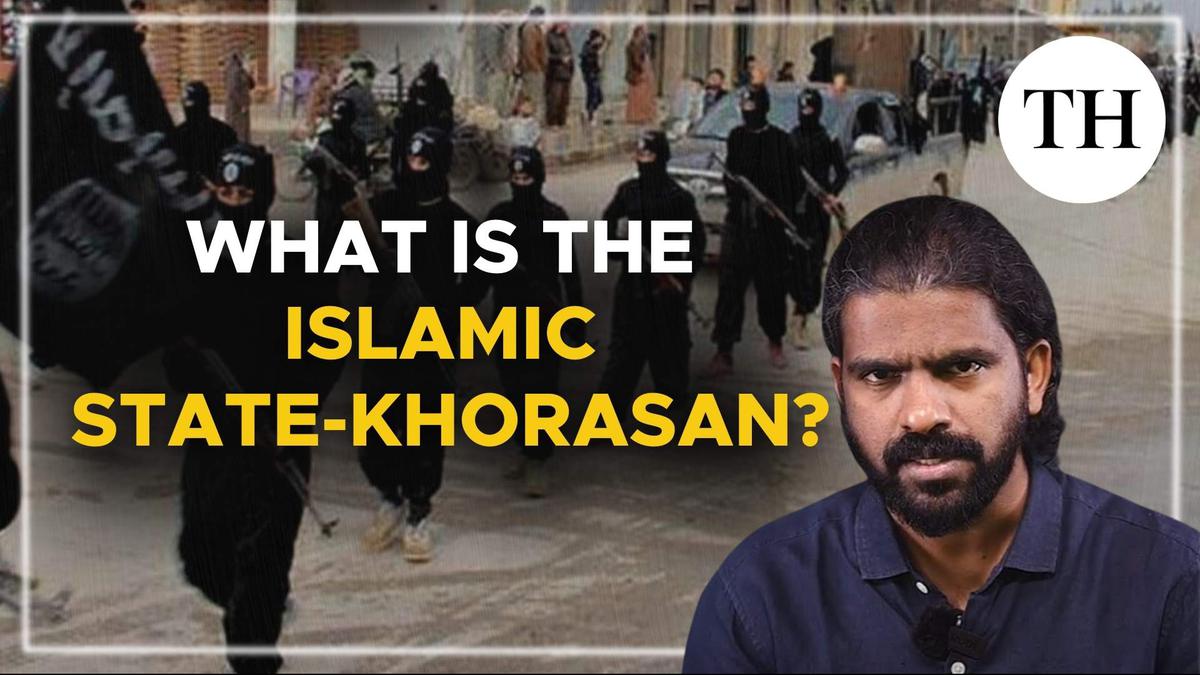
Watch | What is the Islamic State-Khorasan and why did they attack Russia?
The Hindu
A history of the Islamic State-Khorasan, their rivalry with the Taliban, their hatred towards Syria and Russia and what led to the terror attack at the concert hall in Moscow
In June 2015, a few months after the Islamic State (IS) announced its Wilayat Khorasan, the Taliban wrote a letter to the IS chief, Abu Bakr al-Baghdadi. The Taliban’s demand was that the IS should stop recruiting jihadists in Afghanistan. Both the Taliban and the Islamic State were insurgencies that time.
The letter, signed by the then political committee chief of the Taliban, Mullah Akhtar Mansour said there was room for “only one flag and one leadership” in the fight to re-establish Islamic rule in Afghanistan. Mullah Mansour would later become Taliban’s leader and be killed by a U.S. air strike in May 2016.
The Islamic State faction, which came to be known as the Islamic State-Khorasan, did not stop recruiting disgruntled Taliban fighters. Nor did it stop launching terror attacks across Afghanistan. Today, the Taliban are no longer an insurgency. They are the government in Kabul. And the IS-Khorasan has emerged as the most powerful branch of the Islamic State networks. It has training centres in the Taliban-ruled Afghanistan. It has recruited thousands of disgruntled Central Asians. It has carried out a number of attacks in recent months, including the January twin bombings in Kerman, Iran, a strike on a church in Istanbul and a massive attack on a concert hall in the outskirts of Moscow on March 22.
Armed gunmen opened fire at the Crocus City Concert Hall and threw explosives, killing at least 137 people and wounding nearly 200 others, in one of the worst terrorist attacks in Russia in years. Russian authorities have arrested and charged four Tajik nationals for the attack.
When the Islamic State announced the formation of the Khorasan Wilayat in January 2015, referring to an geographical area encompassing Afghanistan, Pakistan and Central Asia, the group’s immediate strategy was to exploit the divisions within the main jihadist groups operating in the region. It appointed Tehrik-i-Taliban Pakistan (TTP) commander Hafiz Saeed Khan as its leader and former Afghan Taliban commander Abdul Rauf Aliza as his deputy (both were killed in U.S. strikes). It attracted members from different militant organisations such as Lashkar-e-Taiba, Jamaat-ud-Dawa, the Haqqani Network and the Islamic Movement of Uzbekistan into its fold.
The IS-K declared its allegiance to Abu Bakr Baghdadi, the self-declared Khalifa, who was killed by an American strike in 2019. In operational tactics and ideology, it followed its parental organisation. The key goal is to establish “Islamic rule” in the “province” and for that they are ready to wage “jihad”. In a video message released in in 2015. the IS-Khorasan stated: “There is no doubt that Allah the Almighty has blessed us with jihad in the land of Khorasan since a long time ago, and it is from the grace of Allah that we fought any disbeliever who entered the land of Khorasan. All of this is for the sake of establishing the Shariah.”
When the Islamic State in Iraq and Syria came under pressure in 2015 and 2016, the core organisation shifted its focus to Afghanistan. The IS was losing territories to Kurdish militias in Syria and government forces and Shia militias in Iraq. In Afghanistan, a fractured country batted by civil war, the IS saw an opportunity to rebuild its organisation. Having built its base in eastern Afghanistan, the IS-Khorasan issued propaganda messages, calling on Muslim youth across Asia to join the group. Many radicalised youth, including dozens from India, travelled to Afghanistan to either join the IS or live an “Islamic life” under the Caliphate’s rule.


U.S. may soon lift sanctions on Venezuela to aid oil sales and economic recovery, says Treasury Secretary Scott Bessent.

Maduro loyalists rally in Caracas as the Venezuelan government seeks to strengthen ties with the U.S. amid political turmoil.

Activists report 116 deaths in Iran protests against theocracy, amid state media's portrayal of control and casualties.

North Korea demands an explanation from South Korea over a drone incursion, escalating tensions on the Korean Peninsula.

Kurdish fighters in Syria agree to evacuate Aleppo under a ceasefire, transporting members to northeastern regions.

Myanmar holds the second phase of a controversial military-run election, with low turnout and criticism from international observers.

Thousands protest in Minneapolis and nationwide against ICE violence following fatal shootings, urging peaceful demonstration amid rising tensions.

Nobel Institute denies Venezuelan leader Machado's attempt to transfer Peace Prize to Trump, affirming the award's permanence.

Six killed in Mississippi shootings; suspect in custody, with authorities ensuring no further threat to the community.

Explore the U.S. strategic interests in Greenland amid geopolitical tensions and the implications for NATO and global security.

Venezuela engages in talks with the U.S. to restore diplomatic ties following the ousting of President Maduro.

Japan's PM Sanae Takaichi may call a snap election to leverage high approval ratings and strengthen her government's majority.

Netanyahu aims to reduce Israel's reliance on U.S. military aid over the next decade, seeking complete independence.